LANSING, Mich. (WZMQ) – Ahead of next week’s Mackinac Policy Conference, Dana Nessel and several Democratic lawmakers are arguing the conference itself has become a visible example of how corporate influence operates in Michigan politics.
The annual conference on Mackinac Island brings together lawmakers, lobbyists, business executives, and political consultants for high-level discussions about issues ranging from health care and energy policy to economic development and education.
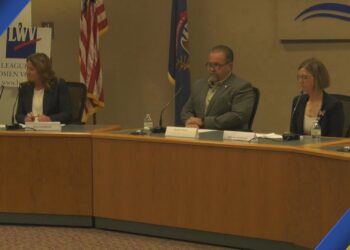
But lawmakers at a Lansing roundtable said many of the corporations with the largest presence and sponsorships at the conference are the same organizations they believe wield enormous influence over what legislation moves forward in Lansing.
Among the companies repeatedly mentioned were DTE Energy, Consumers Energy, and Blue Cross Blue Shield of Michigan.
“At the end of the day, the question is, DTE okay with it? Is Consumers Energy okay with it? Is Blue Cross okay with it?” Nessel said. “Once you got to the point where you were in any way infringing on some of these big corporate donors and what they wanted, then it was a no-go and then everything just stopped in its tracks.”
Critics of the conference argue the event highlights the close relationship between political power and corporate money in Michigan. Attendance costs thousands of dollars, and major sponsors include utilities, insurers, and large business groups with significant interests before the Legislature.
Lawmakers said the concern is not simply that corporations attend the conference, but that the businesses most visibly connected to the event are often the same ones lawmakers feel pressure not to challenge politically.
“The stranglehold that DTE and Consumers have on Lansing is longstanding,” said Representative Erin Byrnes (D- Dearborn). “It runs deep, and it’s really a cancer, I think, on how this place operates.”
Representative Betsy Coffia (D-Traverse City) pointed to rising utility bills and health care costs as examples of issues lawmakers should prioritize over corporate interests.
“People are not okay,” Coffia said. “They can’t afford to pay their bills and they’re mad at us and they should be.”
Coffia also accused Blue Cross Blue Shield of Michigan of helping block mental health reforms she said would have benefited rural communities.
“Blue Cross has been given far too much power and latitude,” Coffia said. “We should never allow for-profit and large nonprofit lucrative industries to have that much play over whether we do what is right for our constituents.”
The lawmakers tied those concerns to broader criticisms of Michigan’s ethics and campaign finance laws, arguing current disclosure requirements still leave major loopholes surrounding political donations, nonprofit spending groups, and leadership PACs.
Participants also revisited the BRITE Act, a package of transparency reforms they argued was weakened before passage during Democrats’ 2023-24 trifecta.
“We inherited a culture that was broken,” Coffia said. “We did not create it, but it falls to us.”
The group repeatedly emphasized the issue extends beyond either political party, arguing the system itself has normalized close relationships between lawmakers, lobbyists, and corporate donors.
As next week’s conference approaches, lawmakers said the larger question is whether Michigan’s political culture has become too dependent on insider access and corporate influence, even as many residents struggle with rising costs for utilities, housing, and health care.