
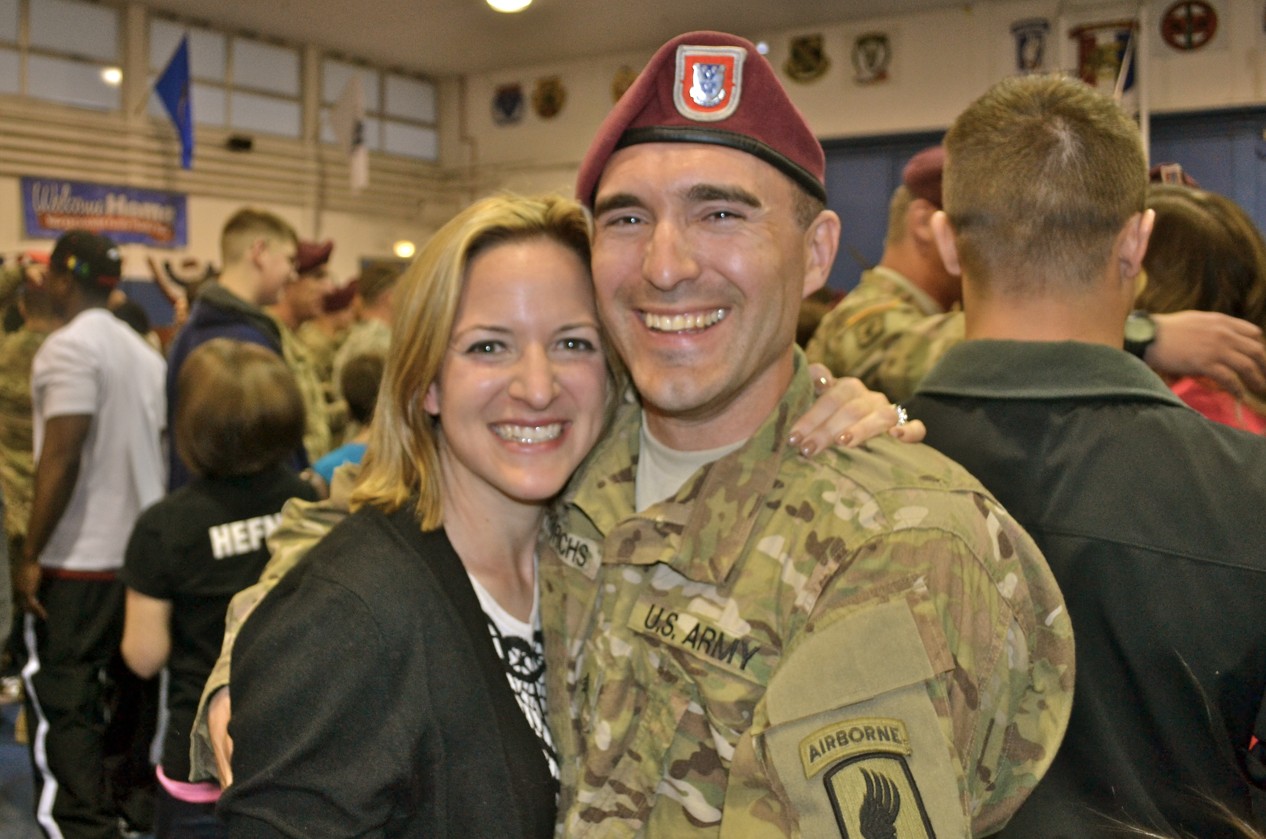
LANSING, Mich. (WZMQ) – For years after her husband deployed to Afghanistan with the U.S. Army’s 173rd Airborne Brigade, Michigan’s Secretary of State Jocelyn Benson says daily life carried a quiet but constant anxiety familiar to many military families.
“You feel that anxiety that comes with having to prepare yourself every day for that phone call,” Benson said during an interview for National Military Appreciation Month. “Walking through what you would do if that knock on the door comes.”
Her husband, U.S. Army Sgt. Ryan Friedrichs, enlisted in January 2011 after watching friends and fellow Americans answer the call to service following the September 11th terrorist attacks. Benson said he was especially moved by conversations with Gold Star families and by the repeated deployments facing many service members during the wars in Iraq and Afghanistan.
“His goal was basically trying to, he wanted to do a tour in Afghanistan so that someone else didn’t have to go back,” Benson said.
Friedrichs served with Company C, 1st Battalion, 503rd Infantry Regiment of the 173rd Airborne Brigade, part of the Army’s airborne infantry forces. He ultimately served eight years between active duty and reserve service.
Benson said the deployment also exposed her to another side of military life that often receives less public attention: the isolation, financial strain, and uncertainty experienced by spouses and families waiting at home.
“When Ryan was gone, I went through what a lot of military families do,” she said. “I felt isolated. I felt alone.”
Benson said that experience led her to help found Military Spouses of Michigan after connecting with other military spouses through a University of Michigan support and research program. The organization worked to create community networks for military families while also providing practical assistance to spouses facing housing instability, legal disputes, workplace conflicts, and financial hardship.
“In addition to the sort of overall feelings of anxiety and isolation, the financial challenges of many in the military are real,” Benson said. “Our service members, particularly combat service members who are serving on the front lines, get paid very little.”
The conversation comes as veterans advocates and mental health experts continue raising alarms about staffing shortages, funding pressures, and growing instability within the U.S. Department of Veterans Affairs system.
According to recent federal workforce data analyzed by the Center on Budget and Policy Priorities, the Department of Veterans Affairs lost nearly 28,000 employees between January and December of 2025, including thousands of nurses, psychologists, claims evaluators, and medical officers. Michigan alone lost roughly 575 VA employees during that period, according to the report.
Veterans advocates say the cuts are already contributing to delays in care, backlogs in benefits processing, and growing strain on mental health services.
The American Psychological Association has also warned that staffing shortages inside the VA are worsening access to mental health care for veterans nationwide. More than half of VA medical centers already report psychologist shortages, according to the association, while federal workforce reductions and hiring caps have intensified concerns about long-term care capacity for veterans coping with PTSD, depression, traumatic brain injuries, and substance abuse disorders.
Research cited by veterans policy experts shows veterans receiving care through the VA system often experience better long-term outcomes and lower suicide rates than those treated outside the system, particularly because VA providers are specifically trained in military culture and combat-related trauma.
Benson pointed directly to staffing shortages at VA facilities during the interview and argued states will increasingly need to help bridge gaps affecting veterans and military families.
“Oftentimes, services can be available that veterans aren’t connected to those services, or they don’t have someone reaching out to make that connection,” she said.
She also said veterans who feel abandoned by institutions after returning home deserve more consistent support beyond symbolic recognition during holidays or appreciation campaigns.
“It is easy to thank people for their service or remember them when they come home,” Benson said. “But it’s oftentimes a week or a month after where that isolation sets in again.”
Benson argued rebuilding trust with veterans requires both direct outreach and long-term investments in housing support, employment programs, apprenticeships, and mental health resources.
Among the policies she discussed were expanding apprenticeship programs for veterans and incentivizing businesses to hire veterans and military spouses, something she said other states have already implemented successfully.
“And as governor, I’ll use every tool in my toolbox to make sure we’re showing up for that community and providing real economic support, housing support, and other types of ways that we can ensure the community’s not left behind,” she said.
The discussion also unfolded against the backdrop of rising international tensions and the possibility of future overseas conflicts, concerns Benson said resonate deeply with military families who understand the unpredictability of deployments.
“My heart goes out to all the service members and their families who are now facing the uncertainty that comes with deployments,” she said.
Benson said military families often carry invisible burdens long after deployments end and long after public attention fades.
“I know how important it is to appreciate our service members, not just this month, but every month,” she said.