EAST LANSING, Mich. (WZMQ) – Michigan’s young voters showed up in record numbers in recent elections, and Democratic U.S. Senate nominee Abdul El-Sayed is trying to make sure that trend continues into November, one campus town hall at a time.
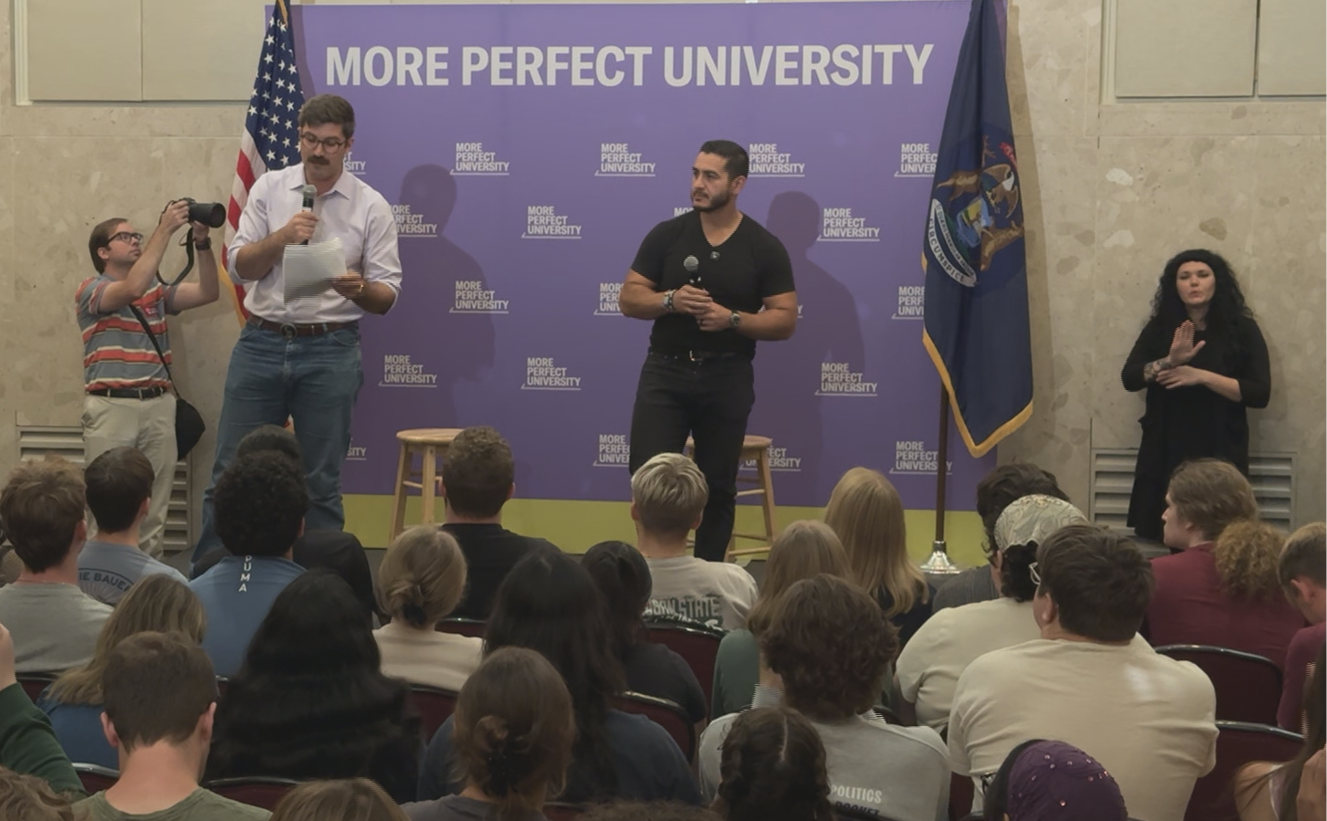
El-Sayed brought his ongoing college town hall series to Michigan State University Friday afternoon, taking questions directly from students for more than an hour rather than delivering a traditional stump speech. The format, built around listening before responding, reflects a broader strategy his campaign has leaned on throughout the race.
“It’s not just a rally here or there,” El-Sayed told students. “It’s about a sustained conversation with young folks.”
The strategy comes as Michigan has emerged as one of the strongest states in the country for youth voter participation. Turnout among Michigan voters ages 18 to 29 reached 58% in 2024, the third-highest rate in the nation, according to a Tufts University report. That was a four-point increase from 2020, the largest jump of any state. That contrast matters heading into a midterm year, when youth turnout typically drops off sharply from presidential-election levels.
Tufts Center for Information & Research on Civic Learning and Engagement (CIRCLE) ranks Michigan’s U.S. Senate race, the one El Sayed is running in, second in the nation for how much young voters could influence the outcome, as of a July 2026 update to the organization’s Youth Electoral Significance Index. The ranking measures potential impact, not a prediction of turnout or results, and researchers note that potential depends on whether campaigns actually invest in reaching young voters.
El Sayed’s campaign has decided to make that investment, and it was on display as El Sayed structured much of the event around direct questions from the audience rather than a scripted address. Students raised concerns ranging from artificial intelligence threatening their future careers to the cost of rent to gaps in healthcare coverage, and El-Sayed responded to each in turn.
One of the first questions came from a student named Luke, who told El-Sayed he’s from the Upper Peninsula and asked how he’d address rural hospital closures back home.
El-Sayed explained the closures as a direct result of how Medicaid reimburses rural providers. Because rural hospitals serve more Medicaid patients compared to hospitals in more populated areas, and Medicaid reimbursement rates run lower than private insurance or Medicare, those hospitals take in less revenue for the same care, he said, a gap that adds up over time and makes it harder for rural facilities to stay open.
“Medicaid is a really critical safety net program, and we have, in effect, defunded Medicaid,” El-Sayed said.
He added that the problem is likely to worsen before it improves. Federal Medicaid cuts passed earlier this year don’t take effect until next year, he said, meaning rural hospitals could see even fewer reimbursable patients once those cuts kick in. El-Sayed pointed to his support for Medicare for All as a longer-term fix, arguing that a single, universal reimbursement rate, rather than the current patchwork of Medicaid, Medicare, and private insurance, would give rural hospitals steadier funding regardless of their patient mix.
WZMQ later followed up on Luke’s question directly, asking how El-Sayed would approach reopening rural hospitals that have already closed due to lost funding. He pointed to public and nonprofit models that built much of the country’s existing hospital infrastructure in the first place.
“You shouldn’t have to drive three or four hours to see the doctor,” El-Sayed said. “The first hospitals were either built by religious organizations, or towns and cities… The municipal hospital model is a thing that’s existed forever and ever in this country.”
El-Sayed proposed using federally qualified health center infrastructure, a federal designation that already provides funding to community health clinics, as a foundation local towns could build on to reopen shuttered facilities, with Medicare for All providing the ongoing reimbursement to keep them running. He warned that without action, the consequences would be measured in lives, not just inconvenience.
“We’ve got to open up more rural healthcare settings,” El-Sayed said. “If we fail to do that, don’t be surprised when there’s unnecessarily lost life, because people aren’t able to get to a healthcare center in time if they have a stroke or a heart attack, or suffer a mental health crisis.”
Several students raised concerns about artificial intelligence displacing the careers they’re currently in school for. El-Sayed called AI’s impact on the job market one of the defining risks facing their generation and proposed that the federal government take a financial stake in AI corporations to help cushion the economic fallout if the technology displaces jobs.
A student named Kate, who said she lives with cystic fibrosis, told El-Sayed she’s worried about losing access to medication and insurance coverage after she turns 26. El-Sayed used her question to make the case for Medicare for All, arguing that a single government insurer would eliminate the coverage gaps tied to aging off a parent’s plan, changing jobs, or other life changes.
One student described the financial burden of filing a personal protection order, saying she was charged nearly $200 to file and again to enforce it after it was violated. El-Sayed said the legal system needs to be restructured around victims’ experiences rather than treated as an afterthought.
El-Sayed closed the event with a direct appeal to turnout, telling students the stakes of the race outweigh how much time they have to work with.
“So I’m asking you to just get involved every day between now and November 3rd,” El-Sayed said.
WZMQ 19 News reached out to the Rogers campaign for comment on its own youth outreach efforts and had not received a response as of publication.