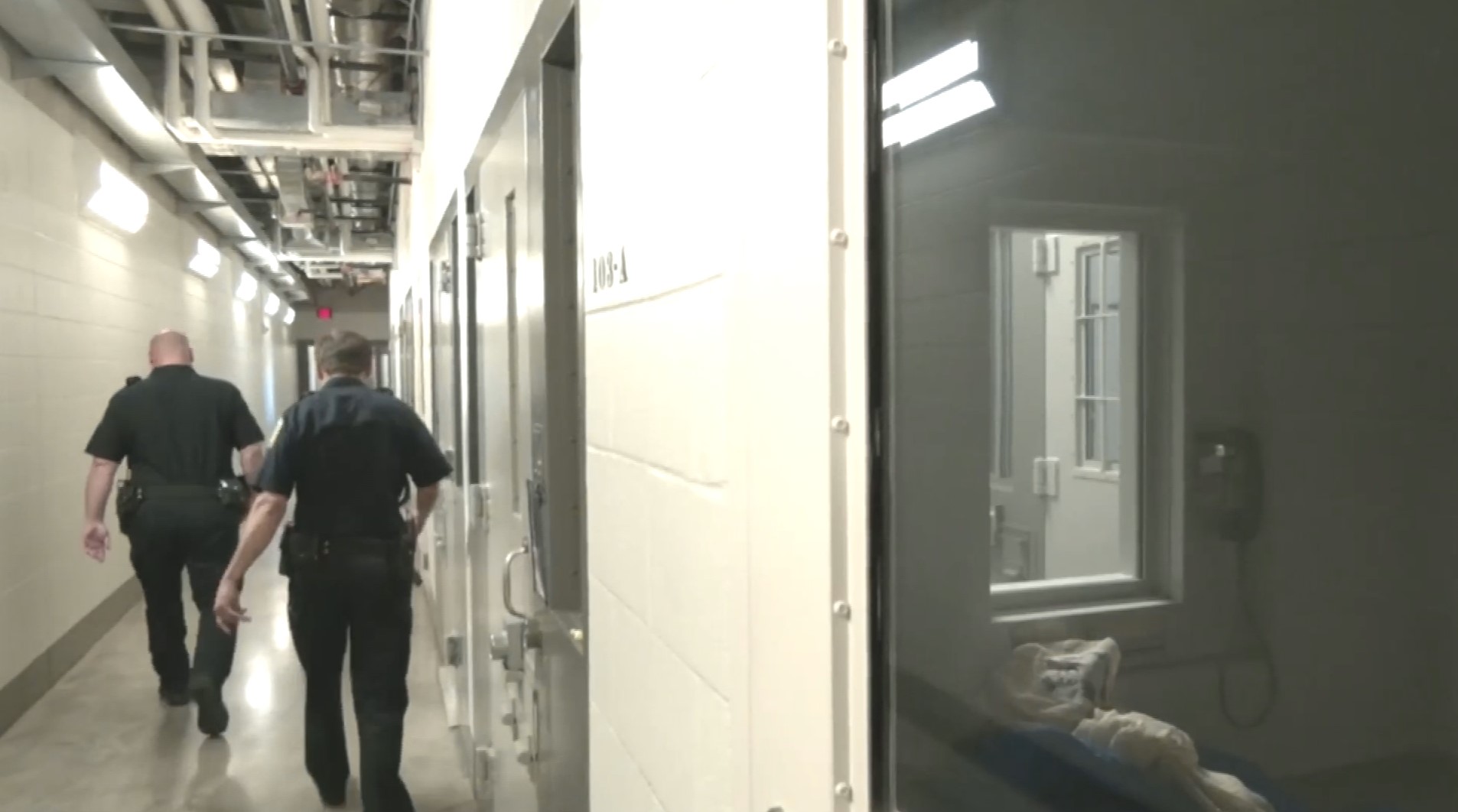
LANSING, Mich. (WZMQ) – Michigan corrections officers have spent years working mandatory overtime under a policy known as Rule 32, sometimes pulling 16-hour shifts day after day. Now, state lawmakers are again trying to pass legislation to make the job more sustainable and attractive to new officers, reducing shortages. Still, the union representing officers says it has little faith the effort will succeed this time either.
The Michigan Senate passed Senate Bills 1133, 1134 and 1135 to replace bills recently vetoed by Gov. Gretchen Whitmer. The legislation would add corrections officers, along with conservation officers, motor carrier officers and another law enforcement division, to the same pension program used by the Michigan State Police.
State Rep. Dave Prestin, R-Cedar River, said the mandatory overtime policy has taken a toll on officers’ lives.
“Some of these guys are sleeping in their cars, just until they get their days off where they can go home and see their families,” Prestin said.
Byron Osborn, president of the union representing Michigan corrections officers, said he appreciates the bill sponsors in the Senate, but doesn’t believe the legislation will move in the House before the year is out.
“We don’t even believe they’re going to be meeting back in session prior to the elections,” Osborn said. “So you’re only talking about the lame duck period now that’s going to be in play, and quite frankly, we don’t have any faith in them getting this done.”
Osborn said assaults and homicides, including prisoner-on-prisoner homicides, have become more frequent as staffing shortages and classification issues persist. Prestin, who has toured all six Michigan correctional facilities, said the state is seeing deaths in corrections facilities regularly, including at a women’s facility downstate.
The situation predates even pandemic-related labor shortages, leaving some officers close to a decade of working in subpar conditions. This also signals a larger crisis with quality of life for prisoners in facilities. Some prisons are working with fewer staff members than needed to provide proper prisoner privileges. This only adds to the tension, as prisoners spend more time in close quarters, and has pushed prisoner advocacy groups to support these bills as well.
With corrections officers and prisoner advocates on the same side, the issue has also pushed Republicans and Democrats together. Rep. Prestin said he signed on to state Rep. Emily Pohutsky’s letter calling for the resignation of Corrections Director Heidi Washington following the deaths of women in a facility downstate, which are being called medical neglect. Pohutsky, D-Livonia, is a left-leaning member of the Democrat caucus in the House.
Still, the bills aren’t law.
Rep. Prestin said the bills haven’t moved because they’re too broad, bundling in benefits for other law enforcement classifications.
“Why we didn’t come out with a targeted [bill], I know Senator McBroom offered an amendment to narrow it down to just corrections, and they ignored it,” Prestin said. Pointing to Senate Democrats as the reason the bill included more than just corrections officers.
He argued that adding other job classifications muddies a bill that would otherwise have broad support, and pointed to the pay gap facing Michigan corrections officers compared with other states.
“Our corrections officers, they cap out at what the Wisconsin and the federal starting wage is at,” Prestin said. “So they start out in the 20s, they cap out in the 30s. State of Wisconsin and the feds are starting in the 30s and capping out at the 50s.”
Osborn was also critical of Upper Peninsula House Republicans who have publicly voiced support for the bills. He said the entire House Republican caucus, including Reps. Parker Fairbairn, Markkanen, Prestin and Bohnak, walked out of the chamber rather than vote when similar legislation first came up. House Republicans were protesting at the time to force action on bills related to minimum and tipped wage changes.
“None of them get to say that they support these bills, because none of them voted yes,” Osborn said.
Osborn says, either way, he’s heard this story before and is holding out hope new lawmakers will prioritize a fix next year. If the bills do pass, it would be the second time similar bills made it to the governor’s desk.
Under Democratic control, the bills passed but weren’t handed over to the governor. After a lengthy legal battle, the bills were sent by new leadership, but vetoed by the governor, who said the language was now outdated. Osborn said the union has also lost confidence in Whitmer, who he said stayed silent on the issue for about 18 months before recently signaling she would consider signing the bills if they reach her desk.
Beyond staffing and pay, both Prestin and Osborn described a corrections system under strain.
“We are playing with people’s lives, at the end of the day,” Prestin said. “We are having deaths every day in corrections facilities. Every month we are having serious health consequences or deaths in the corrections officer ranks.”
Lawmakers are in Lansing this week, working on a special committee hearing and voting on bills relating to education, personal protection order fees, and dam regulations. The bills still need a scheduled committee hearing themselves, and if Prestin’s changes are made to narrow the focus, they’ll need to pass a vote in the Senate again before making it to the governor. Both Prestin and Osborn said the earliest realistic window for action is the lame-duck session, if it happens at all.