
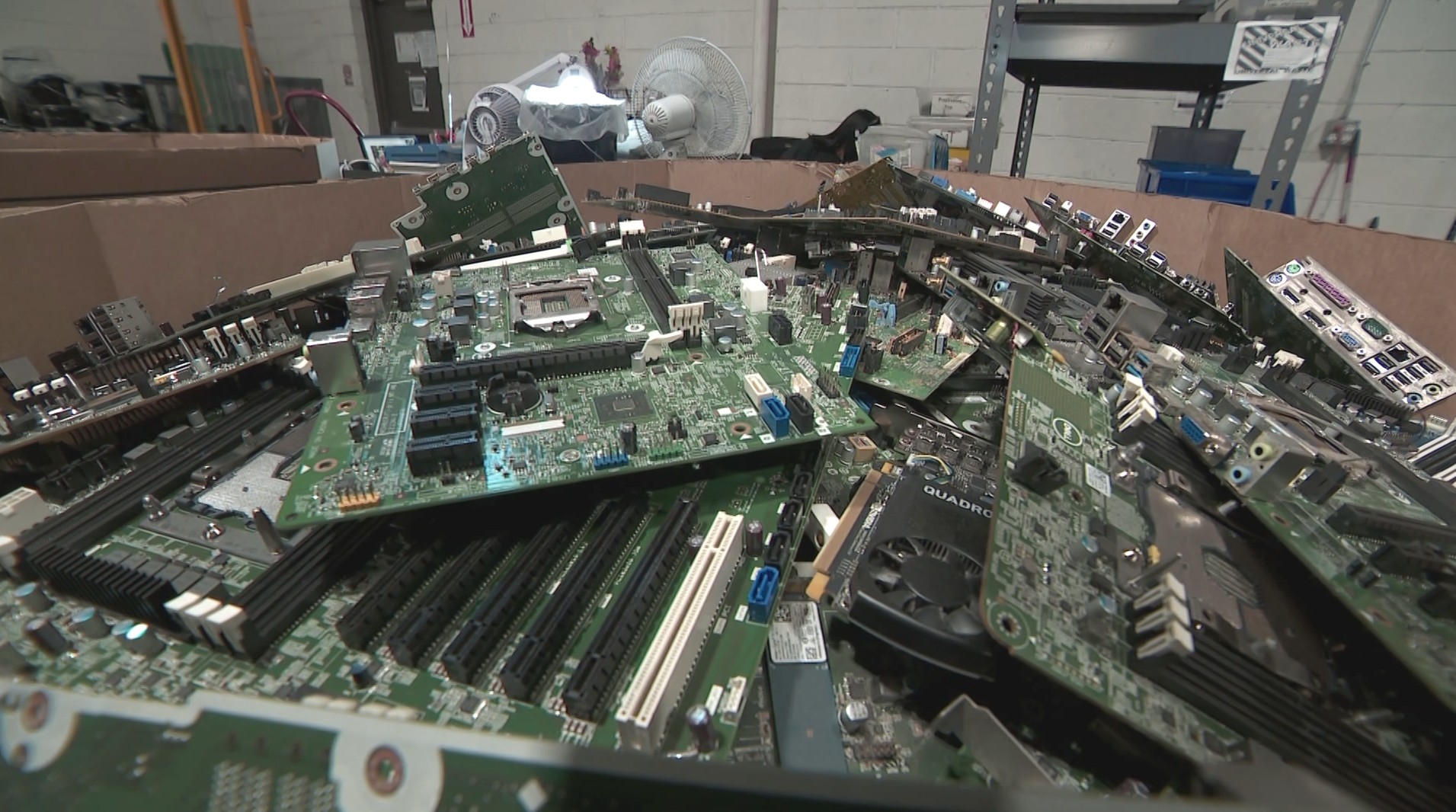
LANSING, Mich. (WZMQ) – A network of electronics recycling sites built across the Upper Peninsula in response to one of the region’s largest illegal dumping problems is now seeing record participation, and state officials say they want to expand it further west.
The Michigan Department of Environment, Great Lakes, and Energy (EGLE) said the network grew out of a 2014 complaint about an unregistered electronics recycler in the Escanaba area who had spent roughly a decade collecting old cathode-ray tube televisions, stripping them for valuable metals and circuit boards, and crushing the leftover glass into storage sacks.
When the property was abandoned in a Gladstone warehouse, 1.2 million pounds of crushed glass were left behind, more than the state could handle on its own. The EPA stepped in and spent about six months clearing the site. That cleanup is separate from, but similar to, the illegal e-waste pileup WZMQ 19 covered in Daggett Township last year.
“That’s what really prompted our identification of the need to have more collection systems in the UP,” said EGLE electronics recycling specialist Steven Noble.
The UP now has 10 permanent collection sites, up from none a decade ago, along with retailer drop-off locations and seasonal collection events. Noble said participation has grown by nearly 15% every year, and he credits that growth to residents simply becoming familiar with where the sites are.
Asked why he thinks people are dropping off more electronics, Noble pointed to the shift from occasional collection events to permanent, year-round locations. “Having these 10 permanent locations across the UP, people know that they’re gonna be there,” Noble said. “They’ve learned what their hours are, and they’re not territorial. They’re gonna accept material from pretty much whoever brings it to them.”
One of the newest and most productive sites is in Marquette, run by the Superior Watershed Partnership. Noble said an earlier site south of the city in Sands Township wasn’t reaching residents who live in Marquette itself, so the partnership asked to open a location in town. It has outpaced expectations every year since.
Tribal governments have also played a central role in building out the network. Noble said partnerships with tribes across the UP, including Bay Mills, Hannahville, and the Keweenaw Bay Indian Community, gave the program both an existing environmental focus and a physical presence in communities EGLE couldn’t easily reach on its own.
Despite the growth, gaps remain. Noble said EGLE is actively looking for a partner to establish a site in the Iron River or Iron Mountain area, on the western side of the UP. “We don’t have anybody that’s stepping up,” Noble said. “We need some in the Iron River, Iron Mountain area, so if anybody’s listening to this and you might wanna help set up a collection location over there, we’d be more than willing to work with you.”
The program currently runs on EGLE grant funding that covers the cost of a contractor, since the rural spread of collection sites makes the economics of hauling material difficult. Noble said that funding won’t last indefinitely, and once it ends, individual sites will have to decide whether they can afford to keep collecting material on their own.
Residents without a nearby drop-off site can also use free manufacturer mail-back programs, which Michigan law requires electronics makers to offer, including a box and prepaid shipping label. EGLE plans to post a list of manufacturer take-back links on its e-waste recycling website.