
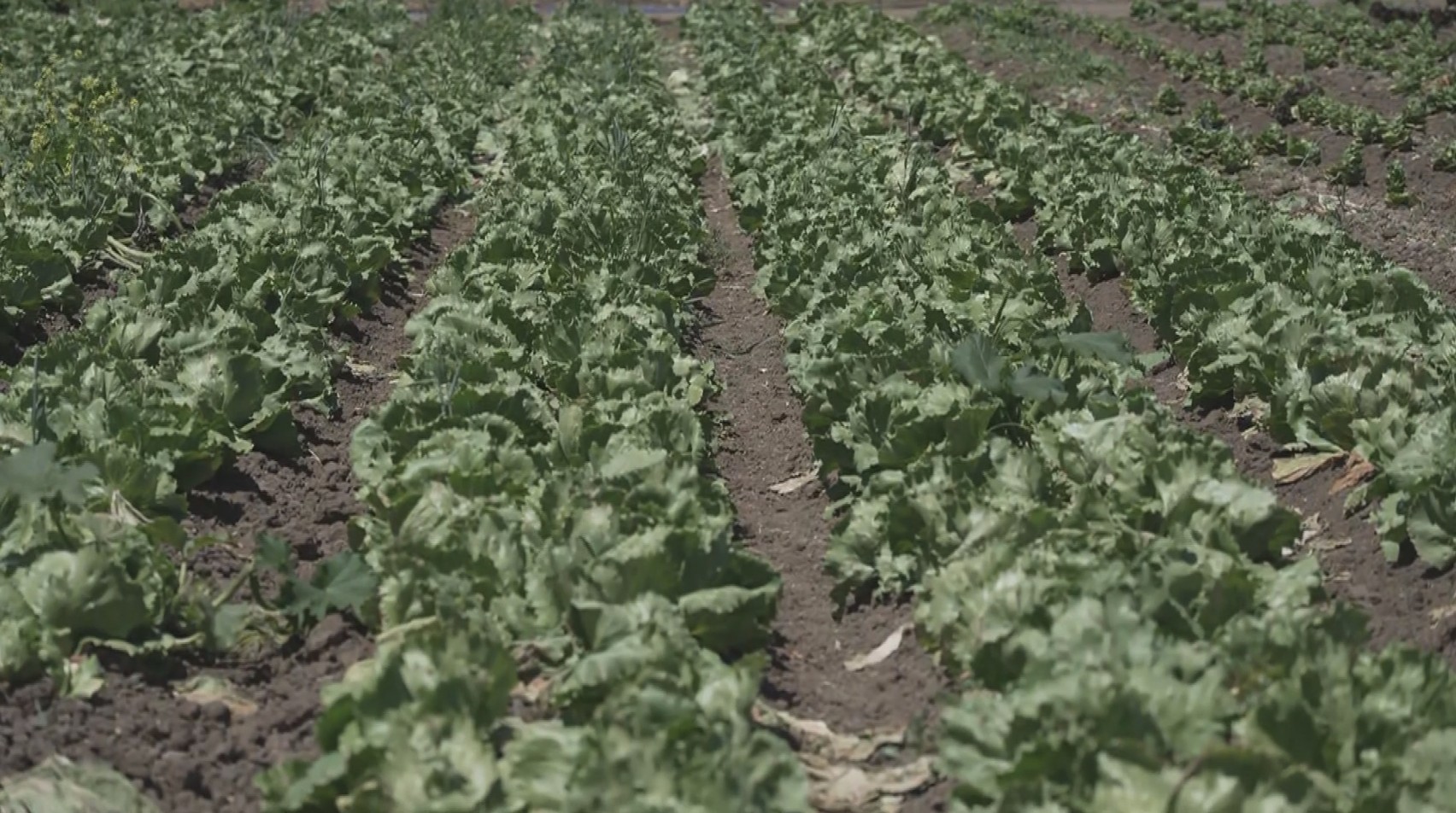
LANSING, Mich. (WZMQ) – As the U.S. Food and Drug Administration continues its investigation into a multistate Cyclospora outbreak linked to Taylor Farms lettuce, a farmer-led watchdog organization says the outbreak points to a bigger problem in how America’s produce reaches consumers.
Farm Action, a nonprofit that studies corporate concentration across the food system, found that just four companies now supply more than half of the fresh-cut salad sold in the U.S. Angela Huffman, the group’s president and co-founder, said that concentration is why a single contaminated source can affect so many people so quickly.
“The headlines have really focused on Taylor Farms and Taco Bell. The bigger story that we see is that more and more of our food is coming from fewer and fewer companies like Taylor Farms,” Huffman said. “While the FDA investigates this outbreak, we are asking a different question. How did one supplier’s lettuce end up reaching so many people?”
Huffman said the shift away from local and regional supply chains occurred gradually as retailers and restaurant chains grew and began buying from a small number of national produce suppliers rather than individual farms.
Companies like Taylor Farms now sit between farmers and consumers, she said, both growing their own produce and processing and distributing lettuce grown by contracted farms to restaurants, grocery stores, schools and hospitals across the country.
“It really does limit the opportunities farmers have to get their products to consumers and even their bargaining power,” Huffman said. “If you only have a couple potential buyers, they can create a lack of competition, and that can impact the price that farmers are offered, and it does. Farmers are seeing over time lower and lower prices for their products, even while their costs keep increasing.”
Huffman also pointed to the political influence large suppliers can carry during a federal investigation. “Taylor Farms has given over $1,000,000 in campaign contributions to the current administration,” she said. “They’ve also, they’re on the record having met with the White House, asking how they could limit their, you know, the damage to their public perception.”
Taylor Farms has said in a statement on its website that it invests more than $200 million annually in food safety measures and has commissioned an independent, top-to-bottom review of its food safety protocols following the outbreak. The FDA has said a false-positive lab result on one lettuce sample did not change its ongoing investigation into Taylor Farms’ recalled lettuce from central Mexico.
She argued Michigan is a case in point, since the state grows lettuce during the same summer months the outbreak occurred. “Why are we importing lettuce from Mexico in the middle of summer?” Huffman said. “You know, Michigan grows great lettuce this time of year, right?”
Farm Action points to two main fixes. The first is stronger antitrust enforcement, meaning the federal government making fuller use of laws already on the books to stop a handful of companies from controlling too much of one market, and to break up that control where it already exists. The idea is that if lettuce came from dozens of suppliers instead of four, one contamination problem couldn’t reach nearly as many people at once.
The second is shifting government farm support away from the largest producers and toward small and regional farms. Most federal agriculture funding currently goes to the biggest farms growing a handful of commodity crops, Huffman said, and redirecting more of it toward smaller, local producers would rebuild the shorter supply chains the country relied on before consolidation. She said that matters for food safety specifically because problems on a small farm are easier to trace and fix. “It doesn’t impact as many people and can be traced back quickly and addressed,” Huffman said.
In the near term, Huffman said she wants the FDA’s investigation into this outbreak carried out without corporate influence. Consumers looking to support local food systems in the meantime can turn to farmers markets, community-supported agriculture programs and independent grocers, she said.