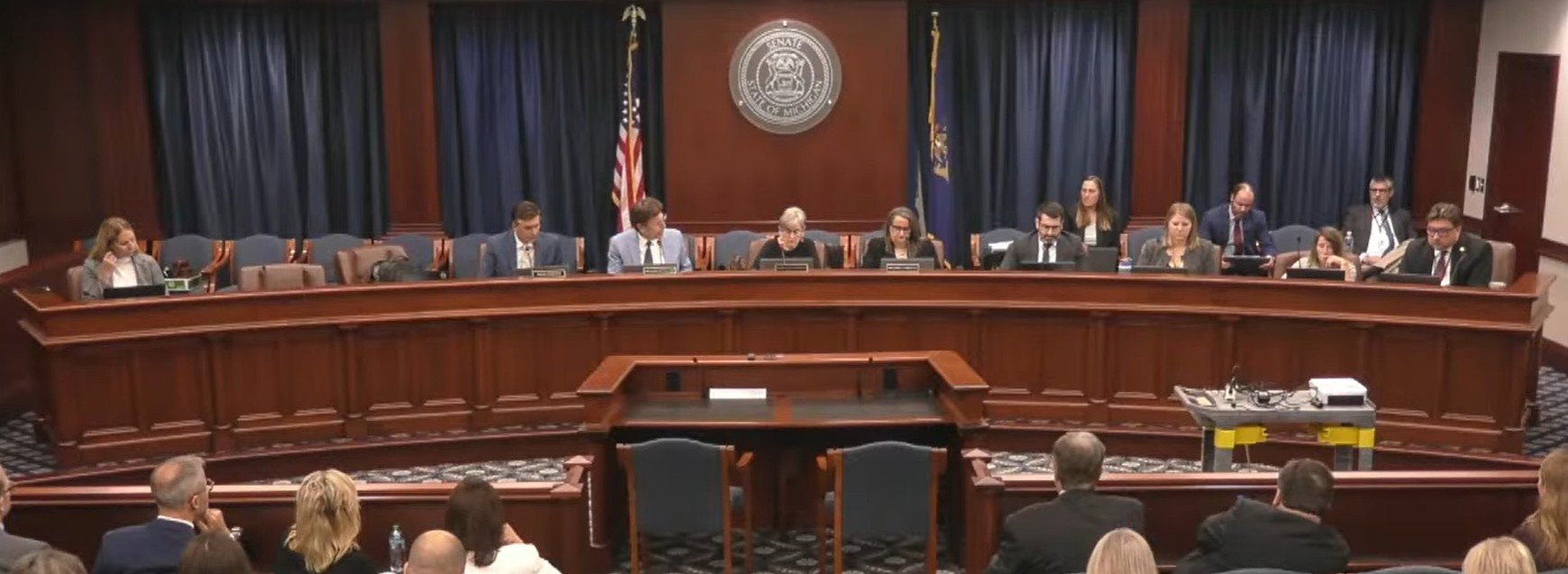
LANSING, Mich. (WZMQ) – The Michigan Board of State Canvassers voted to certify the Michiganders for Money Out of Politics initiative for the November ballot after hours of testimony over whether the petition contained enough valid signatures.
The proposal required an estimated 356,958 valid signatures to qualify. Using the board’s random sampling process, Bureau of Elections staff determined the petition met the required threshold after reviewing a challenge filed by opponents. Staff ultimately estimated 657 valid signatures in the 1,000-signature sample, above the 636 needed for certification.
Attorneys representing Protect MI Free Speech argued the petition should not be certified, saying the remaining margin was too narrow and that the board could not be certain the initiative met the constitutional requirement.
“We’re here to demonstrate why there aren’t enough valid signatures to certify the proposal to the ballot,” attorney Gary Gordon told the board. “If you do the math, and if the 2.5% error rate falls to the negative, then that drops the validity rate to 63.2%, which is below the margin of error. That’s not adequate for this board to rule with certainty that there are enough valid signatures presented.”
Gordon also argued the challenge uncovered duplicate signatures, circulator issues and other problems that he said should have disqualified additional signatures.
Supporters of the initiative countered that the board should follow the petition review process it previously adopted rather than reconsider its methodology during an active certification.
Attorney Michael Brady, representing Michiganders for Money Out of Politics, told the board the petition reflected a broad citizen effort.
“What we have here today is the culmination of thousands of Michiganders, of Michigan citizens, Republicans, Democrats, and independents exercising their constitutional and statutory right to reform their government,” Brady said. “That should be celebrated.”
Brady also argued the board’s established sampling procedures should remain in place throughout the review process, saying changing the rules during an active petition challenge would be unfair.
Bureau of Elections Director Jonathan Brater acknowledged staff discovered additional issues during the review process, including duplicate signatures identified through the challenge and administrative errors involving scanned petition sheets. However, he said those issues did not change the bureau’s recommendation.
“Ultimately, based on a review of the sample, a review of the challenge… it remains our recommendation that the petition be determined sufficient because we do estimate that it has a sufficient number of ballot signatures,” Brater said.
Following the testimony and board discussion, the Board of State Canvassers voted to certify the petition, allowing the proposal to move forward for consideration by Michigan voters in November.