MACKINAC ISLAND, Mich. (WZMQ) – Michigan’s race for governor took center stage during the final day of the Mackinac Policy Conference, as leading Democratic and Republican candidates laid out competing visions for the state’s future.
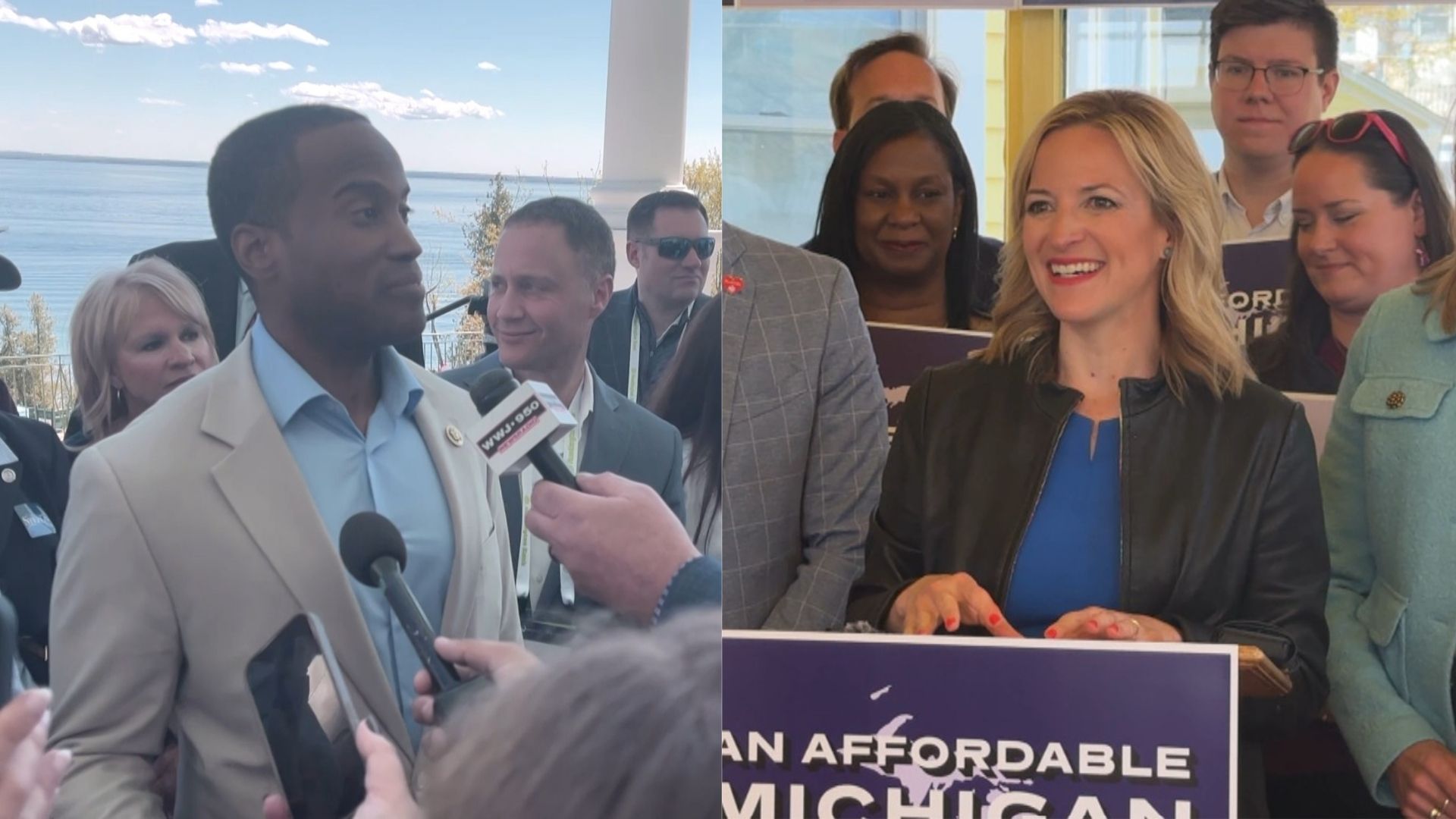
The conference featured appearances from Republican Congressman John James and Democratic Secretary of State Jocelyn Benson, both widely viewed as front-runners in their respective primaries. Other candidates running for governor also attended, including Democrat Chris Swanson and Republican Perry Johnson.
James addressed reporters Wednesday, focusing heavily on economic opportunity and limiting government involvement in people’s lives.
James added that he believes the answer is not in Lansing, and argued Michiganders should have the freedom to excel on their own terms.
Benson spoke on Thursday, centering her remarks around affordability, education, and energy costs. She argued that the state government needs to take a more active role in lowering costs for families.
“For too many, costs are going up with no real end in sight,” Benson said. “We have a responsibility to change that.”
Benson also criticized what she described as a lack of federal leadership, saying state officials will need to step up to address economic concerns.
The Republican front-runners saw signature verification at the board of state canvassers, which brought renewed attention to tensions within the Republican primary after James’ campaign alleged staff connected to Perry Johnson altered petition forms submitted to qualify Johnson for the ballot.
The Michigan Board of State Canvassers ultimately certified Johnson’s signatures as valid, allowing him to remain on the August primary ballot.
On the Democratic side, candidates are also navigating the impact of Detroit Mayor Mike Duggan ending his independent gubernatorial campaign, which could reshape the general election landscape in November.
The Mackinac Policy Conference has long served as a major political networking event in Michigan, giving candidates an opportunity to speak directly to business leaders, donors and party officials while testing campaign messages ahead of the election season.