
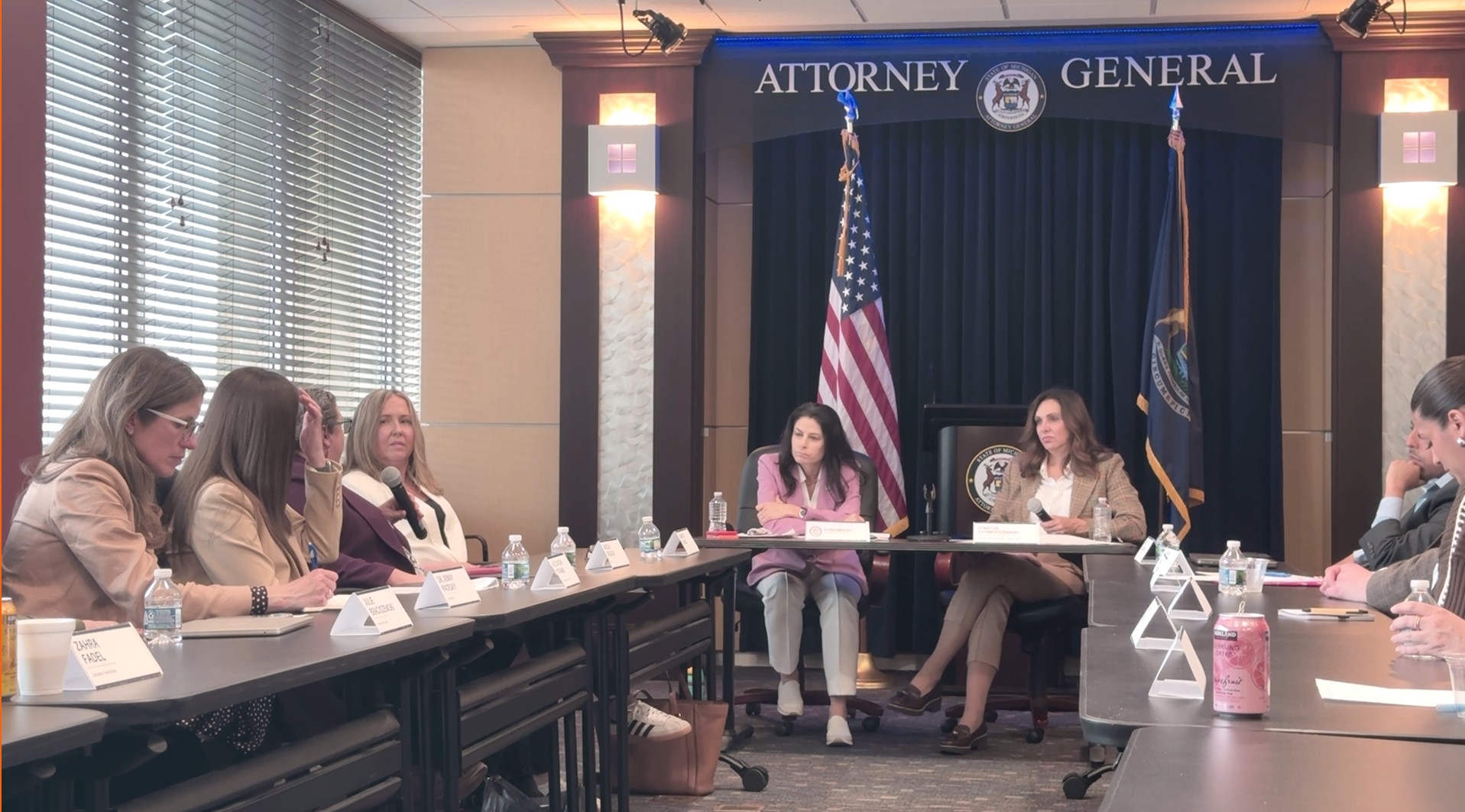
LANSING, Mich. (WZMQ) – Michigan Attorney General Dana Nessel and state Sen. Dayna Polehanki convened a roundtable Thursday with youth leaders, medical experts, and parents to highlight concerns about the impact of social media and artificial intelligence on children.
The discussion centered on a package of bills known as Kids Over Clicks, which aims to limit addictive platform features, strengthen privacy protections for minors, and regulate how AI chatbots interact with young users.
Nessel said the issue has evolved significantly over the past decade, as smartphones and social media have become more embedded in daily life.
“We could see what was happening as parents, but we didn’t really have that much information from a scientific standpoint yet,” Nessel said. “You knew it was bad, but you didn’t know why.”
Polehanki, one of the bill sponsors, said the legislation reflects growing evidence that online platforms are designed to maximize engagement, often at the expense of children’s well-being.
“We can’t keep asking kids themselves and parents to bear the consequences of technologies that prioritize engagement over safety,” she said.
The proposed legislation would restrict personalized algorithmic feeds for minors, prohibit targeted advertising to children, and require default high-privacy settings. Another measure would place guardrails on AI chatbots, banning interactions that promote self-harm, violence, or other harmful behaviors.
Medical experts at the roundtable pointed to research linking social media use to sleep disruption, anxiety, and developmental concerns.
“These designs clearly benefit the companies,” said Dr. Jenny Radesky, a developmental behavioral pediatrician. “But they don’t align with kids’ need for sleep, focus, or healthy development.”
Students also shared personal experiences, describing pressure tied to online image and exposure to unwanted interactions.
“A lot of us regret having social media when we were younger,” said Michigan State University student Katherine Johnson. “We all have a story about how it affected us.”
State officials said they are also seeing real-world consequences tied to online activity, including cases involving exploitation that begin on digital platforms.
The bills have advanced out of committee but face opposition from some business groups and technology companies. Lawmakers say they are working to craft the legislation carefully to withstand potential legal challenges, including those related to the First Amendment.
Despite uncertainty about final passage, Nessel said public awareness and bipartisan concern are growing.
“This might be one of the most bipartisan issues I’ve ever seen,” she said. “We all want the same thing, to protect our kids.”