
LANSING, Mich. (WZMQ) – As Michigan’s ballot access deadline approaches, candidates across several high-profile races are turning in petition signatures to secure spots on the August primary ballot.
In the republican U.S. Senate race, former congressman Mike Rogers announced he filed 30,000 signatures, the maximum allowed under state law and double the required minimum. His campaign described the effort as a sign of strong grassroots backing, with Rogers saying thousands of Michiganders are “ready for a change” and pointing to concerns about housing, jobs, and education.
On the democratic side, U.S. Rep. Haley Stevens also submitted 30,000 signatures, the first democratic senate candidate to file. Her campaign cited polling strength, particularly among independent voters, and highlighted a broad coalition of endorsements from labor unions, elected officials, and national democratic leaders.
other democratic candidates have also reached key filing milestones, as previously reported by WZMQ 19 News.
State Sen. Mallory McMorrow submitted 30,000 signatures, emphasizing a volunteer-driven effort with more than 2,000 people collecting signatures across all 83 counties. She said the campaign did not rely on paid canvassers and framed the submission as an early sign of organizational strength.
Former Detroit Health Director Abdul El-Sayed filed 29,750 signatures, nearly double the requirement. He said more than 500 volunteers and campaign staff helped gather signatures statewide, calling the effort proof of grassroots momentum and voter demand for alternatives to the current political system.
In the governor’s race, Secretary of State Jocelyn Benson submitted 30,000 signatures, with her campaign pointing to what it described as a “people-powered coalition” built over more than a year on the campaign trail.
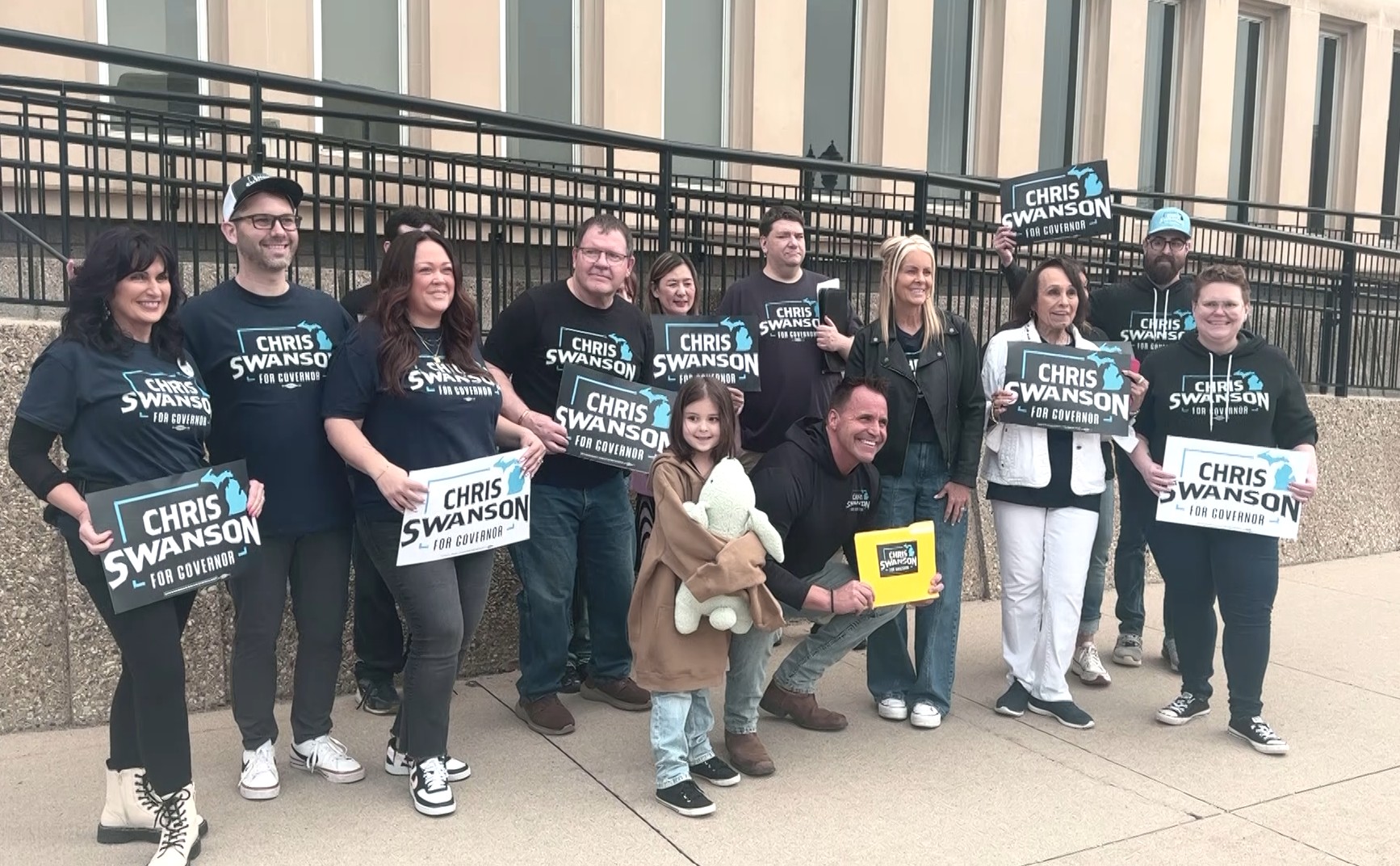
Genesee County Sheriff Chris Swanson also filed 26,752 signatures collected from all 83 counties. Swanson delivered the petitions to Lansing after traveling the state, describing his campaign as focused on working-class voters and broad geographic outreach.
Candidates must submit a minimum number of valid signatures to qualify for the ballot, often collecting well above the threshold to account for potential invalid entries. With the April 21 deadline approaching, campaigns are racing to finalize submissions before shifting fully into primary campaigning.
Michigan’s August primary is expected to draw significant national attention, particularly the open U.S. Senate race, as both parties compete for a seat that could play a key role in determining control of the chamber in November.