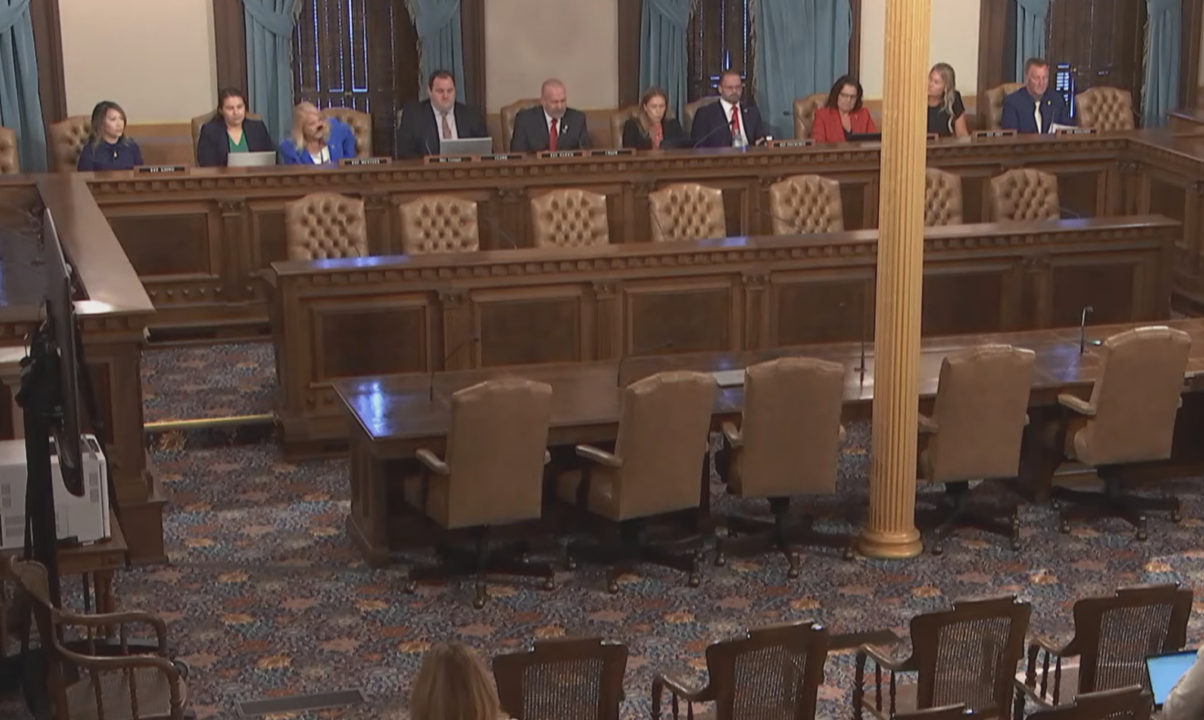
LANSING, Mich. (WZMQ) – A Michigan House committee looking into why a citizen voting petition never made it onto the November ballot held its first hearing Tuesday. Read our original story on the committee here.
Here’s the background: the group Americans for Citizen Voting turned in more than 700,000 signatures to get its proposal on the ballot. Under state rules, officials check a random sample of 1,000 signatures to estimate whether the whole batch is valid. That sample needed to show at least 446,198 valid signatures, and the state’s Board of Canvassers deadlocked 2-2 along party lines on Aug. 24 over whether it did. Both the Michigan Supreme Court and the U.S. Supreme Court declined to step in, which ended the group’s chances for this year’s ballot. Americans for Citizen Voting says it plans to try again in 2028.
State Rep. Mike Harris, R-Waterford, who chairs the new committee, opened Tuesday’s hearing by making clear the panel isn’t there to weigh in on whether the ballot proposal itself was a good idea.
“We are not here to decide whether we agree with the proposed amendment,” Harris said. “We are not here to relitigate a political campaign. And we are not beginning this investigation with a conclusion about whether anyone did anything wrong.”
Instead, Harris said the committee wants to understand how the state’s signature-checking process actually worked. He said members will compare this petition drive to another recent one, Michiganders for Money Out of Politics, which also came close to the threshold but ended up on the ballot, to see whether the same rules were applied the same way both times.
“Were the same rules applied? Were the same standards used? Were similar circumstances treated similarly?” Harris said. “We don’t know those answers today, and that’s why this committee exists.”
Harris said the committee has invited people from both petition groups to testify, along with the officials who run the signature-checking process, and will request records as the investigation continues. He said tough questions shouldn’t be read as accusations against anyone.
“Difficult questions are not accusations,” Harris said. “Oversight is not harassment, and disagreement is not evidence of misconduct.”
“Facts first, conclusion second,” Harris said. “That standard will apply to everyone.”
Tuesday’s meeting was mostly procedural. The committee adopted a rule for how it will operate going forward, then adjourned without hearing testimony.