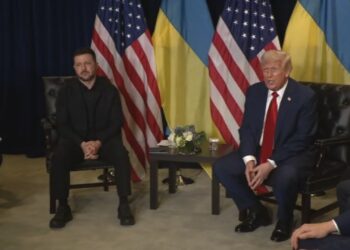
WASHINGTON, D.C. — One week after agreeing to purchase hundreds of thousands of gallons of Russian diesel, President Trump is facing additional backlash over a decision to waive new sanctions on Moscow.
The move is sparking bipartisan concern over whether it will help end the war or benefit Russia.
As Ukraine faces more deadly attacks, President Trump is defending his decision to ease pressure on Moscow by waiving additional sanctions related to Russian fossil fuel sales.
“My decision on Russia is a very simple one. I am in the process of negotiating Peace in the war between Russia and Ukraine, and don’t want to do anything that will drive, foolishly, Russia away from the bargaining table. Great progress is being made, and that includes current hostage negotiations!” the president wrote on Truth Social Sunday.
It comes one week after announcing a deal to purchase Russian diesel.
“It’s because he wants to see if there’s an opportunity for the talks that are going on right now with both Ukraine and Russia to lead to something positive and avoid another disastrous year of war and conflict,” said Secretary of State Marco Rubio. “The president’s been clear, he’d like the war in Ukraine and Russia to end… We’ve done everything we can, and we will continue to do everything we can to help facilitate the end of that war.”
The White House says the goal is peace, not concessions to Putin.
“The main sanctions on Russia are all still on,” said Secretary of Energy Chris Wright. “President Trump waived sanctions just on diesel exports. And what’s the one thing Russia has not been able to export over the last month or so? Diesel. Because they’re short of diesel. The world is short of diesel. And President Trump is relentlessly looking for ways to bring cost relief to Americans.”
“Instead of offering economic relief from the high prices he has inflicted on the American people, President Trump is giving relief to murderous dictator Vladimir Putin,” said Sen. Kirsten Gillibrand, D-N.Y. “This exemption defies logic and compromises our national security. This action does nothing to lower costs for working families; it simply rewards Putin for the indiscriminate killing of innocent civilians.”
In a recent letter to the White House, a bipartisan group of senators expressed similar remarks, warning the recent relief for Russia will aid its war efforts and undermine the bipartisan “Graham Act,” which imposes tough sanctions on top buyers of Russian energy. The Graham Act was signed into law last month and is named after the late Sen. Lindsey Graham, who was a fierce advocate for tougher punishments on Russia.
Graham’s sister, Senator Darline Graham, R-S.C. — who is running to retain her late brother’s seat — said the law is a key tool to keep pressure on Russia.
“It’s up to him whether or not he chooses to use it,” said Sen. Graham. “Personally, I would choose to keep the pressure on Russia to end the war and get the gas prices down.”
The diesel agreement and easing of other sanctions come just over two weeks before the Nov. 3 midterms, where the economy and fuel prices continue to dominate the political landscape.
“I would have voted for the sanctions bill. If the president has a better idea to get diesel prices down, I’d be for it. I’m just a little skeptical that this will work in the way that the administration wants it to work, and we’re paying a pretty heavy price here in Michigan,” said Mike Rogers, the Republican Senate candidate in Michigan.