
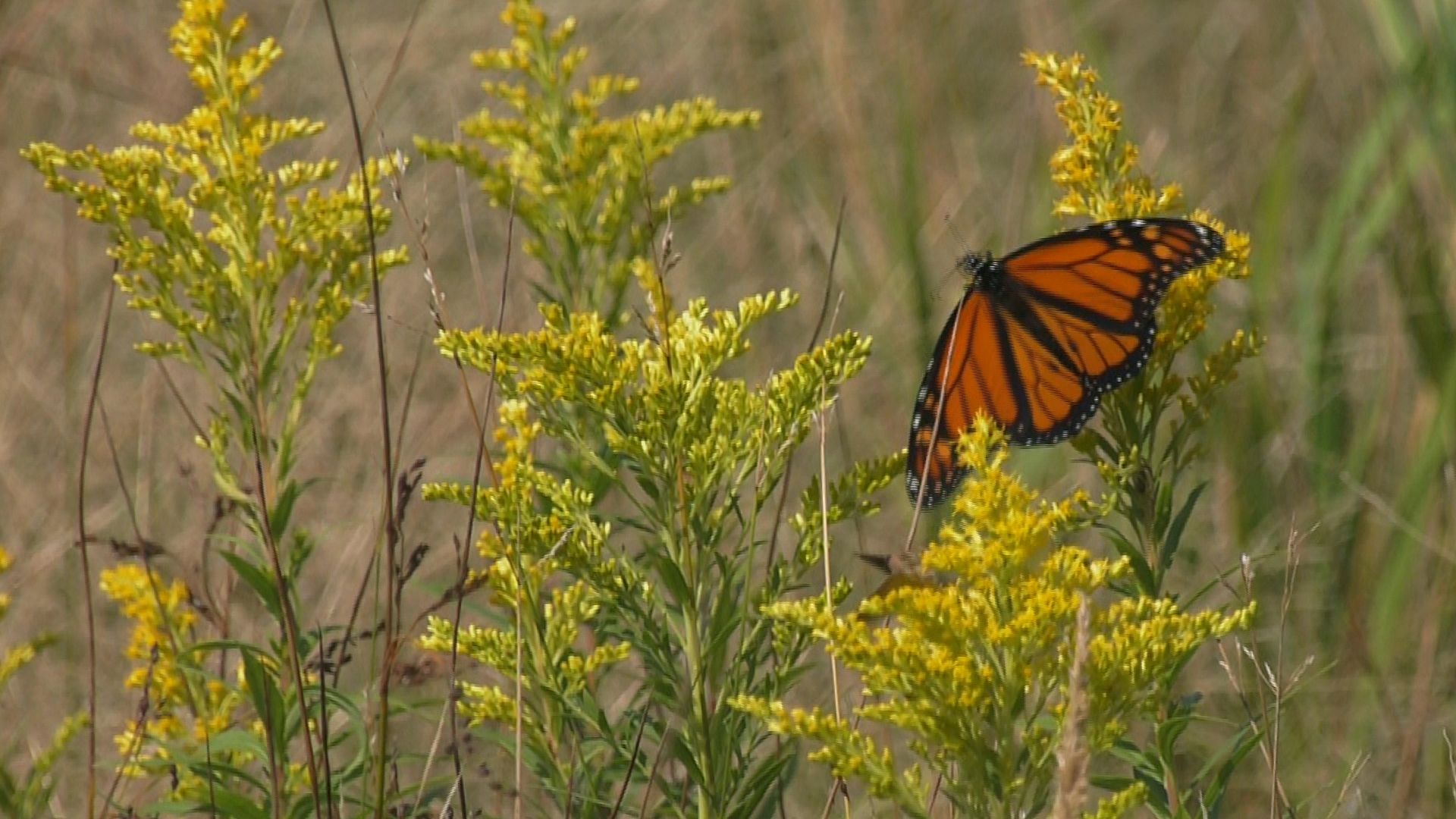
STONINGTON PENINSULA, Mich. (WZMQ) – If you visit the Stonington Peninsula now through mid-September, you might find an extra pop of orange fluttering through the flowers.
At the end of each summer, monarch butterflies migrating from Canada to Mexico make a pit stop in the Upper Peninsula.
“They kind of come down through the northwest, through the Great Lakes area,” said Opal Hoffmann, a community volunteer with the Monarch Project. “They get funneled down the peninsula. We’re at the shortest point across the water, and they can cross over to Door County in favorable winds.”
Depending on the weather, hundreds to thousands of monarch butterflies visit Peninsula Point in a given season.
“The monarchs that migrate to Mexico are actually called super monarchs,” Hoffmann said. “They live eight to nine months, versus the regular monarch only lives two to five weeks. One trip down to Mexico, then upon their return, it’s more like three and four generations by the time they reach here.”
The Monarch Project has been tracking the butterflies for more than 30 years, in partnership with the U.S. Forest Service and Wildlife Unlimited of Delta County.
“We place a little sticker on their wing, and it’s numbered,” Hoffman explained. “It’s recorded with Monarch Watch. There’s other people just like us all the way en route to Mexico, so they can see how far the monarch goes. They can keep track of their health, their habitats on the way down.”
The Monarch Project is also testing them for the ophryocystis elektroscirrha, a parasite that primarily targets females. According to Hoffmann, although the parasite was discovered in the 1960s, it is currently spreading to the north.
“Every time [a monarch] stops on a milkweed, a few of those spores drop off,” she said. “When their offspring eats it, they can become infected. It can cause deformities. They might be weak, or they might not be able to migrate.”
While at the point, the monarchs search for nectar during the day. At night, they camouflage themselves by roosting in the cedar trees.
“When it’s cold, they kind of group together for warmth,” said Hoffmann. “In the morning, if winds are favorable, they will leave. If not, they might flutter around for a while, dry off their wings, energize.”
It is a sight that draws people to Peninsula Point year after year. Every September, U.P. Wild hosts a Blessing of the Monarchs to send the butterflies off on their journey. This year’s event is scheduled for Wednesday, September 2, at 5:30 p.m.
For monarch enthusiasts, the migration is an opportunity to catch one of nature’s most colorful phenomena right here in the U.P.
“We’re 2,000 miles north of where they go,” Hoffmann said. “Just like they would see in Mexico, we can see them hanging in the trees, and it’s just a really cool sight. They’re just a very remarkable creature.”
To try to spot the monarch butterflies before they take off, visit Peninsula Point at 3722 County 513 T Road.