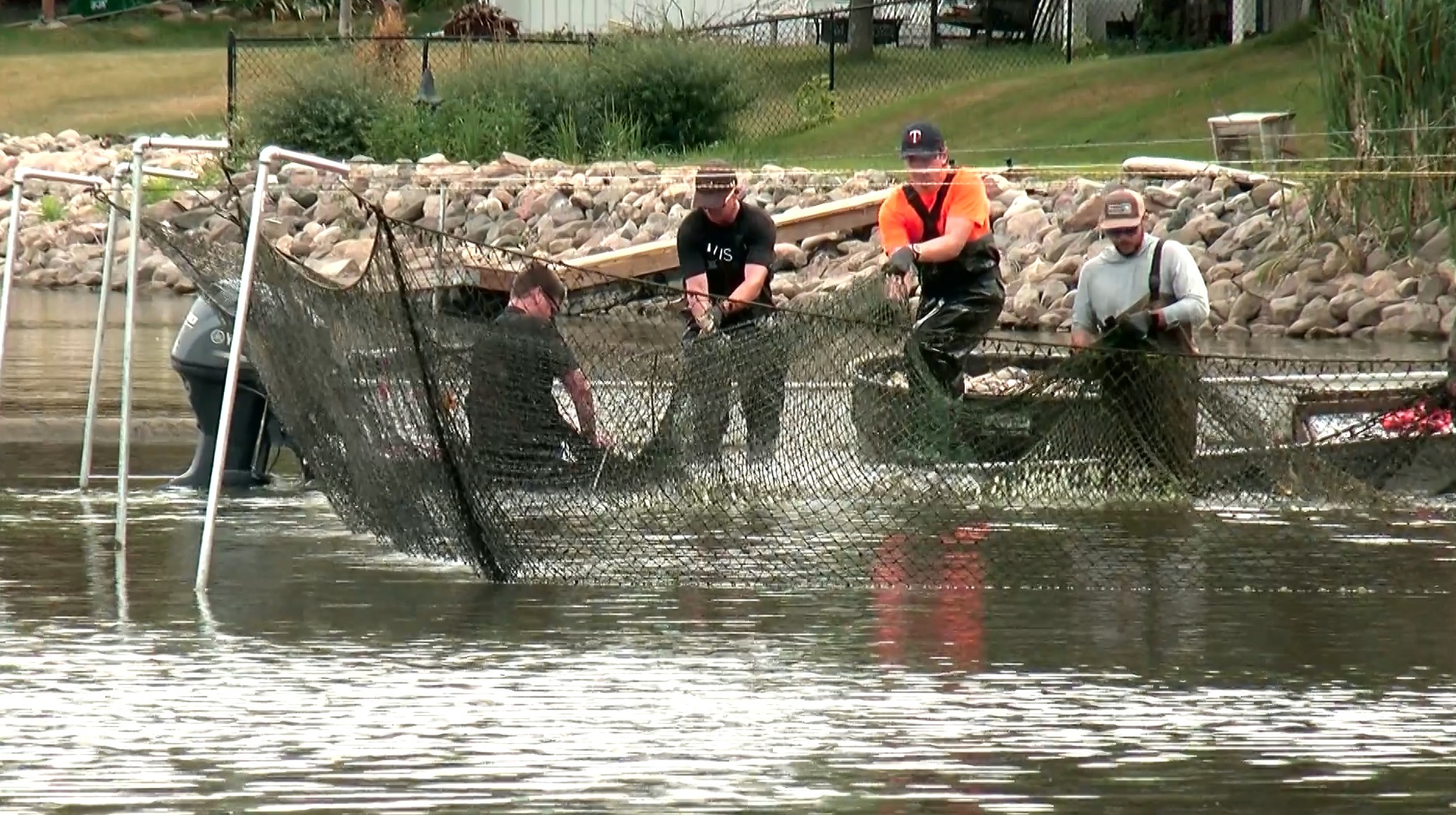
LANSING, Mich. (WZMQ) – For nearly 200 years, the Ruleau family has made its living on the waters of the Great Lakes.
Their business, Rulo Brothers in Cedar River, predates Michigan statehood. But after generations on the water, Skyler Ruleau worries about what comes next.
“We’re just a small operation just trying to succeed here,” Ruleau said. “And it’s hard, it’s really hard.”
What was once a major Michigan industry has dwindled to just a handful of family-run operations. According to lawmakers backing new legislation, only three full-time commercial fishing businesses remain in the state.
Ruleau says many people misunderstand what commercial fishing looks like today.
“It’s mom and pop type stuff. It’s very small. It’s very family. We’re not this Kellogg type industry,” he said.
That reality has brought together two lawmakers from opposite sides of the political aisle.
Representatives Dave Prestin (R-Cedar River) and Jason Morgan (D-Ann Arbor) have introduced legislation they say is aimed at preserving one of Michigan’s oldest industries while maintaining protections for the Great Lakes.
“This bill is focused on what I would consider common sense updates to rules that haven’t been updated in like 50 to 60 years,” Morgan said.
The proposal would not remove oversight from the Department of Natural Resources. Instead, it would allow the agency to set quotas for additional species when scientific data supports it, while continuing to regulate harvest levels and fishing areas.
Supporters say one of the biggest frustrations for commercial fishers is watching fish they cannot legally sell end up back in the water. At the same time, many restaurants and grocery stores purchase Great Lakes fish harvested by Canadian operations.
“The majority of fish that you buy in Michigan is from the Great Lakes, but from Canada,” Morgan said. “Because they’re allowed to catch walleye and lake trout and we don’t allow ourselves to catch them.”
Prestin says the goal is not to increase fishing without limits. Both lawmakers say they have spent months working with environmental groups, recreational anglers and the DNR to find common ground.
“There’s nothing in the legislation that compels the DNR to allow them to catch it. It only allows the DNR to set a quota if they so wish,” Prestin said. “We’re working with all stakeholders to hopefully work towards a bill package that is amenable and acceptable to everyone,”
For Ruleau, the debate is about more than regulations. He sees it as a fight for the future of a family tradition that has survived for generations.
“I want to see my family succeed. I want to see the generations after me succeed,” Ruleau said. “Without these bills, the light at the end of the tunnel doesn’t look as bright.”
The legislation recently received its first hearing in the House Natural Resources and Tourism Committee. Lawmakers say discussions with stakeholders are ongoing.