LANSING, Mich. (WZMQ) – A bipartisan group of Michigan lawmakers is proposing a new state-funded research program studying ibogaine, a psychedelic compound supporters say could help veterans and others struggling with PTSD, opioid addiction, and traumatic brain injuries.
House Bill 6020, introduced by Jaime Greene and a bipartisan coalition of lawmakers, would create an ibogaine grant program within the Michigan Department of Health and Human Services. The proposal would invest $50 million from Michigan’s opioid settlement fund into FDA-supervised clinical trials and research partnerships.
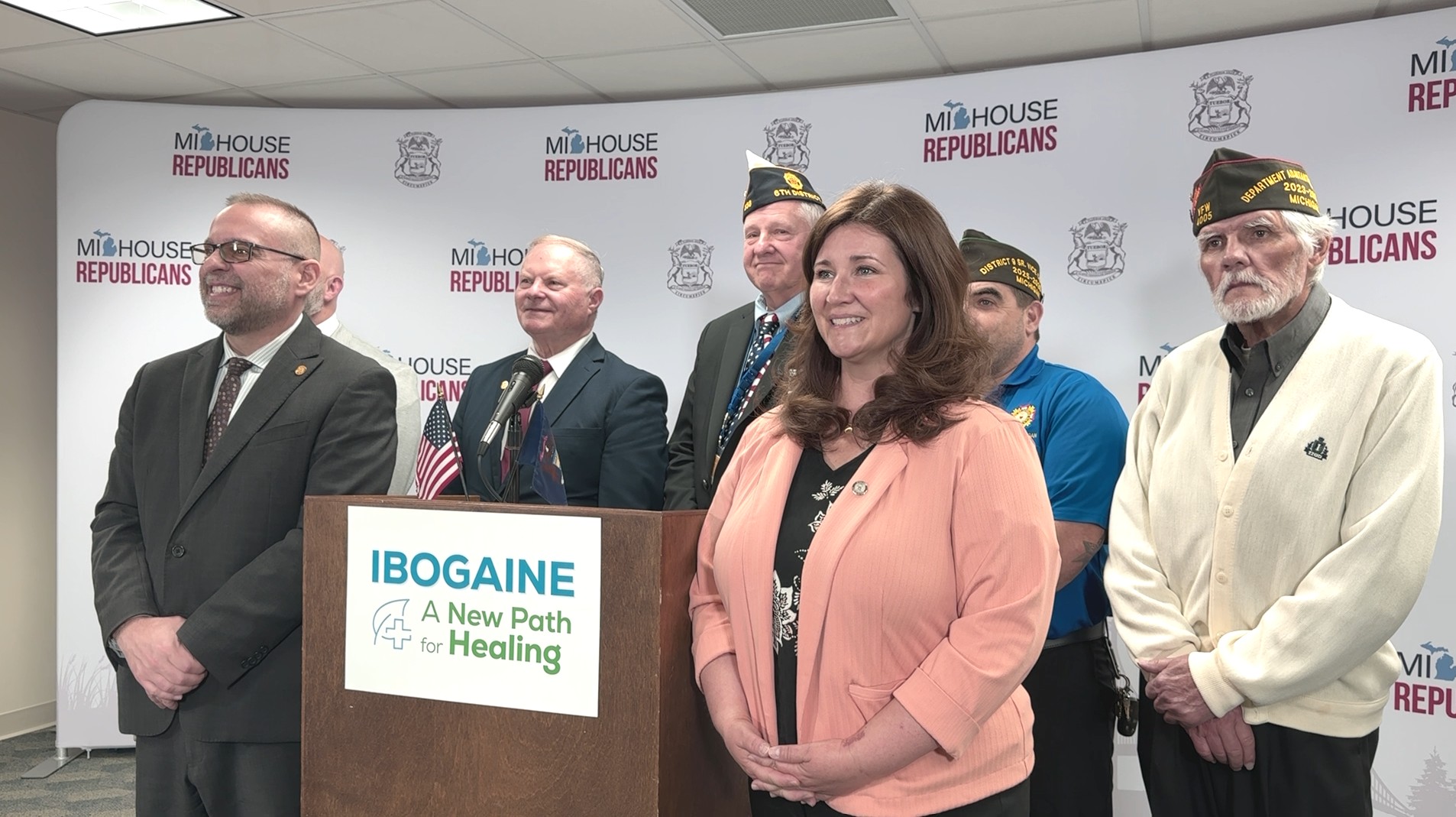
Greene, a Navy veteran who has firsthand experience with the impacts of PTSD, framed the issue as both personal and urgent during a Capitol press conference ahead of Memorial Day.
“This is really important to me as a Navy veteran who has PTSD,” Greene said. “I haven’t been shy about my own condition and even my own medical journey.”
Greene said her search for treatment eventually led her to learn about veterans traveling to clinics in Mexico for ibogaine therapy because the drug is not approved for medical use in the United States. Ibogaine remains classified as a Schedule 1 controlled substance federally and under Michigan law, though the bill would create limited exemptions for research and medically supervised treatment.
“This is not legalizing ibogaine,” Greene said. “This is a hospital research facilitated plan.”
The legislation would allow Michigan to participate in multi-state research consortiums involving hospitals, universities, and drug developers pursuing FDA approval for ibogaine-based treatments. Participating institutions would need advanced neurological expertise and cardiac intensive care capabilities because of known safety risks associated with the drug.
Representative Mike McFall, a Democratic co-sponsor, said lawmakers should pursue alternative treatment options as veteran suicide and opioid addiction continue to affect families across the country.
“We are losing an average of 20 veterans every single day to suicide,” McFall said. “That statistic is unacceptable.”
Supporters of the bill include the American Legion, which said its national organization has passed several resolutions supporting controlled research into psychedelic-assisted therapies.
Jeff Lawrence of the Reason Foundation argued ibogaine research has shown promise in treating opioid addiction and traumatic brain injuries, though many of the claims cited by supporters remain under ongoing scientific review.
The bill would not allow unrestricted public use of ibogaine. Instead, it would create a narrow exemption allowing its use in approved research settings and under physician supervision if the FDA eventually approves the treatment.