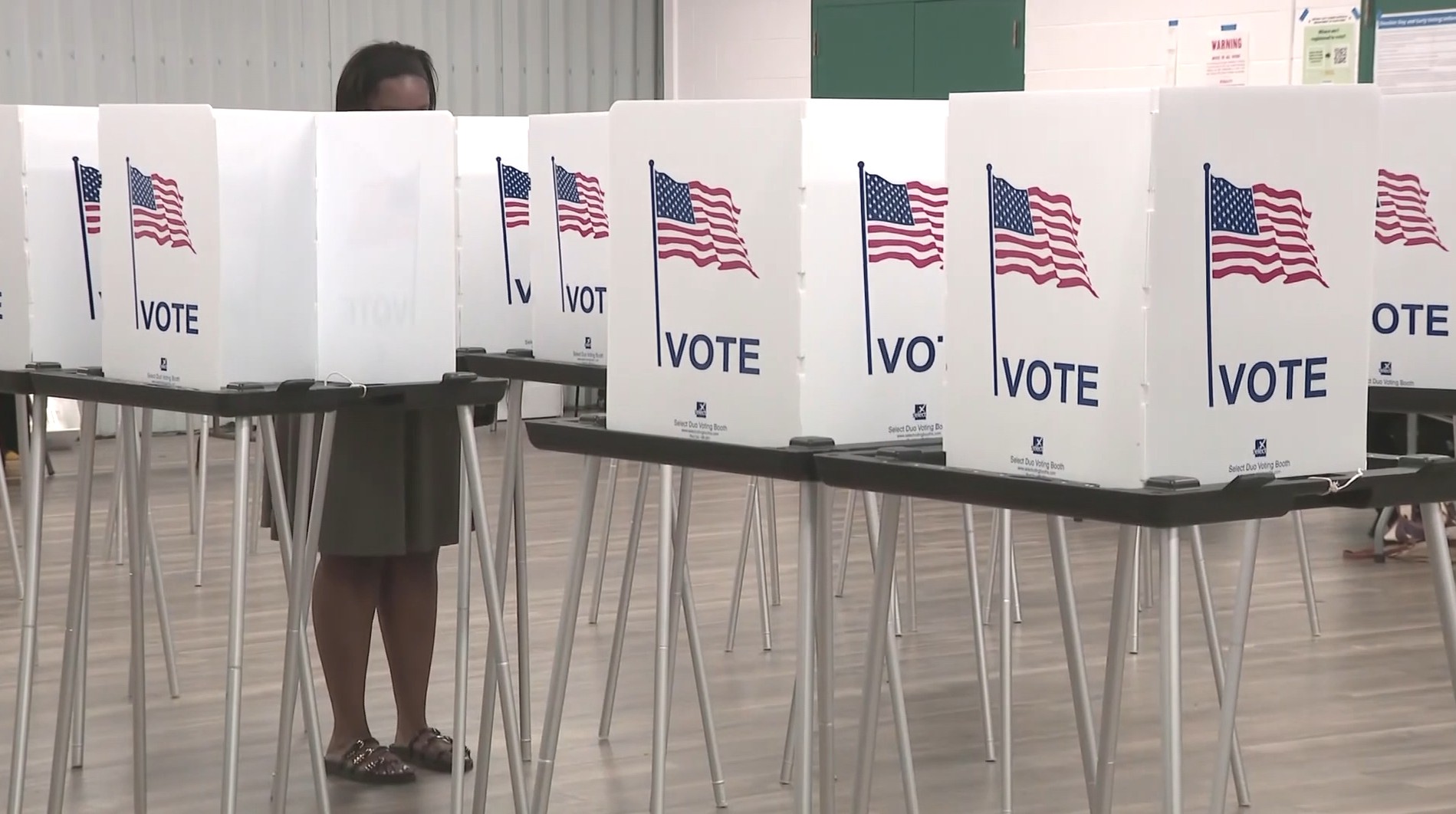
LANSING, Mich. (WZMQ) – Nearly 2.4 million Michiganders voted in Tuesday’s primary, and voting rights advocates say the mix of mail, early and Election Day ballots shows what drove the record turnout, and where access still fell short.
Michigan’s Aug. 4 primary drew roughly 2.4 million voters, already surpassing the state’s 2022 midterm primary turnout, according to Voters Not Politicians, a nonpartisan voting rights group that tracks election access across the state.
The Upper Peninsula tracked closely with that statewide surge. Across the region’s 15 counties, 30.53% of registered voters cast a ballot, essentially matching the statewide turnout of 30.7%. Turnout within the U.P. varied widely by county, from a regional high of 39.4% in Keweenaw County to 24.7% in Gogebic County, but the region as a whole kept pace with the rest of Michigan.
Melinda Billingsley, director of communications for Voters Not Politicians, pointed to competitive statewide primaries on both sides of the ballot as a driving factor. Both the Democratic and Republican gubernatorial primaries drew large numbers of voters despite uneven name recognition among candidates, she said.
“It just goes to show when people feel like they have a real choice in front of them, it’s not just both parties are the same or my vote doesn’t matter,” Billingsley said. “When people feel like their vote is going to make a difference in the results of the election, and when they have access, when they have options to be able to cast their ballot, they’re going to come out and vote.”
More than 1.3 million of the state’s ballots came in by mail, and that total had already outpaced all of the mail ballots cast in the entire 2022 primary before polls even opened Tuesday morning, according to the Michigan Secretary of State’s office. Michigan has had no-reason absentee voting since 2018, meaning any registered voter can request a mail ballot without providing a reason.
Another milestone came in early in-person voting. More than 130,000 people cast ballots during the nine days of early in-person voting available ahead of the primary, a record for an August election in Michigan. Because of Michigan’s same-day voter registration law, more than 2,800 residents also registered to vote and cast a ballot at their local clerk’s office on Election Day itself.
Billingsley said one focus for Voters Not Politicians heading into November is making sure more voters know early voting is available to them. “A lot of people might know about early voting, but don’t necessarily know which elections they have that option, because it is not every election, but it is statewide elections,” she said.
But the primary wasn’t without hiccups. Billingsley said some last-minute polling location changes on Election Day weren’t always relayed from local clerks to the Secretary of State’s office, leaving some voters confused about where to go. “Voters ended up getting turned around or were confused about where to go, and that actually ended up meaning that some voters just chose not to participate because it was too difficult to figure out even where to vote,” Billingsley said.
That’s part of why the group trains nonpartisan poll challengers, Billingsley said, describing one incident during the primary in which a poll worker mistakenly told a voter that a t-shirt supporting a presidential candidate not currently on the ballot counted as prohibited campaign apparel. A poll challenger flagged the issue and got legal guidance confirming the voter’s shirt was allowed, and the voter was able to cast a ballot.
“They misunderstood the guidance, because obviously not all of us practice election law all day long,” Billingsley said. “But really it goes back to our goal with our poll challengers and poll worker education and training: to make sure that all the processes are followed and everyone who has the right to vote can cast their ballot.”
Deputy Secretary of State Aghogho Edevbie struck a similar note of confidence in a statement after polls closed Tuesday, thanking the state’s 1,600 local clerks and poll workers. “No matter how you vote, or who you vote for, you can be confident, as always, that your vote will count, and that the election results will reflect the will of the people,” Edevbie said.
Looking ahead to November, Billingsley said preserving the access voters had this cycle is now the priority. “We want to make sure that the access that voters had for this August election, that went really well, we want to make sure voters have that same access for November and for every election going forward,” she said.
Election officials are now moving into the canvassing process, in which bipartisan boards review ballot and voter counts to confirm accuracy. County canvassers must certify results by Aug. 18, and the Board of State Canvassers must certify the statewide results by Aug. 24.
The November general election is now less than three months away.