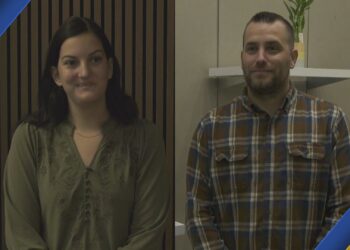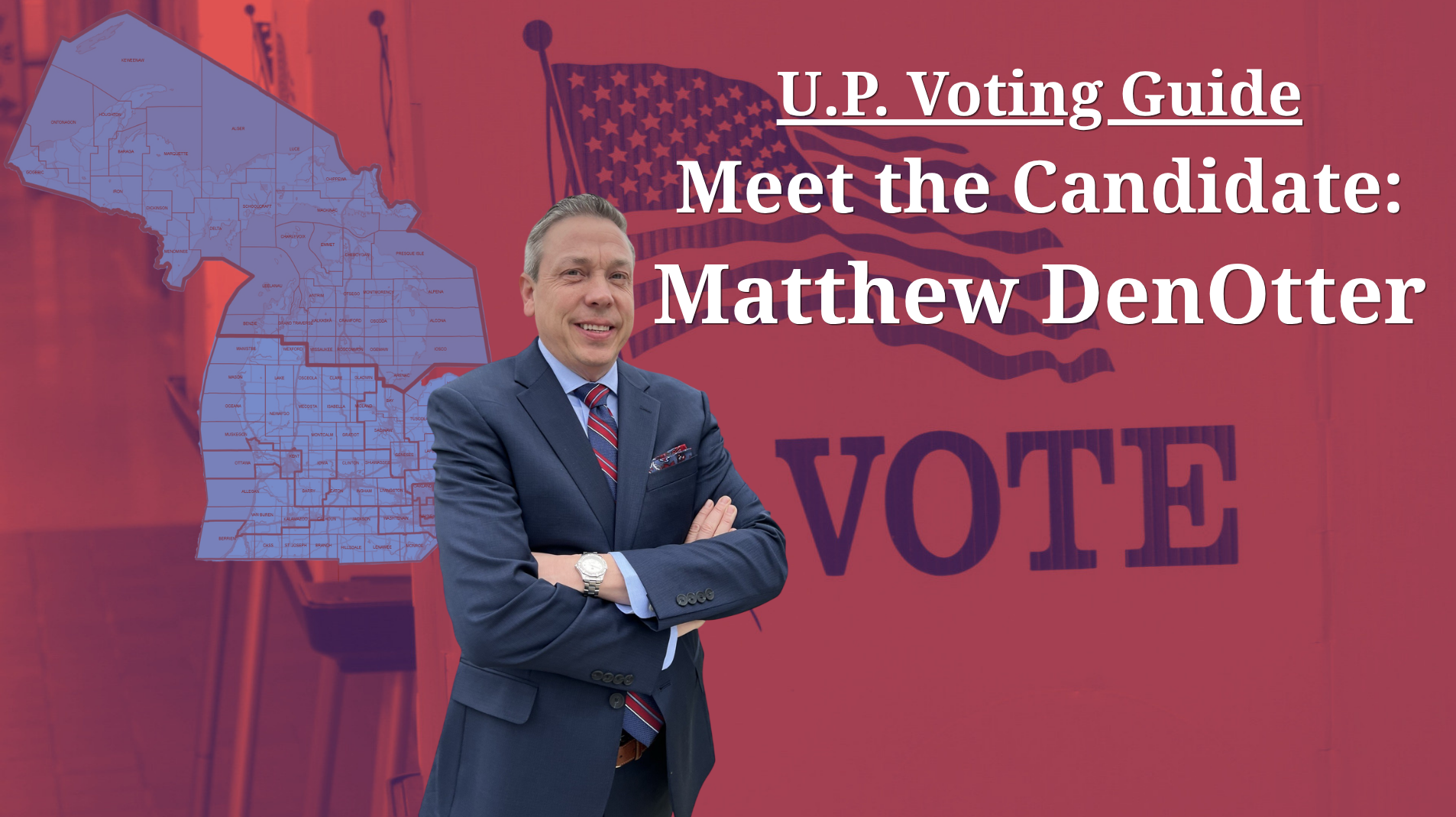
LANSING, Mich. (WZMQ) – Michigan’s 1st congressional district covers the entire Upper Peninsula and most of northern Michigan, making it one of the largest U.S. House districts east of the Mississippi River. Republican Jack Bergman, who has held the seat since 2017, is seeking a sixth term. Matthew DenOtter, a healthcare industry veteran, and Justin Michael are both challenging him in the Republican primary. Michigan’s primary is Aug. 4, with early in-person voting underway.
Q: Tell me a little about yourself: where you’re from and what made you decide to run for office.
I grew up in Grand Rapids and went to Calvin Seminary, but realized my calling wasn’t the pulpit, it was other areas, like healthcare, where I spent 25 years. My first stop was Marquette, where I lived in Harvey for four years and bought a home. Unfortunately, like a lot of people in the U.P., I lost my job, there just isn’t enough work up there. So I moved downstate, first to the Detroit area, where I lived in Highland and other spots, and enjoyed it. Eventually I moved back up to northern Michigan, back to my roots.
I didn’t move up here for politics. I’m not a politician, I’m a businessman, and I want to function as one in politics. I think that serves people well: you treat voters like your boss, your stakeholders. You hold town halls, you get information out, and it’s not about the drama, it’s about solutions and getting on the same page. My 25 years in healthcare have served me well, because that’s the primary issue up here. Northern Michigan has become a healthcare desert. People are driving an hour and a half to two hours for services, or getting diverted to Wisconsin or even down to Lansing. We want to change that: bring in competition, maybe another hospital system, and incentivize healthcare so those jobs pay more to come up north than to stay downstate. That’s something Congress can actually do through appropriations. Because I’ve been in healthcare for 25 years, I can go there and educate other legislators on the actual problem, because I don’t think they understand it, and if you don’t understand what’s broken, you can’t fix it.
Q: This seat has been held by Jack Bergman for five terms. What’s your message to voters about why you’re the strongest candidate in this race?
For one, I’m a lot younger. I joke with voters that I can run faster than Jack because I’m 52 and he’s 80. That’s not a knock on him; he’s served ten years, and I think it’s time for younger change, new ideas, someone who understands and can use new technology. But I also understand the community and the pulse of the people, because I’ve lived here, not just in the U.P. but in northern Michigan generally. I understand that people up here don’t want data centers, something I don’t think Jack understands, since he supported the SPEED Act, which strips out local regulation or say in where data centers go. That’s a problem, because we have three Great Lakes worth of glacier water in this district that can’t be replaced. I want to return that decision-making to the people, so local decisions direct federal policy rather than the other way around.
Q: How would you work with lawmakers across the aisle, and people who disagree with you, to bring resources home to Michigan?
As a leader, you have to unite people. That’s something a lot of politicians don’t do well. I want to unite Northern Michiganders around a handful of bipartisan issues: healthcare, broadband, jobs, schools, keeping our kids here. Get everybody together on what unites us first, and then tackle the harder issues once we’ve shown we can work together. That includes ideas like micro-nuclear power, which I think is a great fit for the U.P.. It’s the same technology the military uses, it’s clean, it’s not an eyesore, and it can reduce energy costs and create jobs. A big problem with politicians today is that they appropriate money in Congress but don’t follow it to make sure it actually reaches the county level. I want to end the silos with local politicians and work directly with them so we understand the issues together.
Q: Housing: What federal role do you see in addressing housing access and affordability in northern Michigan and the U.P.?
Housing has to be more affordable. Part of the issue is investment properties inflating home values in places like Traverse City, Charlevoix, Boyne, Petoskey, and even areas further north like Escanaba and Marquette, pricing out people who make $60,000 or $70,000 a year. We need to work with builders on how to tackle that without hurting one group to help another, and look at what’s driving up the cost of shipping materials up here. We do have to balance wanting investment against protecting affordability, but the goal is more affordable housing that’s still built to last.
Q: Healthcare: Given rural hospital and provider closures and rising costs, what’s your approach to healthcare at the federal level?
Beyond general access, we’re lacking specialty mental health care almost entirely. The highest suicide rates in my district are in the western U.P., particularly among elderly residents in the Porcupine Mountains area, largely because of isolation and lack of access. We need to bring in the right incentives to make those services available. I also want to restructure how healthcare dollars flow so more of it goes toward the patient rather than insurance companies, and make the system more transparent, so patients know what’s actually being decided about their care and can get the best options and costs.
Q: Energy: Where do you stand on keeping natural gas plants running versus expanding renewable energy in the U.P.?
Energy up here is tied closely to the mines, we have to keep that going, both for individual costs and for the workforce. I’m not looking to take anything away while we work on bringing in micro-nuclear, which is essentially plug-and-play, like the military already uses, and can cut costs significantly. We already pay more for energy up here than people downstate do, so bringing that source here locally would be a big win for the community. It also moves past the wind-versus-solar argument. Those are options, but we should keep looking for better, cleaner, safer ones, which is why I promote micro-nuclear.
Q: Data centers: What role, if any, should the federal government play in regulating data center development?
This is a bipartisan issue up here, and the answer is pretty simple: no. People here don’t want data centers, mostly because of the unknowns. I approach it like a Midwest physician would: conservative, waiting for real-world evidence before signing on. I’d want moratoriums until data centers are proven safe elsewhere. In the meantime, we have other resources, like copper, that we can offer instead of hosting data centers ourselves, negotiating those assets in ways that help the community without taking on the parts of the project residents don’t want.
Q: Mining: What’s your stance on mining in the U.P., including the proposed project near the Porcupine Mountains?
The White Pine project is a good example of why mining matters here. Ontonagon lost its hospital in part because a mine wasn’t operating there anymore, and the hospital system eventually shut its doors and pushed patients into Wisconsin. Bringing mining back, like at White Pine, means jobs for miners and their kids who want to stay in that line of work, plus things residents have lost, like a local gas station. Because I’ve been in healthcare for 25 years, I also want to push to get that hospital reopened alongside the mine coming back.
Q: Defense: Would you support renewed investment in K.I. Sawyer Air Force Base, and how would you work with U.P. Republicans on a project like this?
I think that’s a good thing. Investment around the base could help with housing in that area and put money back into the community. The airport there feeds into Marquette and Gwinn and serves the whole U.P., so it’s an important piece of infrastructure. I’d support continued investment in bases like that.
Q: Give me your elevator pitch: what do you want Democrats, Republicans, and independents to know about you and your campaign?
I have skin in the game. I’m not a politician, I’m a real guy who’s here to work, and I set my campaign up so I either perform or voters can fire me, because I self-funded it in a way that means it will take about ten years to get that money back if I win. That keeps me tied to actually delivering for people rather than to donors. I want to bring people together, fight for everyone, and follow through honestly on what I say, even when it’s hard. People can find our material at my campaign website; we’ve done about 14 commercials and gotten more than 90,000 unique visits to the site, so we know there’s momentum.
You can read more about Matthew DenOtter on his website: denotterformi.com
DenOtter is facing incumbent Congressman Jack Bergman and Justin Michal in the Republican primary. Democrats on the ballot are Callie Barr, Kyle Blomquist, and Wayne Stiles.
Information about every candidate on the ballot is available in our 2026 primary voting guide.