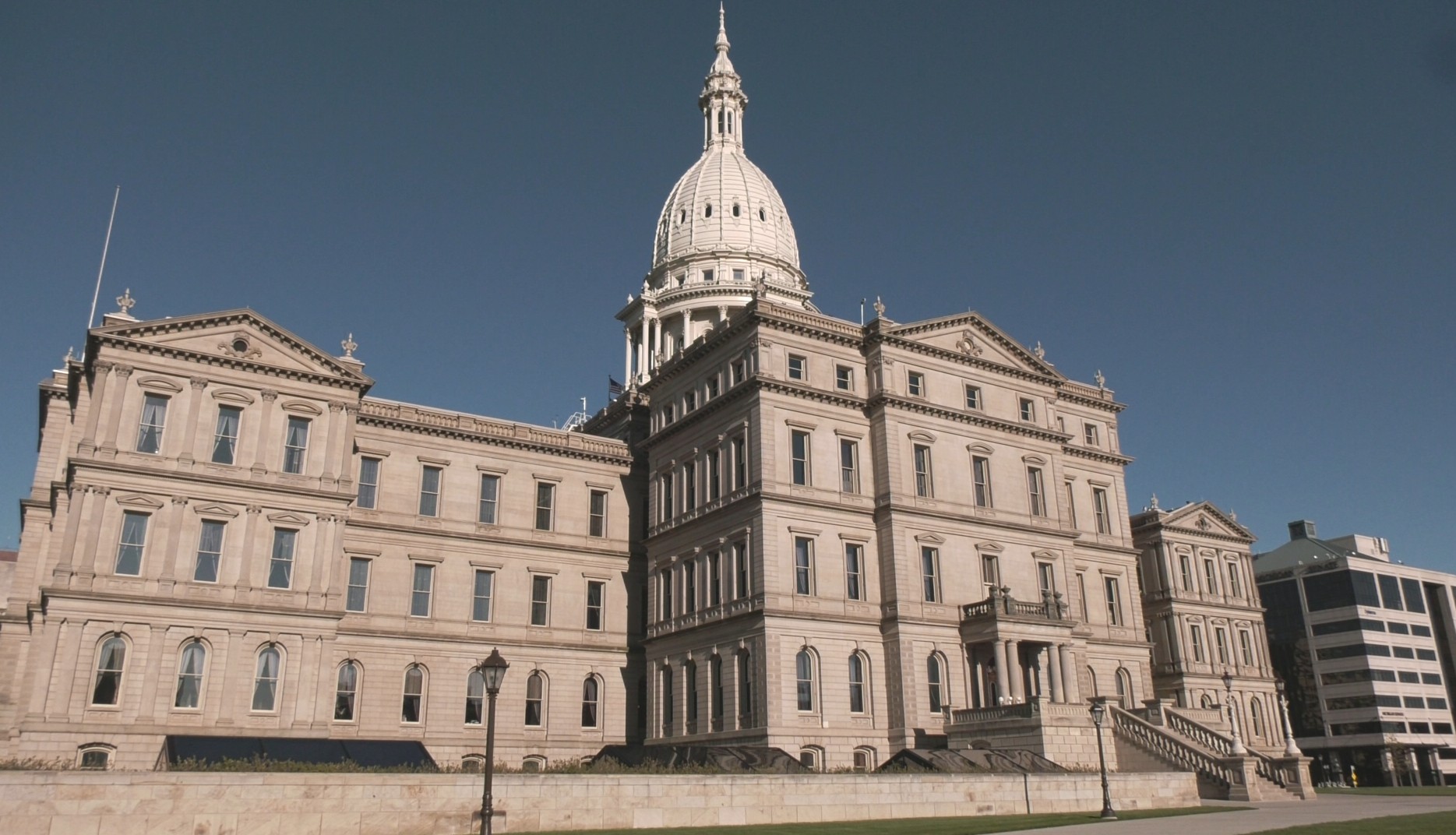
LANSING, Mich. (WZMQ) – Michigan’s legislative calendar is overflowing this week as lawmakers race toward a July 1 deadline to pass a new state budget, leaving everything on the table as deal-making accelerates in the Capitol.
While budget negotiations dominate behind-the-scenes conversations, committee work is pressing forward on a range of bills from election transparency to education overhaul to a child custody package that advanced to the House floor.
Dual Citizenship Disclosure Bill Advances in House Committee
A bill that would require Michigan candidates to disclose dual citizenship on their election paperwork is moving through the House, though it drew sharp debate along party lines.
House Bill 6090, sponsored by Rep. Josh Schriver (R-Oxford) would add one requirement to the affidavit of identity candidates already file when seeking office: if they hold citizenship in another country, they would have to disclose it, identify the country, explain how the citizenship was acquired, and note whether it remains active. The Secretary of State would then make the information publicly available alongside other candidate filings.
“This is a disclosure and transparency bill. Nothing more, nothing less,” Schriver told the House Election Integrity Committee. “Candidates already affirm under oath that they are indeed United States citizens. This bill simply adds one additional disclosure.”
Schriver was clear that the bill would not bar anyone from running. Dual citizens would remain fully eligible to seek office, be elected, and serve under Michigan law.
Democrats on the committee questioned the legislation’s practical purpose. challenging whether disclosure serves voters, noting that dual citizenship carries no legal disqualification for office under Michigan law. Others debated what legal requirement the bill fulfills, given that running for office as a dual citizen is not prohibited, and raised concerns that while the requirement technically applies to everyone, in practice it would single out certain Americans, particularly immigrants and naturalized citizens, for additional scrutiny.
Schriver rejected that framing. “This applies to everybody. Everybody is required to disclose whether or not they are a dual citizen.”
Republican members of the committee were largely supportive, stating they would personally never vote for a dual citizen candidate and suggesting future legislation could go further and bar dual citizens from certain offices outright, a position Schriver did not endorse.
The bill remains under consideration in the House Election Integrity Committee and has not yet been scheduled for a vote.
House Bill Would Let Parents Hire Teachers Directly Under New ‘Learner-First’ District
A Republican lawmaker is proposing one of the more unconventional education reforms to come before the Michigan Legislature in recent years, a statewide “Learner-First District” that would allow parents to use public education dollars to hire teachers directly.
House Bill 5919, introduced by Rep. Brad Paquette (R-Niles), would create a new state-operated district governed by a board appointed by the Legislature. Under the proposal, certified teachers and college faculty could register with the district and offer their services directly to families. Parents would use per-pupil public education funding to hire those teachers, who could operate small classrooms, offer individual tutoring in a student’s home, or design their own courses outside a traditional school setting.
Paquette, a former classroom teacher himself, framed the bill as a response to decades of stalled education reform and a system he says drives talented educators out of the profession.
“We’ve been approaching the reform, talking about the same challenges for many, many years,” Paquette said. “My mind has been devoted to that, and this is why this legislation is here with you today.”
He argued the current system limits teacher pay to seniority and leaves innovative educators with little room to see their ideas take hold. The Learner-First model, he said, would let the market determine which teachers succeed, and compensate them accordingly.
Paquette used an analogy to describe the problem: a northern pike that stops trying to eat minnows after bumping its nose on a glass divider, even after the glass is removed. “A lot of teachers are stunted because of that,” he said.
Committee members from both parties pressed Paquette on governance. Questions centered on how the appointed board would be structured, what qualifications members would need, how the board would evaluate educational effectiveness and whether the district might strain the existing public school system by drawing away teachers.
Paquette said he was open to refining the language and acknowledged the board’s composition would be pivotal to the district’s success.
Supporters on the cards included MAPSA and the Mackinac Center for Public Policy. The bill received its first committee hearing Tuesday and has not been scheduled for a vote.
Child Custody Bills Clear Committee, Head to House Floor
A package of bills that would fundamentally shift how Michigan family courts handle child custody has cleared the House Judiciary Committee and is headed to a vote before the full House, making it the furthest along of this week’s three major proposals.
House Bills 5211, 5212, and 5213, the Child Welfare and Stability Package, would establish a legal presumption that children benefit from equal or approximately equal time with both parents following separation or divorce. Under the bills, a judge could depart from that standard only upon clear and convincing evidence that doing so is in the child’s best interest, and would be required to provide written findings explaining the departure.
The package also would require courts to notify parents early in custody proceedings of the equal-time presumption, and mandate that Friend of the Court offices inform families of the standard and explain it upon request.
Supporters argued the current system produces wildly inconsistent outcomes that depend more on which judge or attorney a family has than on what’s best for a child.
“When parents don’t know what to expect, they’re more likely to fight expensive court battles rather than reach reasonable settlements,” one bill sponsor told the committee. “This amounts to wasted dollars on unnecessary battles that only benefit the attorneys.”
Sponsors emphasized that the bills do not override safety considerations. Courts retain full authority to weigh all 12 best-interest factors under Michigan’s Child Custody Act, including domestic violence, the child’s preference, and safety concerns. The presumption applies only to disputes between parents and does not affect cases involving state agencies or third parties.
Rep Brian BeGole (R- Perry), one of the sponsors, pointed to U.S. Census Bureau data showing approximately 80% of custodial parents are mothers and argued the legislation would introduce more fairness and predictability into a system she said too often leaves fathers with little meaningful access to their children.
All three bills must be enacted together, the package only takes effect if all three measures are approved. They now await a vote before the full House.
With budget negotiations ongoing and a July 1 deadline forcing trade-offs, any of these measures could factor into the broader deal-making now underway at the Capitol. WZMQ will continue to follow developments as the deadline approaches.