
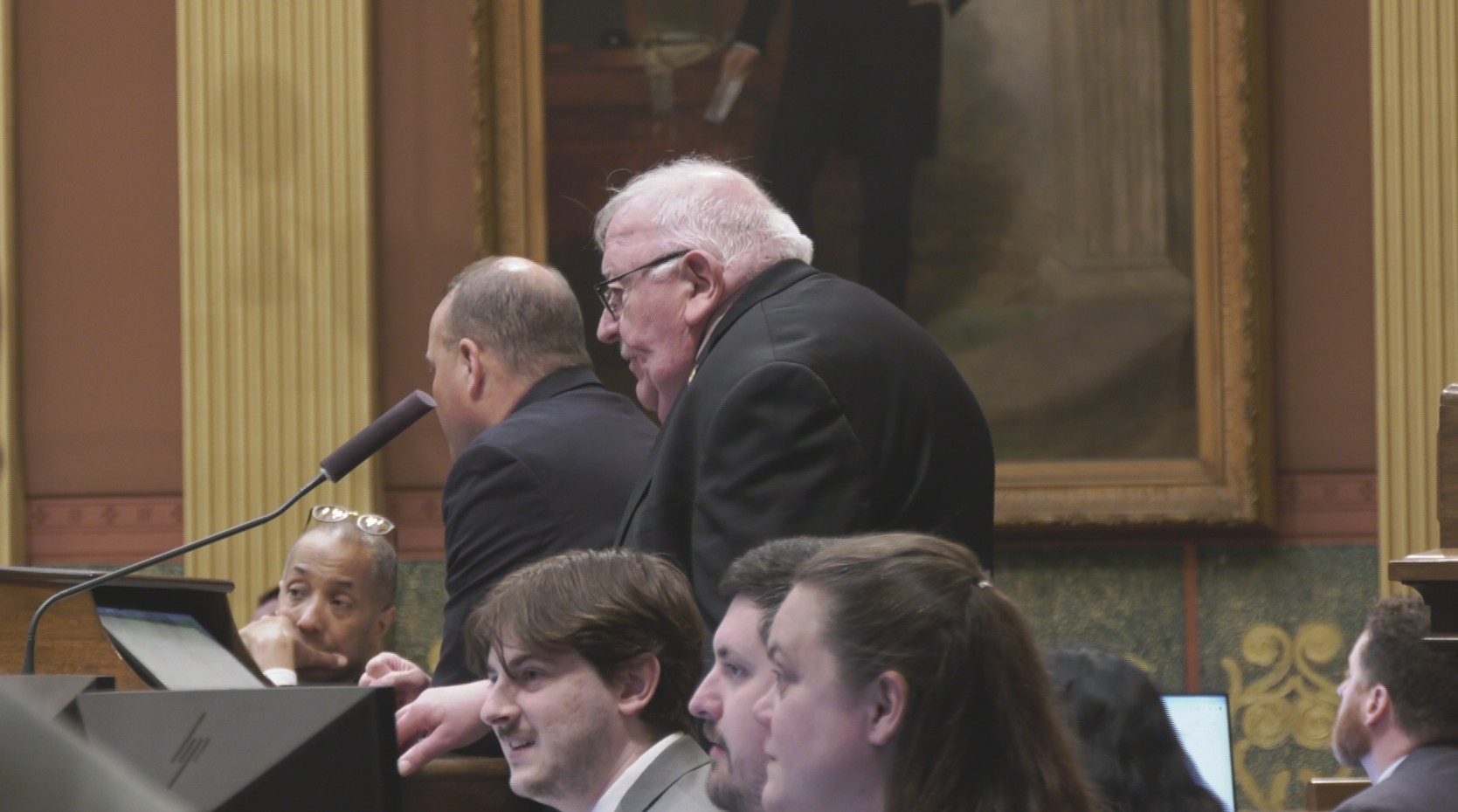
LANSING, Mich. (WZMQ) – Michigan House Speaker Matt Hall said Tuesday that budget negotiators have reached a framework agreement that could pave the way for a final state budget before the July 1 deadline.
According to Hall, the agreement was signed by himself, Senate Majority Leader Winnie Brinks and Gov. Gretchen Whitmer after several days of negotiations.
“In that framework agreement, we’re not going to see any tax increases. We won’t see any rate of the rainy day fund,” Hall said. “So those will not happen, which were major lines in the sand that I drew, as you know, and we will see in a smaller budget than last year.”
Hall said the agreement establishes broad budget parameters, including overall spending levels and decisions about taxes and reserve funds. Negotiators are now working on the next phase of the process, setting spending targets for individual state departments.
“What targets is, is how much money are we going to spend on state police? How much money are we going to spend on MDOT? How much money are we going to spend on health and human services? How much money are we going to spend on the Department of Education?” Hall said.
The speaker said he believes an agreement on those targets could come soon and would allow budget subcommittees to begin finalizing department-level spending plans.
Hall also acknowledged that a smaller budget would require reductions in spending. He argued those cuts should focus on what Republicans describe as waste, fraud and abuse within state government rather than core services.
“If the budget’s going to be smaller than last year, then you’re gonna have to make cuts, right? And I’m hopeful that those cuts will be to waste fraud and abuse,” Hall said.
Beyond the budget, Hall highlighted several policy priorities he hopes lawmakers will consider, including medical debt relief legislation, housing affordability measures, restrictions on corporate ownership of single-family homes and legislation aimed at preventing what he described as AI-driven “surveillance pricing.”
Hall also said he does not expect legislation regulating data centers to be finalized before July 1, arguing those proposals are still in the early stages of the legislative process.
Lawmakers have less than two weeks remaining before the statutory budget deadline, though Hall noted that much of last year’s budget was completed in the final days of negotiations.
“We’re well more than 48 hours from the July 1 deadline,” Hall said. “So if we can get an agreement on targets, we’re actually giving our subcommittee a lot more time to work out their differences.”