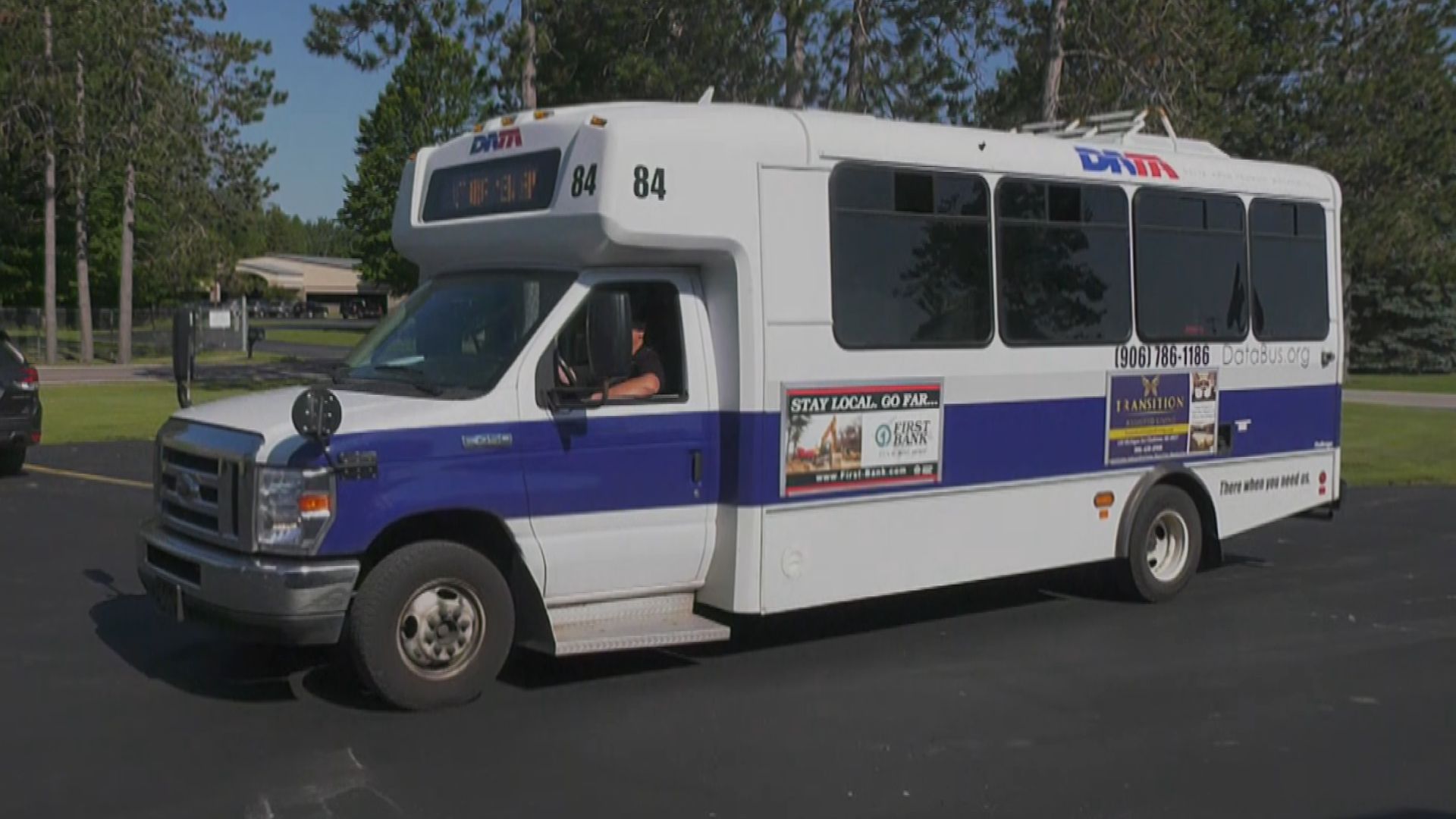
ESCANABA, Mich. (WZMQ) – On August 4, the majority of Delta County voters supported a new millage for public transportation.
For the last several years, the Delta Area Transit Authority (DATA) has been funded by individual millages in the cities of Escanaba, Gladstone, and seven neighboring townships. Those millages are all set to expire either this year or next year.
The proposal passed on Election Day includes a rate of .689 mills. That millage will replace the existing millages, allowing DATA to expand its operations to include every township in the county. It also enables the Transit Authority to offer rides an hour earlier on weekdays, extend Friday service to 2 a.m., and add Saturday service from 7 a.m. to 2 a.m.
“We’re really excited,” said DATA Executive Director John Stapleton. “We’re very humbled by the support that we got. It took a lot of work. We got a lot of feedback from people. We did a lot of presentations and getting the word out.”
Just over 65% of voters cast their ballots in favor of the millage proposal. The last time the Transit Authority asked for a county-wide millage was in 2002. At that time, it only received 40% support.
“Frankly, that was a time when massive layoffs were had here,” Stapleton said. “It’s been something that’s been on the target to do for a lot of years, but it’s a heavy lift. A lot of these areas in Delta County had never seen a DATA bus in 37 years. We knew there was a lot of community support for it, but we sure didn’t know what the outcome was going to be.”
The Authority will now begin the multi-phase process of expanding operations, acquiring new vehicles, and hiring additional staff. Stapleton says while DATA will do its best to accommodate current needs in its new service areas, he hopes to have everything in place by early January.
“The millage helps us match state and federal funds,” he explained. “Our new fiscal year starts October 1, and that’s when we would realize the state and federal side of this proposal. I have put in for some grant funding to help with the startup costs of the county-wide system. It takes about six months for vehicles to be procured. We need to hire ten to twelve people—drivers, dispatchers, mechanics, et cetera. That’s going to take some time.”
For a more in-depth look at what was included in the millage proposal, click here.