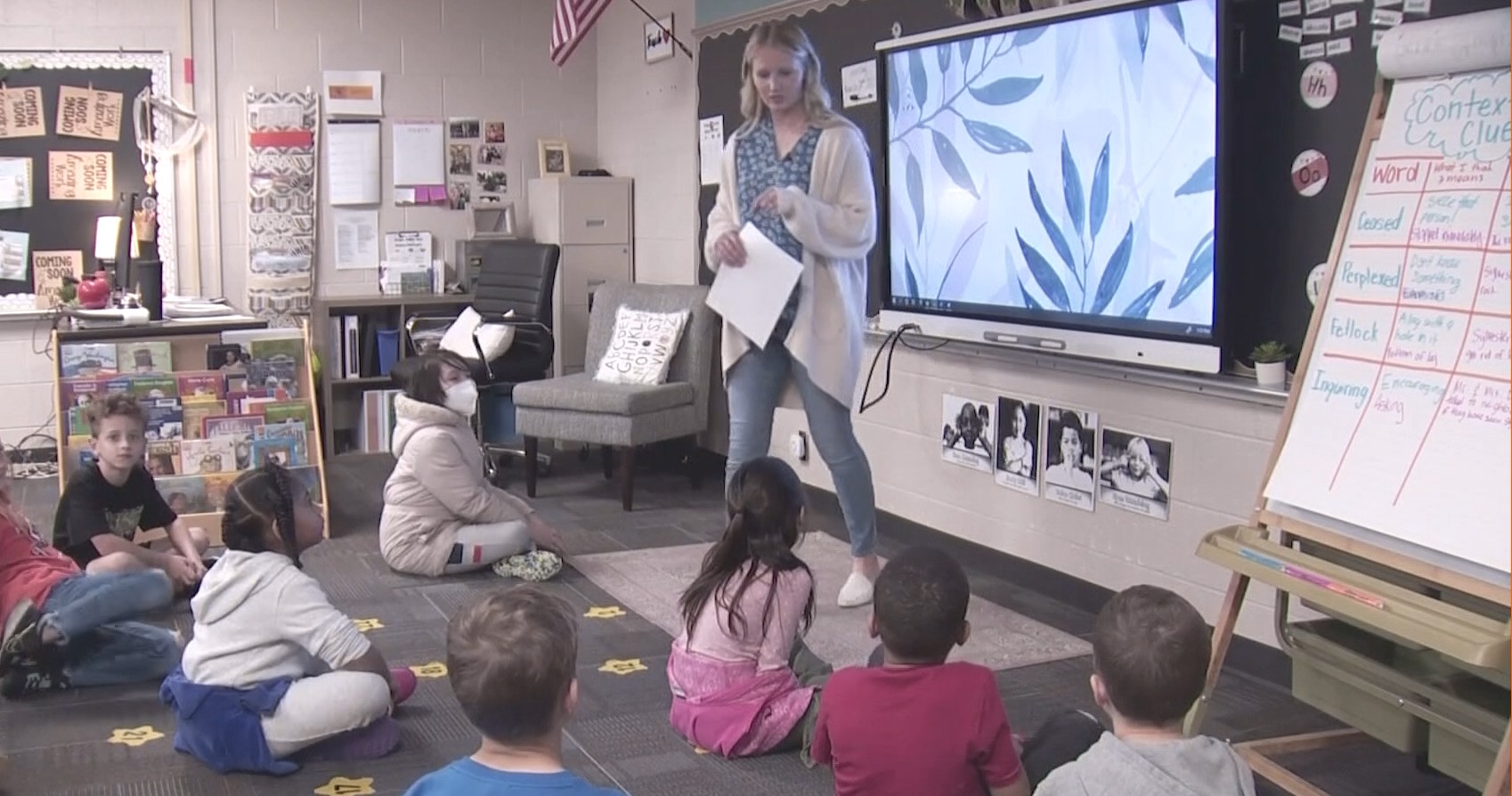
LANSING, Mich. (WZMQ) – As Michigan students return to the classroom, state education officials say literacy remains the department’s top priority, backed by new legislation and more than $180 million in funding.
The push builds on Public Act 146 of 2024, the K-12 literacy and dyslexia law, which has now transitioned into Public Act 26 of 2026, the Science of Reading Professional Learning law. Together, the laws direct schools to screen students for dyslexia and teach reading through research-based methods, while requiring teachers to complete evidence-based training.
Deputy Superintendent Delsa Chapman, Ed.D., said the department is focused on the fundamentals for the youngest students.
“We are encouraging, especially at the early development stages, especially for our pre-K students and our kindergartners, we’re encouraging all stakeholders, obviously our educators, to make sure that we are focusing on word recognition, including decoding, phonological awareness, language comprehension,” Chapman said.
The department says that foundation matters because it carries into later grades, where students move from learning to read to reading to learn, and eventually into the analytical and critical-thinking skills needed for life after high school.
“We want the students in Michigan to be opportunity ready, and that comes from having the foundational skill of literacy,” Chapman said. “Every teacher in the state of Michigan grades K through 5, by the 2031, ’32 school year, will meet the legislative mandate and requirement to be trained in an evidence-based professional learning tool that will empower and help them to teach the appropriate mechanisms of reading.”
Some districts are already ahead of that timeline. “Grand Rapids Public Schools, they have schools with LETRS-trained teachers that are seeing reading scores improve, and they are very intentional on wanting to expand that to more educators,” Chapman said. She also named Comstock Park, Dearborn and Battle Creek as early adopters of the LETRS training program.
The effort is backed by significant state funding. Chapman broke down where the money is going: “There’s over $180 million in literacy funding: $75 million for Letters, $50 million for curriculum materials and assessments, $52.5 million for literacy coaches, and $6.6 million for literacy essentials.” A separate $50 million is set aside for high-impact tutoring, which the department says will support students who need additional intervention beyond classroom instruction.
Chapman said the state’s approach is built for the long term, not overnight results. “It’s all about systemic change, so it’s not going to change over time. What we have been promoting here at the department is that it’s not a sprint, it’s definitely a marathon,” she said.
The department is targeting full statewide implementation by the 2027-28 school year, with the teacher training requirement phased in through 2031-32. Officials say improvements in literacy are also expected to boost outcomes in other subjects, including math and science, as the state works to prepare students for both college and career paths.