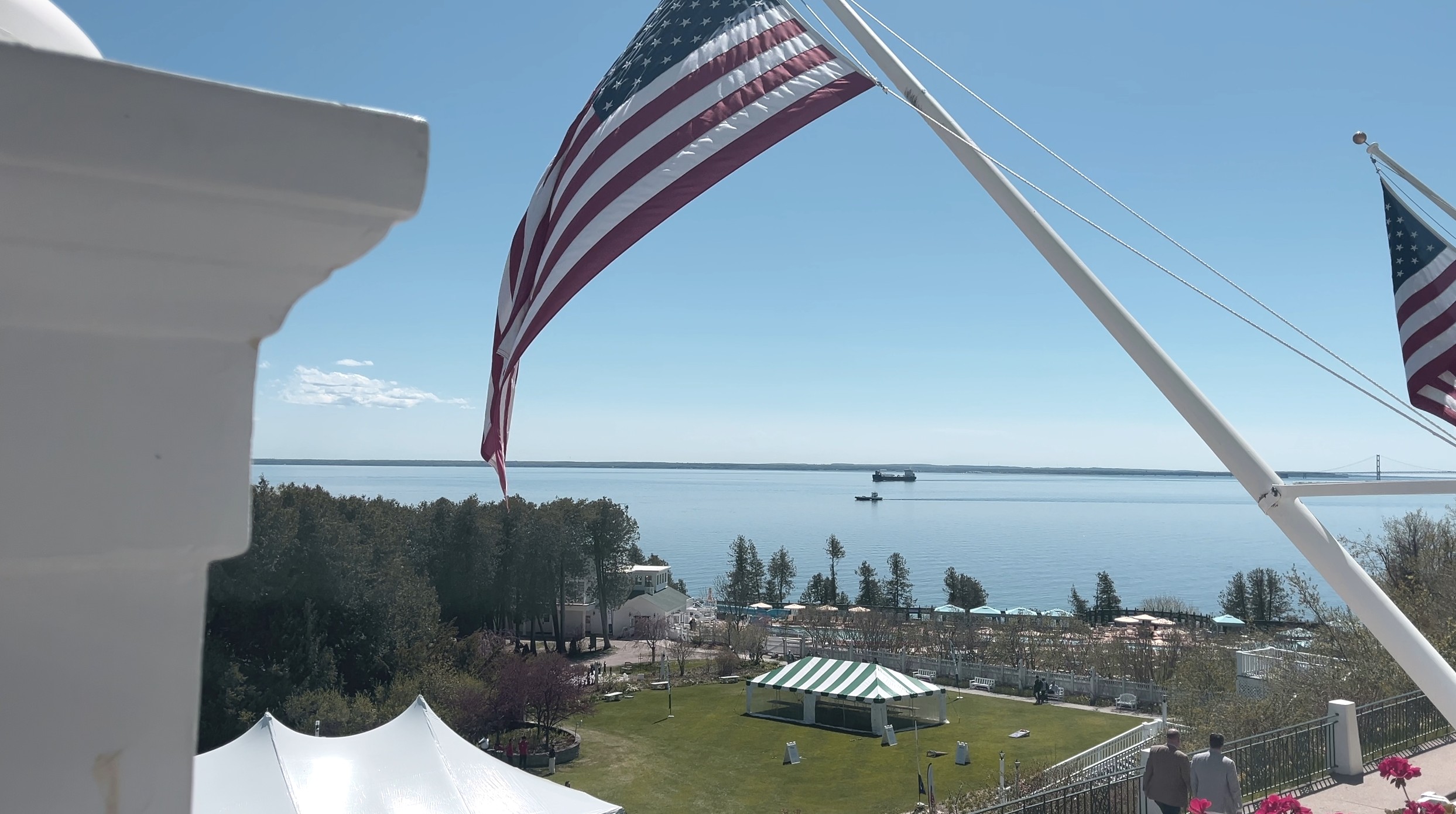
MACKINAC ISLAND, Mich. (WZMQ) – Day two of the Mackinac Policy Conference brought some of the conference’s biggest political names to Mackinac Island, with conversations centered heavily on political division, economic uncertainty and whether leaders can still find “common ground” in an increasingly polarized country.
From former Vice President Mike Pence and former Transportation Secretary Pete Buttigieg to Michigan’s congressional delegation, a recurring theme throughout the day was that while politics may appear more divided than ever, many leaders still believe voters are demanding practical solutions over ideological battles.
The conference’s official theme this year is “The Quest for Common Ground,” and nearly every major discussion Wednesday returned to that idea in some form.
Bipartisanship becomes central theme of congressional discussions
Michigan’s two U.S. senators, Gary Peters and Elissa Slotkin, spent much of their panel discussing the growing challenges of bipartisan governing in Washington.
Peters, who is retiring at the end of his term, described Congress as becoming steadily more polarized during his nearly two decades in Washington.
“It’s gotten harder every single year,” Peters said. “I really noticed that over the last few years.”
Both senators pointed to social media and increasingly ideological primary elections as major drivers of political division. Peters warned that many lawmakers now fear challenges from candidates further to the political extremes, making compromise politically dangerous.
Slotkin argued Michigan’s status as one of the nation’s most competitive battleground states forces elected officials to remain more pragmatic than politicians in safer districts.
“I’m in the same battleground as Donald Trump,” Slotkin said. “It is my mandate to work for all Michiganders.”
That emphasis on pragmatism and results echoed throughout multiple sessions Wednesday, particularly among speakers discussing Michigan’s economy and affordability challenges.
Pence calls for civility while defending conservative principles
One of the day’s most closely watched appearances came from Pence, who delivered remarks before sitting down for an extended conversation focused on politics, governing and the future of the Republican Party.
Pence repeatedly argued Americans are less divided than modern politics suggests.
“I’m not convinced the American people are as divided as our politics,” Pence said. “There will always be more that unites us in these United States than can ever divide us.”
The former vice president mixed optimism with warnings about growing national challenges, including the federal debt, political polarization, artificial intelligence and China’s economic influence.
Pence also reflected on his break with President Donald Trump following the 2020 election certification, defending his actions on Jan. 6.
“I’ll always believe, by God’s grace, I did my duty to support and defend the Constitution of the United States,” Pence said.
At the same time, Pence praised several Trump administration policies, particularly on border security and foreign policy, while criticizing what he described as growing “isolationist rhetoric” within the Republican Party.
Trade and manufacturing became another common thread throughout the day, especially as multiple speakers discussed competition with China and the future of the American auto industry.
Buttigieg warns U.S. risks falling behind China
Later in the day, Buttigieg focused heavily on transportation, infrastructure and technological competition during a conversation with Detroit Regional Chamber CEO Sandy Baruah.
Like Pence and several congressional speakers earlier in the day, Buttigieg repeatedly returned to concerns about China’s economic rise and the future of American manufacturing.
“The policy alone can’t do the work,” Buttigieg said while discussing electric vehicles and industrial policy. “It’s going to be critically important that our sectors are competitive and innovate.”
Buttigieg warned that rapid shifts between presidential administrations have created uncertainty for automakers trying to plan long-term investments in electric vehicle technology.
“You’ve got a four-year product cycle and a four-year political cycle that don’t exactly match up,” he said.
While many discussions at the conference focused on finding bipartisan agreement, Buttigieg’s appearance also reflected another major theme emerging this week: anxiety over whether the United States can remain economically competitive amid rapid technological change.
Both Buttigieg and Peters separately raised concerns about artificial intelligence and social media, warning the technologies could deepen political division and create national security risks if left unchecked.
Buttigieg also criticized delays involving the Gordie Howe International Bridge project and warned America’s transportation infrastructure is showing its age.
“We have a lot of systems that were built over a long time that are showing their age,” he said while discussing outdated aviation technology.
Common threads emerge despite ideological differences
Although Wednesday’s speakers represented very different ideological viewpoints, several issues repeatedly surfaced throughout the day’s discussions:
- Growing concern over political polarization and social media
- Anxiety about Michigan’s affordability and population decline
- Warnings about competition from China
- Calls for bipartisanship and practical problem-solving
- Questions about how the U.S. adapts to emerging technologies like AI and electric vehicles
Perhaps the most notable pattern was that even speakers who sharply disagreed politically often described the same underlying problems, particularly around economic competitiveness, public trust and political division.
The differences largely centered on how to solve them.
Looking ahead to day three
Thursday is expected to bring another major slate of political events at the conference.
Gov. Gretchen Whitmer is scheduled to deliver one of the conference’s keynote addresses, while several state Senate candidates are expected to participate in debates and policy discussions.
Whitmer and Peters are also expected to be honored for their years of public service in Michigan politics as Peters prepares to leave the Senate at the end of his term.
With the 2026 election cycle already looming over many conversations this week, Thursday’s events are expected to continue focusing heavily on the future direction of Michigan and the broader national political climate.