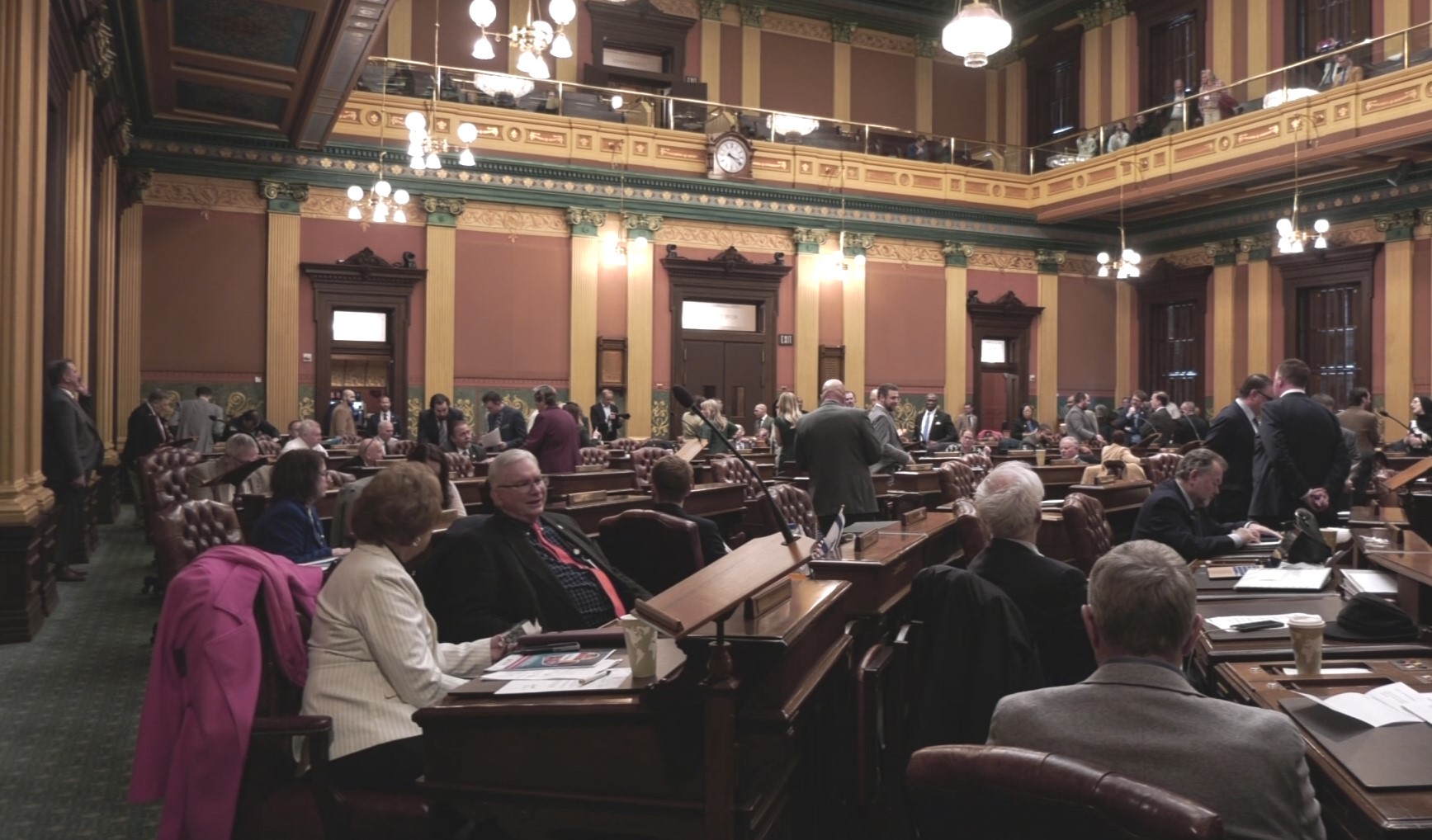
LANSING, Mich. (WZMQ) – Michigan House Republicans have approved their version of the state budget, advancing a more than $75 billion spending plan that now heads into negotiations with the Senate and governor ahead of a July 1 deadline.
The proposal outlines funding across state departments and includes targeted investments in local projects, including several in the Upper Peninsula, while also reducing spending in multiple areas of government.
House Republicans say the plan is built around actual spending levels rather than projected increases.
“We were able to cut $2 billion from this budget without cutting anything. You’re not cutting anything except for the ghost employees and the money they’re not spending,” Speaker of the House Matt Hall said.
The budget includes funding for infrastructure, public safety, and education, along with smaller, direct allocations for local projects such as school improvements, road repairs, and emergency equipment in U.P. communities.
- $500,000 to the 906 Adventure Team in Marquette County for the development and construction of Gluski Park
- $682,000 to the Baraga County Road Commission for flood damage recovery
- $700,000 to the city of Negaunee in Marquette County for the purchase of a fire apparatus truck
- $1.4 million to Superior Central Schools for the construction of safe parking and drop-off sites
- $35,000 to the United Way of Marquette County to expand the volunteer income tax assistance program
- $1 million to Waucedah Township in Dickinson County for the replacement of Waucedah Road
- $1 million to Lake Superior State University for electrical and data system upgrades
- $600,000 to Michigan Technological University for an analysis of Mackinac Bridge conditions and closures
- $600,000 to Bessemer Area Schools to bring elevators into compliance with code
- $600,000 to Gogebic Community College to replace three elevators
- $350,000 to the city of Escanaba in Delta County for the purchase of a ladder truck
At the same time, the proposal reduces funding in several areas, including higher education and certain state programs. Democrats argue those reductions could have broader consequences for residents.
“We have people who can’t afford their groceries and afford to make ends meet at the end of each week. And it’s, again, it’s a shame that we’re taking the time to push through a procedural vote when we should be working together in this chamber in a bipartisan way,” Rep. Alabas Farhat (D-Dearborn) said.
Critics also raised concerns about cuts to vacant positions across departments, warning that those roles may still be necessary to maintain services.
“The question shouldn’t be about whether we should cut these unfilled positions. It’s how do we make sure that we’re incentivizing folks to take those jobs so that we can fill those positions for our state, for our community,” Rep. Jason Morgan (D-Ann Arbor) said.
The House plan also comes as lawmakers navigate a more complicated fiscal outlook, with a projected budget shortfall and uncertainty tied to federal funding and economic conditions.
“I think through that point is there are going to be some tough decisions that have to be made because the budget is correcting itself,” Rep. Joe Tate (D- Detroit) said.
The Senate has already begun introducing portions of its own budget, setting up negotiations between the Republican-led House, Democratic-led Senate, and Gov. Gretchen Whitmer.
Lawmakers from both parties say those talks will determine the final shape of the budget, including whether proposed cuts are restored or adjusted.
“And so this process will play out over the next few weeks, to say where exactly we land is a little premature,” Farhat said.
By law, the Legislature must pass a final budget by July 1.