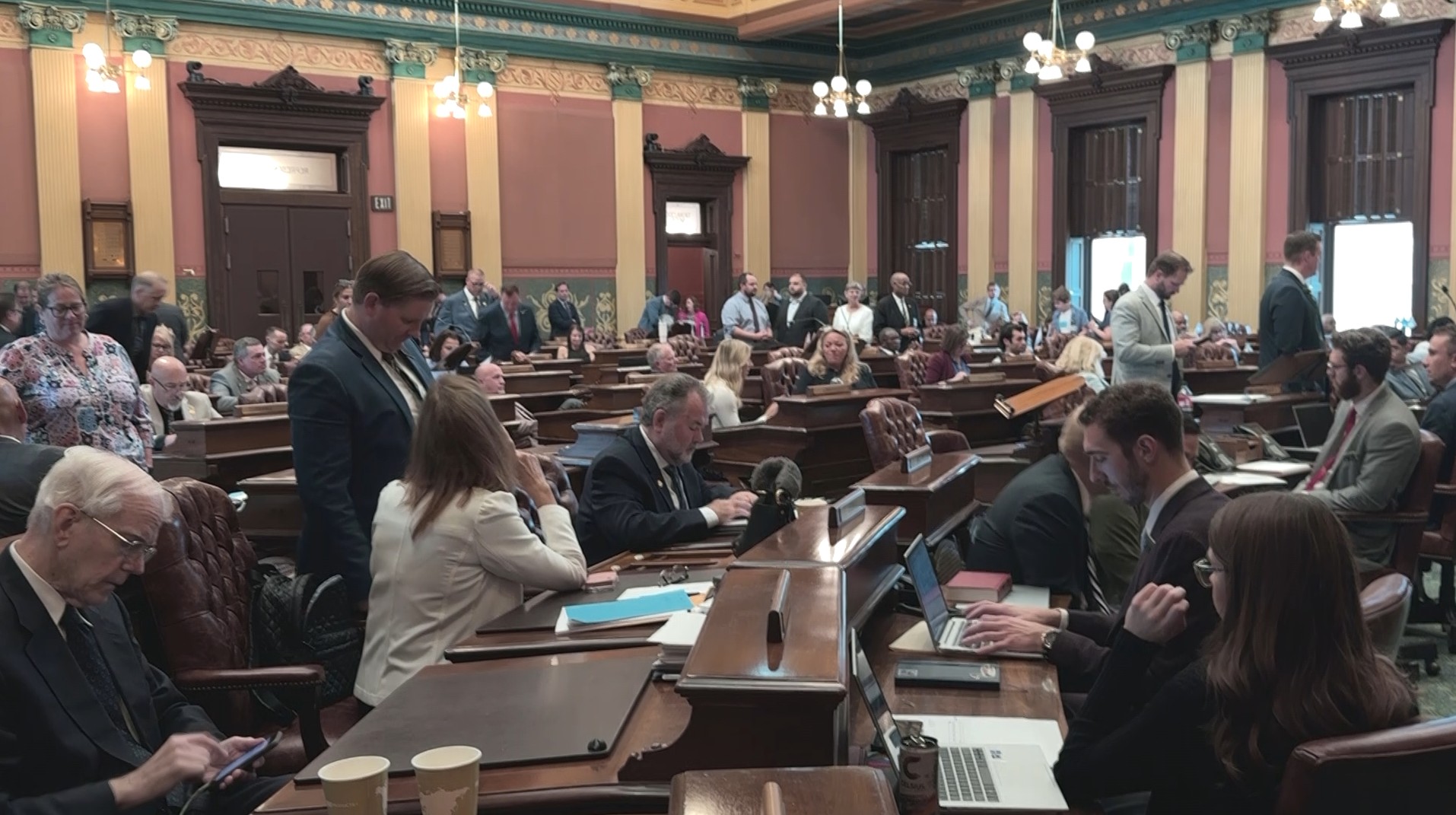
LANSING, Mich. (WZMQ) – The Michigan House of Representatives passed legislation Tuesday that would require proof of U.S. citizenship for certain new voter registrations, advancing a proposal that has sharply divided lawmakers along party lines.
House Bill 4765 would require the Michigan Secretary of State to verify a voter’s citizenship using state and federal databases, including records from the Department of Homeland Security. Applicants could also submit documents such as a U.S. passport, birth certificate, or naturalization papers to expedite verification.
Under the bill, individuals whose citizenship cannot be confirmed would be designated as “federal-only voters,” meaning they could vote in federal elections but not in state or local races unless they later provide proof of citizenship.
Supporters say the measure is aimed at strengthening election integrity and ensuring only eligible citizens vote.
“This isn’t for those that have already been registered to vote. This is for young people coming in that are registering … and simply showing proof of their citizenship,” said Rep. Jason Woolford (R-Howell).
Woolford argued the policy should not be controversial, calling it a fundamental safeguard. “It shouldn’t be controversial … it’s not a red issue … it’s a red, white, and blue issue,” he said.
Democrats strongly opposed the bill, arguing it could create new barriers for eligible voters and increase costs for residents who must obtain documentation.
“The reality is that these things just disenfranchise legal voters,” said Rep. Ranjeev Puri (D-Canton).
Rep. Stephen Wooden (D-Grand Rapids) criticized the legislation as part of a broader pattern of restrictive voting measures. “We are committing the voter suppression hat trick here in the Michigan House today,” he said.
According to the House fiscal agency, the bill would also increase administrative costs for the state and local clerks, including staffing, training, and technology updates. The state could see a temporary increase in revenue from fees tied to documents like birth certificates and enhanced driver’s licenses.
Opponents, including the Michigan Department of State and several voting rights organizations, have raised concerns about potential legal challenges and compliance with federal voting laws.
The bill now moves to the Michigan Senate for consideration. With Democrats in charge in the Senate and the Executive Office, it’s unlikely to see a vote.