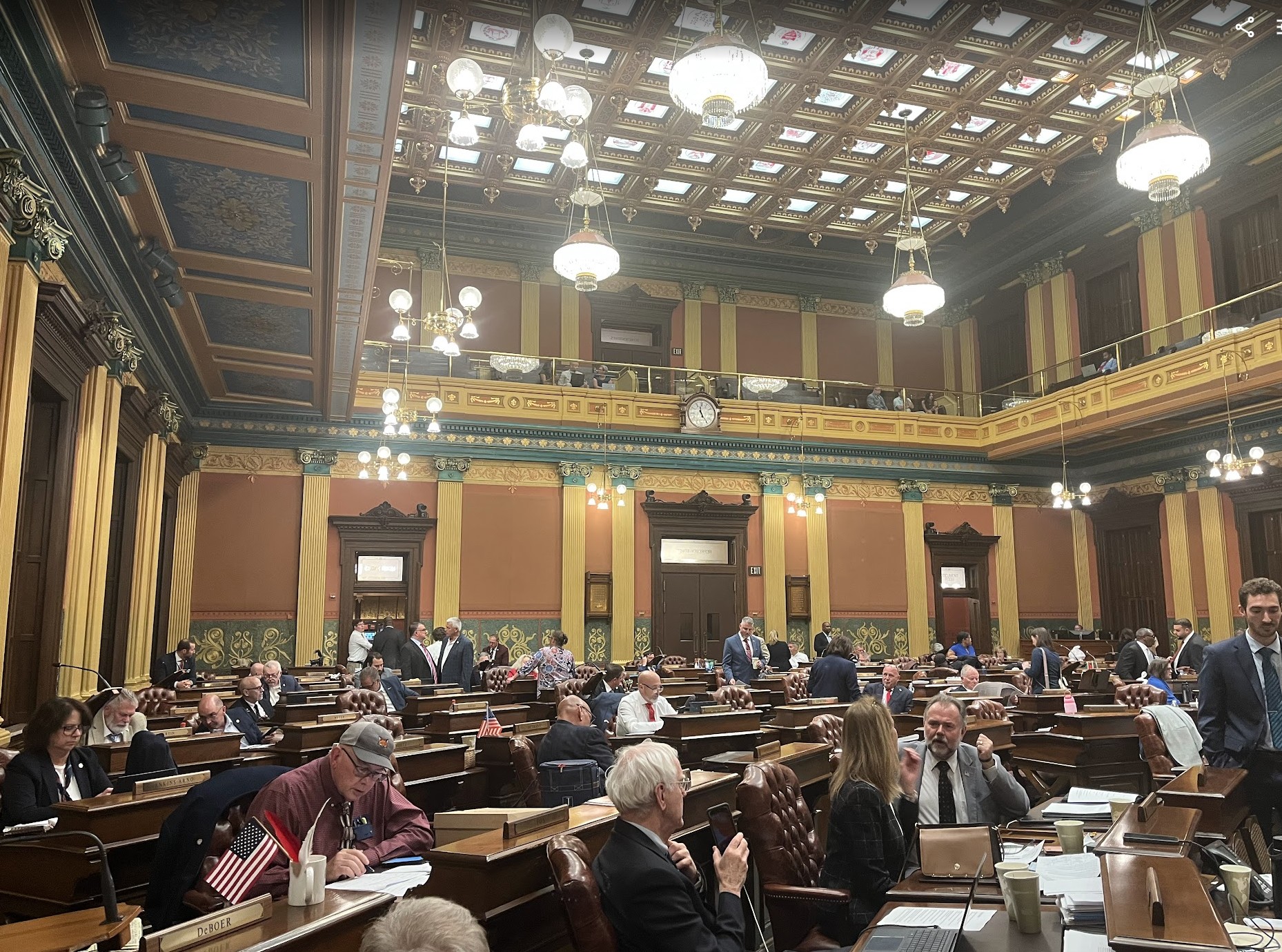
LANSING, Mich. (WZMQ) – Michigan lawmakers are working through the night at the Capitol, racing to finalize a new state budget after House and Senate leaders announced they had reached an agreement Thursday afternoon.
House Speaker Matt Hall confirmed just after 5 p.m. that a deal had been signed, making the announcement on his X account. But signing a deal is only the first step, lawmakers now have to draft the actual bills and count up the votes, a process that could keep them at the Capitol until sunrise.

The state missed its legal budget deadline of July 1, but leaders say they are committed to getting a final vote done tonight, in time to head home for the holiday weekend.
How we got here
Every year, the budget process starts with a proposal from the governor. From there, the House and Senate each build their own versions of the plan, often pairing the spending bill with additional policy bills that help shape how the money is spent.
This year, the two chambers took noticeably different approaches. The Senate’s plan closely mirrored the Governor’s proposal, including pulling money from the state’s rainy day fund to help cover costs.
House Republicans, however, pushed back hard against that approach. Leaders in the House dug in against raising taxes or fees and against dipping into the rainy day fund, and they pushed for a smaller overall budget than last year’s. House Republicans also brought a broader wish list to the negotiating table, including proposals to eliminate the personal property tax, restructure nonprofit hospitals, and lower utility costs.
Weeks of closed-door negotiations followed. Republican leaders had said as early as the Juneteenth holiday that they’d agreed on a general framework, but hammering out the details took until Tuesday to finalize.
One detail leaders did confirm: the deal includes $13 million for Northern Michigan University’s Northern Enterprise Center in the College of Business.
What Republican lawmakers are saying
Rep. Mike Harris, R-Waterford Township, said the framework Republicans set early on shaped the final outcome.
“We set up a framework early on. We’re not raising taxes. We are not raising fees,” Harris said. “I think everyone had the idea of moving forward with giving schools an increase. So look forward to see what that final resolution looks like.”
Harris said protecting the state’s emergency reserves was also a priority.
“We’re not attacking the rainy day fund in Michigan. We want money there for emergencies, right?” Harris said. “I think that’s a good progress that we can take back to the people of the state of Michigan to say, hey, it was worth it.”
Rep. Joe Aragona, R-Clinton Township, echoed that message, pointing to three main wins Republicans say they’re bringing home: no new taxes, no withdrawals from the rainy day fund, and a smaller overall budget than last year.
“There will be no new taxes. We ensure that we’re not going to raid the rainy day fund,” Aragona said. “If you can’t get a tax increase, well, you can always raid a rainy day fund, right? Because that’s an emergency fund that’s supposed to be there separate… No, that’s not what it’s there for. It’s there for Michigan’s emergencies.”
Aragona also highlighted the overall size of the budget.
“Very rarely does the government ever say, hey, let’s spend actually less money. But we actually did that in this budget,” he said. “We’re very proud of that. It wouldn’t have happened without House Republicans.”
Beyond the core budget bill, lawmakers are also working through dozens of related policy bills. Estimates on the House floor Tuesday night ranged from 60 to 70 additional bills tied to the deal.
“It’s a lot of organization. It’s a lot of negotiation,” Aragona said. “I think we’ve got great staff that’s supporting us. There’s going to be a number of other policy bills that are going to pass soon. But I think you’re going to see a lot of them passing in a very bipartisan fashion.”
Aragona said the smaller budget stood out to him most.
“We have plenty of money in the budget to spend. We know that because we’re spending less than last year and we’re still passing a budget that funds all of the things that we need,” he said. “I think we’re going to pass a well-rounded budget.”
What’s next
As of Thursday night, lawmakers offered rough estimates for when they expect to wrap up, with some hoping to finish around 4 a.m. and others predicting votes could stretch to 7 or 8 a.m. Friday.
“We’re going to be here late. It’s probably going to be the wee hours of the morning,” Aragona said. “We’re going to have a lot of votes to get through, but that’s generally how this works towards the end.”
Either way, lawmakers say they’re determined to get the deal finished tonight so they can return to their districts for the summer and begin campaigning ahead of the August and November elections.