
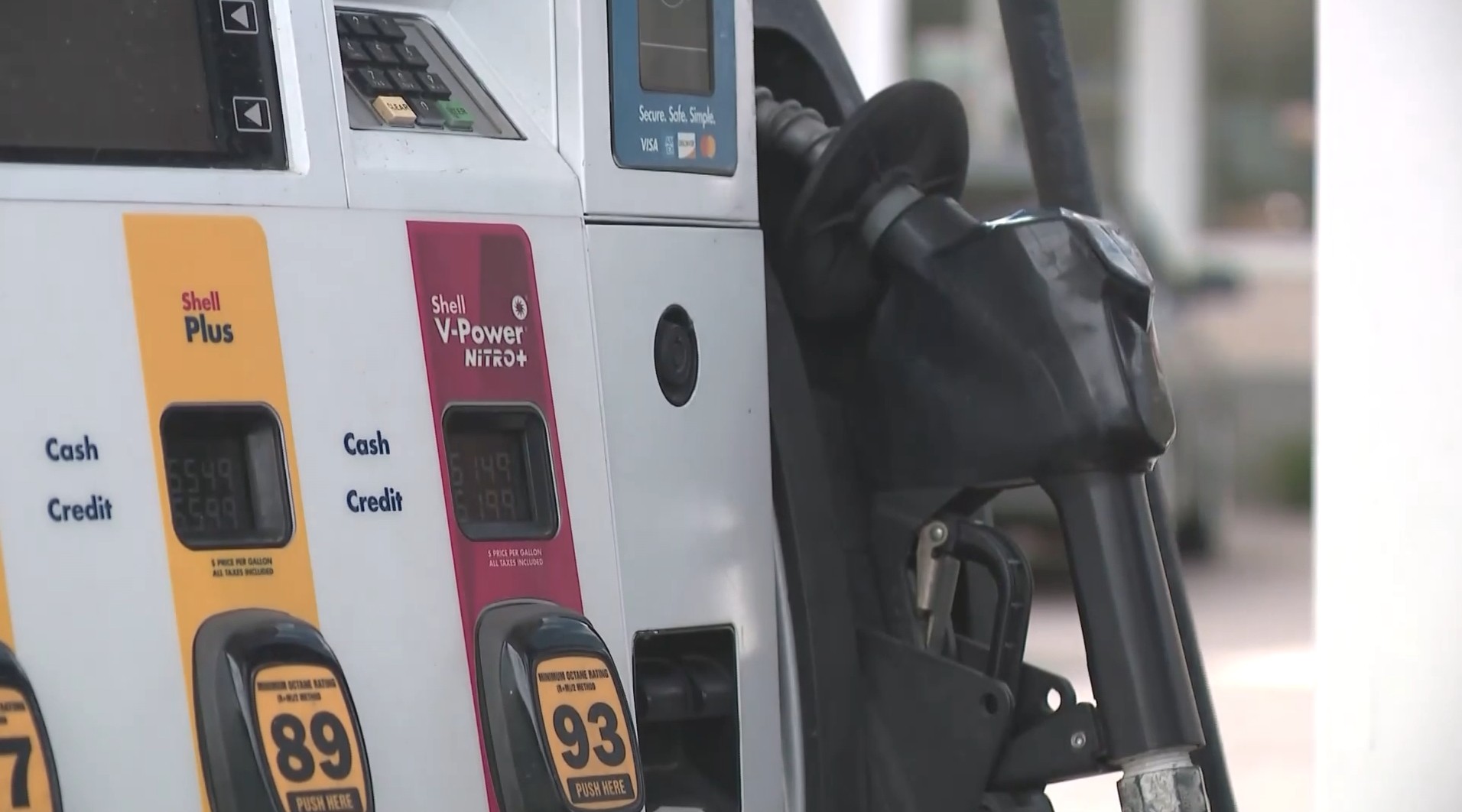
LANSING, Mich. (WZMQ) – The Michigan legislature extended Executive Order 4 of 2026, which provides Michiganders relief at the gas pump by allowing gas stations to continue to sell lower-cost gasoline through the remainder of the summer.
“Michiganders have been grappling with high gas prices driven by the war in Iran. They’re paying a dollar more per gallon than they were three months ago. To give working families relief at the pump, I signed an executive order relaxing Michigan’s summer fuel requirements, saving Michigan motorists 10 to 20 cents per gallon at the pump by giving them access to the same lower-cost fuel already available in the rest of the state,” Whitmer said in a statement to the press. “I’m grateful for partners in both chambers of the legislature who worked across the aisle to get this done.”
Still, Michigan drivers are paying more at the pump heading into the Fourth of July weekend than drivers in every neighboring state. Even though crude oil itself has gotten cheaper in recent weeks.
The gap comes down to a mix of global market shocks, a temporary state fuel-standard waiver, a brand-new tax structure, and how differently Michigan’s neighbors have responded to the same crisis.
Where prices stand right now
| Sunday | Week Ago | Month Ago | One Year Ago | |
| National | $3.87 | $3.94 | $4.43 | $3.19 |
| Michigan | $4.10 | $4.01 | $4.52 | $3.28 |
Source: AAA, week of June 29, 2026
Michigan’s regular unleaded average of $4.10/gallon is 23 cents above the national average and 82 cents higher than a year ago, though still 42 cents cheaper than last month’s peak.
Michigan gas prices soared well above the national average starting in April, after the war in Iran disrupted global oil shipping routes, including the Strait of Hormuz. Governor Whitmer’s office reported prices jumped from $2.99 to over $4.00 a gallon in the weeks following the conflict’s start,
What crude oil actually costs, and why relief is delayed
WTI crude closed at $69.23 a barrel last Friday, down $2.69 that day alone. Using the standard industry approximation of 42 gallons per barrel, that works out to roughly $1.65 worth of crude oil in every gallon of gasoline before refining, distribution, retail markup, or tax.
That means crude oil actually got cheaper right as pump prices in Michigan were still working their way down slowly. Rep. Dave Prestin (R-Cedar River), who previously owned a truck stop and fuel station, points to a lag between wholesale price drops and what shows up at the pump: stations are often still selling fuel they purchased weeks earlier at higher prices, and a station owner sitting on three-week-old inventory can’t afford to sell it at a 30-cent-per-gallon loss just because the spot market moved.
The state’s response: a temporary fuel-standard waiver
Michigan normally requires a stricter, lower-vapor-pressure gasoline blend in eight southeast Michigan counties (Wayne, Oakland, Macomb, Washtenaw, Livingston, Monroe, St. Clair, and Lenawee) during summer months, aimed at reducing ozone formation. That stricter standard means refineries supplying those counties have to produce a specialized formulation not required anywhere else in the country, which adds cost.
In April, Whitmer’s Executive Order 2026-4 declared a state of energy emergency and temporarily suspended that stricter standard, aligning Michigan with a looser federal EPA waiver instead. The goal was to let refiners sell a wider, cheaper pool of gasoline into the affected counties.
On the day the waiver was set to expire, the Michigan House and Senate passed a resolution extending the energy emergency and the fuel-standard suspension through mid-September. Lawmakers and Whitmer’s office estimated that without the extension, prices in the affected counties could have jumped an additional 10 to 20 cents per gallon almost overnight.
With the fuel-standard waiver now extended, that particular cost driver is off the table through mid-September. What’s left is largely Michigan’s tax structure.
Michigan overhauled its gas tax on January 1, 2026
The old system taxed fuel through a flat per-gallon rate plus a 6 percent sales tax that scaled with the pump price. The new system replaces the sales tax with a higher flat excise tax, taking less of your money at the pump than the old system would have at today’s elevated prices.
How Michigan compares to its neighbors, tax-for-tax
| State | Tax structure | Current tax/gallon | Avg. retail price |
| Indiana | Excise tax + sales-tax-style use tax — both currently suspended | 18.4¢ (federal only) | $3.59 |
| Wisconsin | Flat excise tax | 51.3¢ | $3.60 |
| Ohio | Flat excise tax | 56.9¢ | $3.77 |
| Michigan | Flat excise tax | 70.8¢ | $4.10 |
Michigan’s total tax burden is about 14 cents higher than Ohio’s and nearly 20 cents higher than Wisconsin’s, both of which, like Michigan, use flat per-gallon rates. The bigger gap is with Indiana, whose governor, Mike Braun, declared his own energy emergency in April and has since suspended both the state’s 36-cent excise tax and its sales-tax-style use tax entirely until July 7.
The bottom line for drivers
For a driver filling up this weekend, the price on the sign has less to do with the price of oil, which is actually falling, than with three separate, overlapping timelines: how long it takes a gas station to sell through fuel it bought before prices dropped, how long Michigan’s fuel-standard waiver and Indiana’s tax suspension both last, and how a brand-new state tax structure interacts with today’s still-elevated prices.