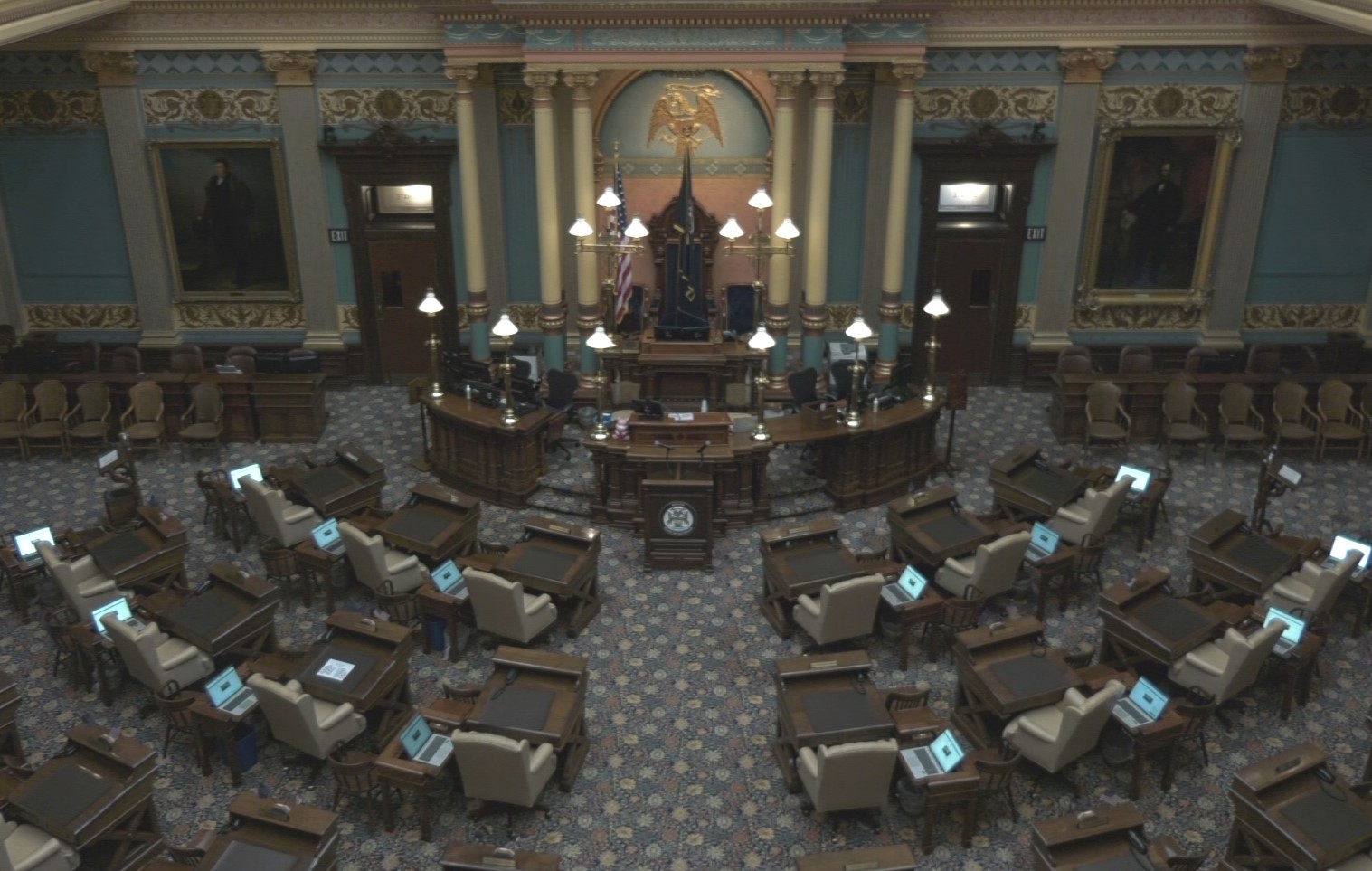
LANSING, Mich. (WZMQ) – The Michigan Senate Civil Rights, Judiciary, and Public Safety Committee heard extensive testimony Thursday on a package of bills aimed at limiting immigration enforcement in sensitive locations. The testimony highlighted concerns from tribal leaders, educators, and advocacy groups about fear, intimidation, and potential civil rights violations.
Michigan lawmakers have introduced three bills addressing law enforcement and immigration enforcement practices.
SB 510 would require officers to wear visible uniforms and generally prohibit masks or disguises when interacting with the public, except for safety reasons like disease protection, face protection, or undercover work.
SB 509 would prevent government agencies from sharing personal identifying information if it’s intended for federal immigration enforcement, unless the requester has a court-issued warrant, and would require agencies to report all such requests annually.
SB 508 would bar immigration enforcement actions in sensitive locations, such as schools, hospitals, places of worship, courthouses, and organizations serving vulnerable populations, unless a court order allows it or there’s an immediate public safety threat.
Tribal Leaders Raise Alarm Over Federal Enforcement Practices
Austin Lowes, elected chairman of the Sault Ste. Marie Tribe of Chippewa Indians testified that his tribe had proactively alerted more than 50,000 members about their rights in the wake of increased federal immigration enforcement activities. He described a culture of fear among tribal citizens, intensified by masked federal agents operating in unmarked vehicles.
“Minority communities are disproportionately impacted by law enforcement, operations, and methods that increase fear, do not result in de-escalated outcomes,” Lowes said. “The irony that tribal communities are now being forced to demonstrate their citizenship in a country where we were the first residents is not lost on us.”
Lowes detailed efforts by the tribe to educate their members on lawful interactions with federal agents and to ensure tribal schools, housing programs, and service programs understand their rights under U.S. law. He said the bills would provide critical transparency and accountability, rebuilding trust between law enforcement and communities across Michigan.
Senator Jeff Irwin (D- Ann Arbor) asked Lowes to elaborate on the harm these enforcement tactics have caused tribal members. Lowes noted that tribal citizens, particularly those with darker skin, face racial profiling, harassment, and intimidation, sometimes escalating to detentions despite their legal status. Tribal governments have issued additional tribal IDs to help members prove their U.S. citizenship, but he emphasized, “It shouldn’t happen. It shouldn’t happen to Native communities.”
Advocates for Survivors of Violence Support Sensitive Location Protections
Testimony from advocates for survivors of domestic violence and human trafficking reinforced the need for sensitive location protections. Johanna Kononen, Associate Director at the Michigan Coalition to End Domestic and Sexual Violence, explained that federal enforcement in shelters and service centers could prevent survivors from seeking life-saving assistance.
“People seek the services of domestic and sexual violence and human trafficking providers when they are fleeing dangerous situations,” Kononen said. “If immigration enforcement occurs in these sensitive spaces, it is no longer a safe location, not just for immigrants, but for all survivors residing there.”
Jessica Glynn, Vice President of Victim Services at the YWCA Kalamazoo, highlighted the real-world impact on survivors, noting that in 2025 her organization served hundreds of victims, including immigrants, who might otherwise have avoided seeking help due to fear of federal enforcement.
“Safety is immediate, fragile, and often the difference between life and death,” Glynn said. “For immigrant survivors, fear of immigration enforcement is one of the most powerful tools of control used by abusers and traffickers.”
Both speakers emphasized that the bills do not interfere with law enforcement acting under judicial warrants, but instead establish clear protections in spaces specifically designated to help vulnerable individuals.
Opposition Warns of Legal Conflicts and Operational Challenges
Opponents, including representatives from FAIR (Federation for American Immigration Reform), cautioned that the bills could conflict with federal law, including the Supremacy Clause, and interfere with Immigration and Customs Enforcement (ICE) operations. They argued that ICE typically exercises discretion when entering sensitive locations and that officers already take steps to minimize disruption and risk.
“Courthouses are not sensitive locations. ICE knows that individuals in locations like a courthouse are unarmed,” Sherry Rendell of FAIR testified. “For them to take someone into custody there is safer for the individual, law enforcement, and the public.”
The testimony highlighted a stark contrast between lawmakers and advocates pushing for protective measures and opponents warning of potential federal conflicts and enforcement limitations.
Next Steps
The committee will continue deliberations on Senate Bills 508, 509, and 510, as well as Senate Resolution 86. Advocates hope the legislation will provide legal clarity, prevent racial and ethnic profiling, and protect vulnerable populations, particularly Native American communities and survivors of domestic violence, from undue fear and harm.