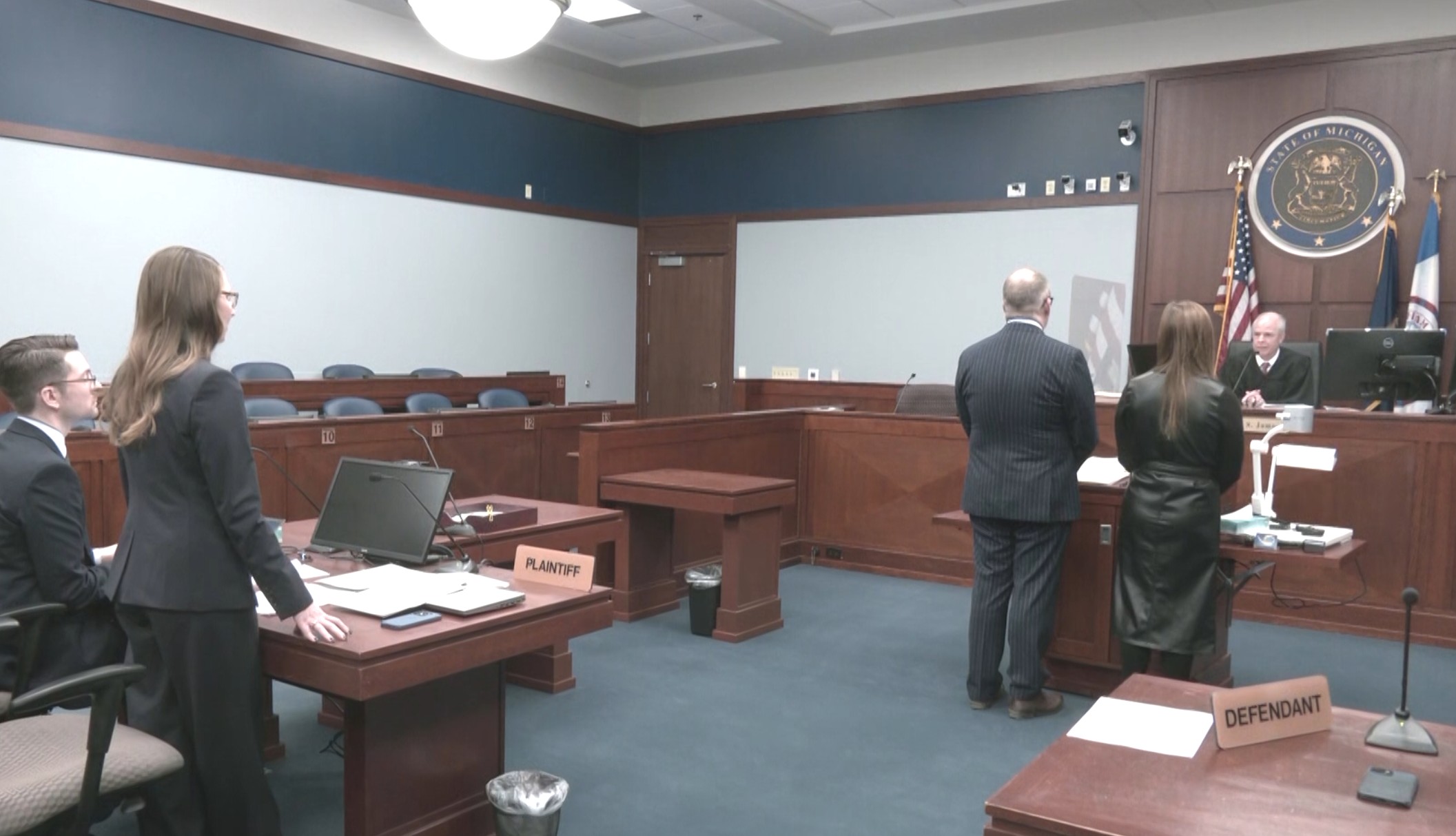
LANSING, Mich. (WZMQ) – Michigan Attorney General Dana Nessel is urging the Michigan Supreme Court to adopt new rules limiting civil arrests inside courthouses, warning that increased immigration enforcement in court buildings is discouraging victims, witnesses, and defendants from participating in the justice system and putting public safety at risk.
In a recent letter to the court, Nessel backed a proposed amendment to Michigan Court Rule 8.115 that would generally prohibit civil arrests inside courthouses. She says the move would restore long-standing protections that once existed under the federal government’s “sensitive places” doctrine.
“We’re asking that the Michigan Supreme Court promulgate a rule that would, in effect, ban law enforcement from engaging in arrests or immigration enforcement inside our state courthouses,” Nessel said. “What we’re seeing is that people are just not showing up for court.”
Nessel said fear of arrest has spread well beyond immigration-related cases, affecting crime victims, witnesses, and people involved in civil lawsuits. She warned that the trend is interfering with both criminal and civil proceedings.
“And so it’s really interfering with our criminal justice system, our civil justice system,” she said. “And it doesn’t have to be this way.”
For decades, federal policy has restricted immigration arrests in sensitive locations, such as schools, hospitals, and courthouses. Nessel said returning to those standards would not prevent immigration enforcement from continuing elsewhere.
“This would be nothing new,” she said. “It would just be, let’s go back to what we were doing before.”
Nessel said judges across Michigan have raised concerns about courthouse disruptions caused by civil arrests, describing chaotic scenes that make it difficult for courts to function.
“I have personally spoken to judges who say that they simply are not being able to perform the regular duties of the operations of their court,” Nessel said. “There’s all this commotion in the hallway, shouting and screaming and crying and people scattering all over the place. You can’t have that and operate a courtroom. You just can’t.”
She emphasized that immigration enforcement can continue without taking place inside courthouses.
“The ICE agents can still do their job, but without interfering with our system of justice, which is exactly what they’re doing right now,” Nessel said.
According to Nessel, the consequences are especially severe in cases involving vulnerable victims, including survivors of human trafficking.
“On our human trafficking cases, we’re hearing far fewer people report these cases,” she said. “We’re having less success solving these cases, and we certainly are having significant issues prosecuting these cases because we can’t get the victims or the witnesses to appear in court.”
Nessel said the fear extends even to people who are lawfully present in the country or U.S. citizens, noting that many people do not carry passports or birth certificates when they go to court.
“I’ve been to court thousands and thousands of times in my career. I never brought those documents with me,” she said. “To tell people you can’t even go to court now unless you have those documents, and if you do, you could be detained for hours or days or even deported for coming to court, I think it’s really interfering with what our traditional notion of justice is.”
She said even routine matters, such as traffic hearings, are being affected.
“We want people to come to court,” Nessel said. “If someone needs driver safety courses, don’t we want that person to come in, have the judge say, ‘Here’s what you need to do,’ and then go do it? That’s best for public safety.”
Nessel also raised broader concerns about the conduct of immigration enforcement nationwide, saying it has contributed to fear and mistrust in communities.
“ICE is terrorizing people all across the United States, and unfortunately, Michigan communities are not immune to that,” she said. “This is not the way a law enforcement agency should operate.”
She cited concerns about agents wearing masks, using unmarked vehicles, and failing to coordinate with local law enforcement, creating confusion about whether enforcement actions are legitimate.
“It’s a scary set of circumstances in part because people don’t even know if they’re real law enforcement or not,” Nessel said, pointing to reports of impersonations and crimes committed by individuals posing as ICE agents.
Nessel also criticized the federal response to a recent incident in Minneapolis in which a woman died during an ICE operation, saying the Department of Justice’s decision not to investigate sends a dangerous message.
“For the Department of Justice to say, ‘We’re not even going to investigate this case,’ is absolutely abhorrent,” she said. “It sends the message that these ICE officers can literally get away with murder.”
Nessel contrasted that with Michigan’s approach to officer-involved deaths.
“When we have an officer-involved shooting or an in-custody death, we automatically investigate those cases,” she said. “We do a comprehensive analysis, and we make those findings public so people can have faith and confidence in law enforcement.”
While the proposed court rule would address courthouse arrests, Nessel said it is only a partial solution.
“It’s not enough,” she said. “What we need is an act of Congress.”
She called on lawmakers to clearly define sensitive spaces where arrests should not occur, including schools, hospitals, and courthouses.
“So people can know they can go to a hospital and get medical treatment and not get arrested,” Nessel said. “So people can know they can take their children to school and not feel like, if I do this, I’m going to get arrested during the process.”
Nessel also pointed to pending federal legislation sponsored by Michigan Sens. Elissa Slotkin and Gary Peters that would require ICE agents to be clearly identified and prohibit the use of masks and unmarked vehicles.
“There are so many reasons why that’s just good policing,” she said.
She warned that current enforcement practices risk damaging trust in all law enforcement agencies, not just immigration authorities.
“They’re really tainting all the other law enforcement agencies out there,” Nessel said. “If people don’t want to cooperate with investigations because they’re so afraid of all law enforcement, that means that we’re going to have a crime escalate in our state. There’s no question about it.”
Nessel said restoring trust and ensuring access to justice must remain a priority.
“It’s deeply concerning,” she said.