LANSING, Mich. (WZMQ) – Michigan Democrats are making another attempt to pass a package of nine bills that became the focus of a nearly two-year legal battle after they were withheld from Gov. Gretchen Whitmer before ultimately being vetoed earlier this year.
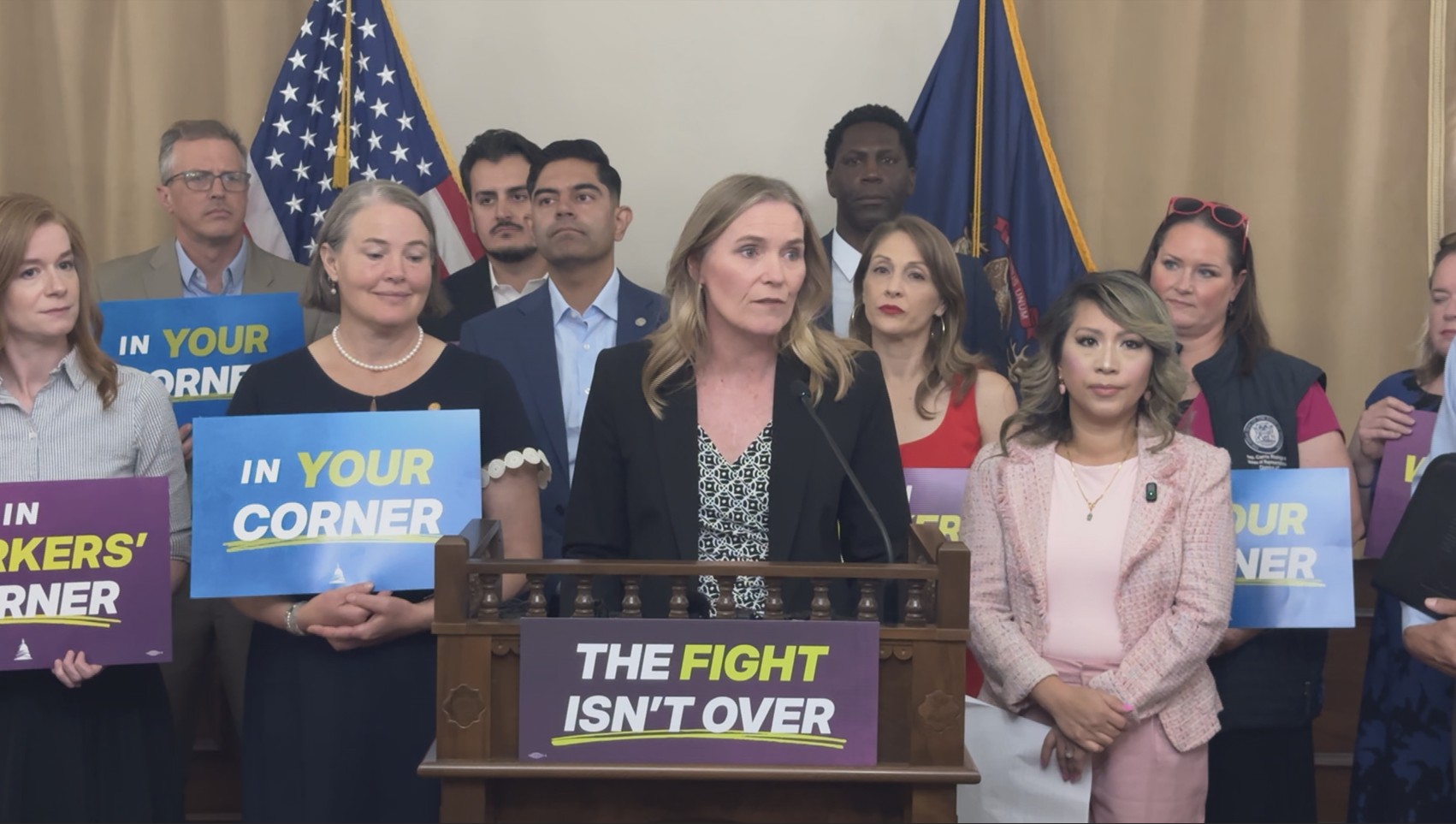
Senate Majority Leader Winnie Brinks, D-Grand Rapids, and House Minority Leader Ranjeev Puri, D-Canton, announced Wednesday that Democrats have reintroduced the legislation, which includes measures aimed at lowering health insurance costs for public employees, restoring retirement benefits for certain public safety workers and expanding protections against some debt collection practices.
The original package passed both chambers during the 2023-24 legislative session but was not transmitted to the governor for more than a year. Democrats sued then-House Speaker Matt Hall, arguing the delay violated the Michigan Constitution. After the Michigan Supreme Court ordered the bills sent to Whitmer, she vetoed them, citing legal and fiscal concerns and urging lawmakers to send revised legislation back to her desk.
Brinks said Democrats intend to do just that.
“A legal battle and a veto may have delayed this legislation’s passage, but it did not diminish its value or our commitment to getting it done,” Brinks said.
One of the highest-profile bills would allow public employers to contribute a larger share toward health insurance premiums for teachers, police officers, firefighters and other public employees. Supporters say it would help offset higher insurance costs created under Public Act 152, which limits employer contributions toward employee health coverage.
Sen. Kevin Hertel, D-St. Clair Shores, who reintroduced the Senate version of the legislation, said some public employees have faced health insurance increases of thousands of dollars annually.
“The choice before us is very simple,” Hertel said. “People can continue playing political games or we can actually solve a serious problem for the people who sent us here and who are counting on us to get the job done.”
Rep. Mai Xiong, D-Warren, who sponsored the House version, said the bills also address retirement security and other financial protections for public workers. She accused House Republicans of delaying the legislation for 18 months and argued the legal battle cost taxpayers hundreds of thousands of dollars.
Labor groups joined Democratic lawmakers in support of the package.
Kara Ayotte, president of the Michigan Nurses Association, said one of the bills would have reduced health care costs for nurses represented by the union and affected recent contract negotiations.
Michigan AFL-CIO President Ron Bieber called the package “lifelines for working families,” saying it would strengthen retirement protections and reduce financial burdens for public employees.
Democrats say bills have been revised
Much of Wednesday’s discussion focused on Whitmer’s earlier veto.
Asked whether Democrats are confident Whitmer will sign the bills if they reach her desk again, Brinks said lawmakers have discussed the governor’s concerns and believe they can address them.
“We believe that there were remedies for the concerns that were raised in the veto letters,” Brinks said. “At this point, she is requesting those bills to come to her desk. As we are introducing them today, we will make the necessary changes so that they meet the muster.”
She acknowledged, however, that signing the legislation ultimately remains the governor’s decision.
Republicans have not yet signed on
Puri said Democrats have not yet discussed the legislation with House Republicans, who control the chamber, but said they remain willing to negotiate.
“I have not had any conversations with the House Republicans on this, but the offer stands that we are willing to work in good faith to get this done,” Puri said.
He added that he is skeptical the bills will advance this year under Republican leadership but said Democrats intend to continue pursuing them if they regain unified control of state government after the 2026 election.
Looking ahead instead of looking back
Reporters also asked whether Democrats would investigate how the bills were delayed if they regain the House majority.
Puri said his focus is on preventing similar situations rather than reopening the dispute.
“If I find myself as Speaker of the House, I will be doing whatever I can to make sure that there’s a process in place in which things are transparent and get done the way that they’re supposed to,” he said.
Brinks similarly defended Democrats’ continued criticism of Hall despite Whitmer’s eventual veto, arguing the former speaker’s decision to withhold the bills for 18 months created the circumstances that led to the governor’s concerns.
“I certainly think that Speaker Hall had the power to put these bills on the governor’s desk for 18 months,” Brinks said. “It would have eliminated some of the things that were cited as concerns in the veto letter.”
She also pointed to the court rulings as establishing that legislative leaders cannot indefinitely withhold bills passed by both chambers, though she said lawmakers could consider whether additional statutory changes are necessary to reinforce that precedent.
Questions remain about funding
Reporters also asked how lawmakers would pay for the increased employer health insurance contributions that some of the bills would allow.
Brinks did not outline a specific funding plan but said lawmakers routinely balance competing budget priorities and expressed confidence that the Legislature could address the fiscal impact during the budget process.
“We certainly are no strangers to making tough decisions about budget items,” she said.
The reintroduced bills must once again pass both the House and Senate before they can return to Whitmer for consideration. Democrats currently control the Senate, while Republicans hold the majority in the House, making bipartisan support likely necessary for the package to advance this legislative session.