WASHINGTON, D.C. — Taiwan may be separated from mainland China by nearly 100 miles of water, but it continues to find itself at the center of a growing geopolitical storm.
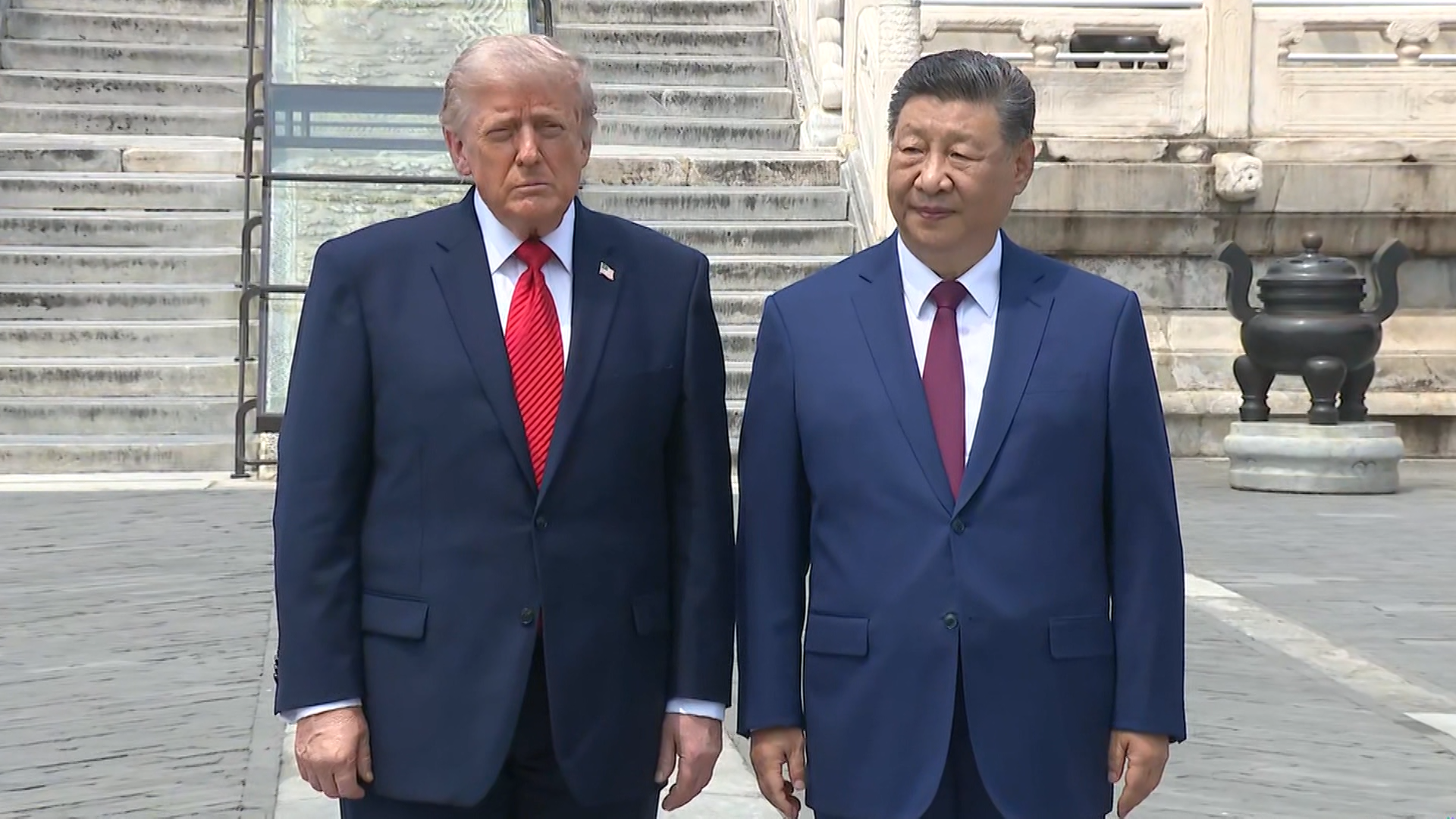
During a recent summit in Beijing, Chinese leader Xi Jinping warned President Trump that mishandling the Taiwan issue could lead to what he called “clashes and even conflicts.”
“I think that the Chinese are looking at what has happened with the Russians in Ukraine as well, and thinking that maybe they can take some of the land that they believe is theirs back, namely Taiwan,” said Dr. Todd Belt, professor and director of the Political Management Master’s Program at George Washington University.
During a summit in Beijing, Xi reportedly warned Trump that the future of U.S.-China relations could hinge on how Washington handles Taiwan. At the same time, concerns are mounting over a $14 billion U.S. weapons package that has yet to receive final approval.
“Well, it has never been the policy of the United States to negotiate arms sales to Taiwan with China,” Belt said.
U.S. support for Taiwan dates back decades. In 1982, the Reagan administration sought to balance America’s relationships with both Taiwan and the People’s Republic of China. This effort resulted in the August 17 Communiqué with Beijing, while President Ronald Reagan also provided Taiwan with the “Six Assurances” to reaffirm U.S. support and ease concerns in Taipei. One of the Six Assurances is that the United States would not consult with Beijing about arms sales to Taiwan.
However, following the summit in Beijing, Trump suggested the arms package could become a negotiating tool in future talks with Beijing.
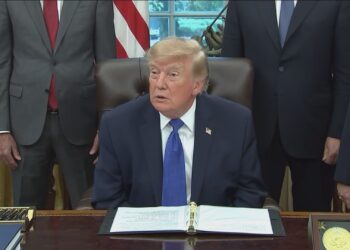
“President Xi and I talked a lot about Taiwan,” Trump said following the summit in mid-May.
“There are a lot of people who are really worried that China is having a say in the arms sales to Taiwan,” Belt said.
Meanwhile, the acting secretary of the Navy recently suggested the package may be paused as the United States replenishes weapons stockpiles depleted during the conflict with Iran.
“You have to think that Xi sees an opportunity with the United States really having a problem in Iran. And that’s related to this because a lot of those arms sales to Taiwan are for anti-ballistic missiles and for anti-aircraft missiles that we know the United States has depleted in the Iran war,” Belt said.
Taiwan’s representative to the United States argues delaying those arms could weaken deterrence.
“If we want to prevent a war from happening, I think it’s best that Taiwan is strong, able to defend itself,” said Ambassador Alexander Yui, Taiwan’s representative to the United States, during an interview on CBS’s Face the Nation on May 17.
“Therefore, we should be able to acquire to buy the arms that we need to have a stronger defense … it makes more sense for the United States to sell us the arms so we can defend ourselves, and so you don’t have to send your army 9,500 miles away to defend us,” Yui added.
Some lawmakers, however, view Xi’s warning as more political theater than a military threat.
“When you play high stakes poker, you make high stakes comments,” said Rep. Jack Bergman, R-Mich.
Still, analysts caution that Beijing may see an opportunity as American resources are stretched by conflicts elsewhere. However, Belt says Taiwan may have another card to play — technology that has reshaped battlefields from Ukraine to the Middle East.
“There is a new type of weapon that is allowing more asymmetrical warfare and that is the drone,” Belt said. “If Taiwan is able to start developing some of their own homegrown drones, the way that we’ve seen the Ukrainians do and frankly the way we’ve seen the Iranians do against the United States, this might be the saving grace for them.”