
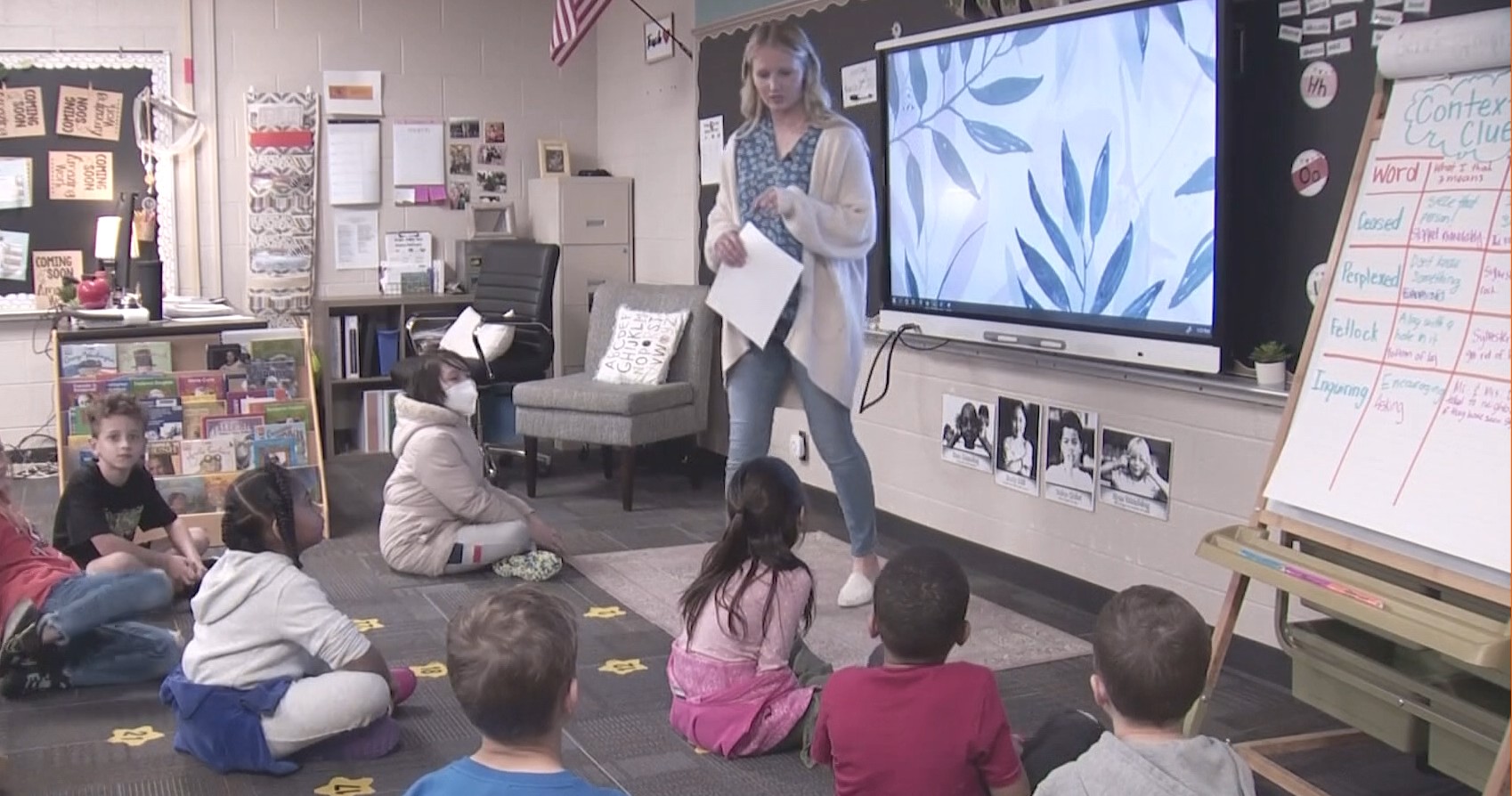
LANSING, Mich. (WZMQ) – March is Reading Month in Michigan schools, and state education leaders say the annual celebration is also an opportunity to highlight new efforts aimed at improving literacy across the state.
Officials with the Michigan Department of Education say this year’s campaign comes as the state continues implementing dyslexia and literacy legislation approved in 2024. The laws focus on strengthening reading instruction and expanding training for educators who teach early elementary students.
Deputy Superintendent Delsa Chapman, who oversees the department’s Division of School Improvement, Assessment, and System Support, said the month marks an important milestone in those efforts.
“Coupled with our efforts through the legislation in fall of 2024, the successful passing of the dyslexia and literacy laws, this year’s March Reading Month is definitely a milestone for all that we have accomplished for almost two years now relating to that law,” Chapman said.
A key part of the strategy is expanding LETRS training, a program that focuses on the science of reading and helps teachers better understand how students develop literacy skills. State officials say the training is especially important for educators working with students from pre-kindergarten through fifth grade.
Chapman said the department is also sending staff members into schools throughout the month to help model reading instruction and encourage students to stay engaged with books.
“There are over, at this point, 100 MDE staff members and affiliates, including State Board of Education members, who are getting out in over 100, I think it’s 182 at this point, schools that will be visiting between now and the end of March, getting in and modeling the importance of reading,” she said.
The literacy push also comes as Michigan leaders continue to examine why reading scores have struggled in recent years. Chapman said the issue has developed over decades and involves multiple factors.
“Over the last two decades, a lot has happened,” Chapman said. “It has changed in the way that instruction is delivered, and there are quite a few elements and factors that occur outside of the school day that can definitely impact learning.”
Namely, economic challenges and the COVID-19 pandemic have played a role. School closures and remote learning disrupted instruction for many students, and educators are still working to address the long-term effects.
State education officials say another priority is strengthening the connection between schools and families. Many districts have begun creating family education hubs and other programs aimed at helping parents support literacy at home.
“And so we do have family education hubs and family education centers across the state now,” Chapman said. “Many school districts, independently and on their own, are implementing those type of support services so that there is a true school-to-home connection.”
Ultimately, Chapman said the goal is to shift the way literacy is viewed, making reading a natural part of everyday life rather than something limited to classroom assignments.
“So we’re really changing the culture around literacy,” Chapman said. “Literacy is a part of our daily lives, and reading can definitely be that key to opening up and expanding knowledge.”
State education leaders say continued funding, teacher training, and community involvement will be critical as Michigan works to improve reading outcomes for students across the state.