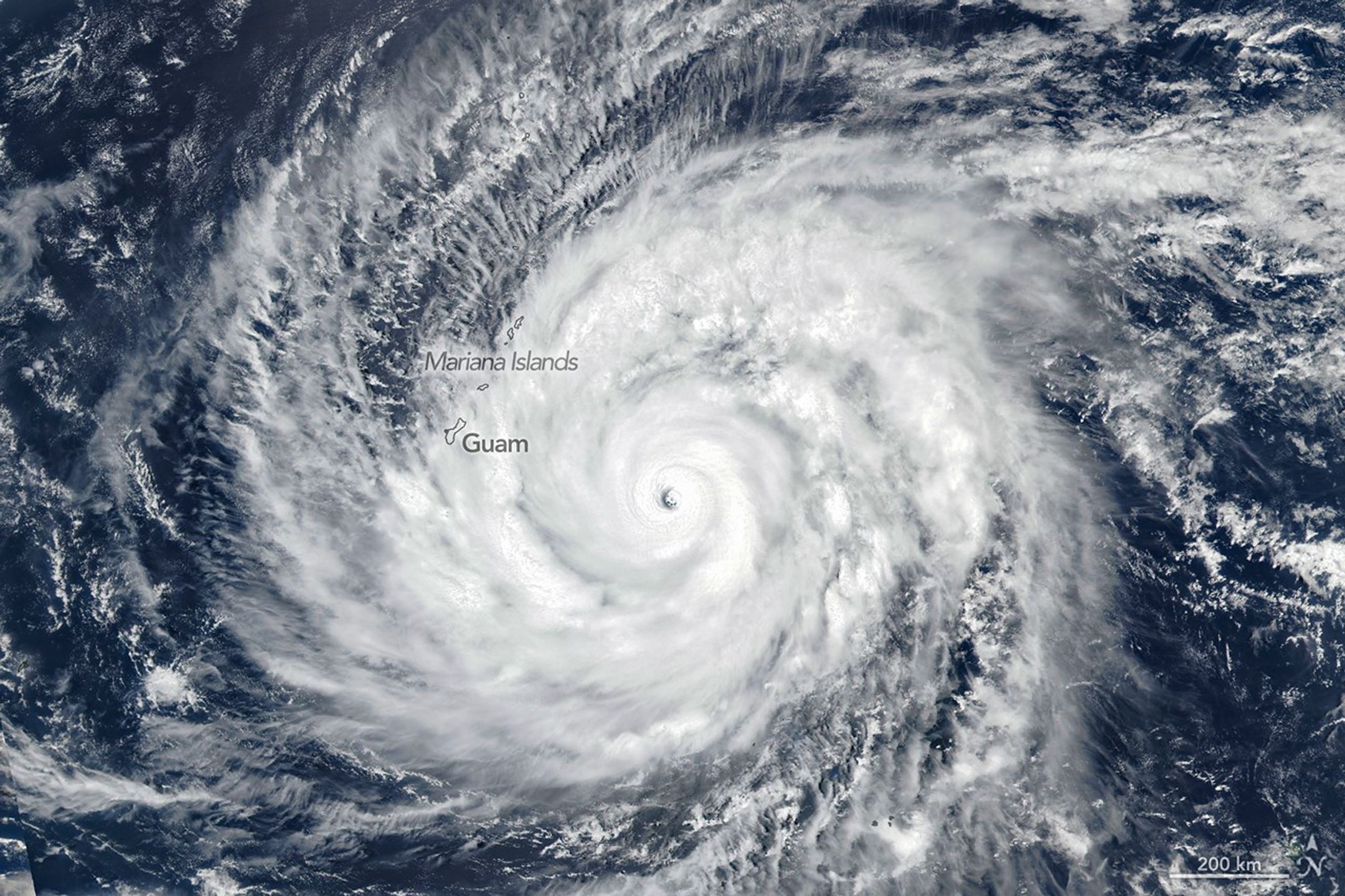
WASHINGTON, D.C. – US territories in the Western Pacific like Guam and the Northern Mariana Islands (CNMI) have been hit hard by super typhoon Sinlaku. National Weather Service officials said there’s been power outages and reports of flash flooding.
“This has definitely been what we call a long duration storm event for all of Guam and the Northern Mariana Islands,” said Landon Aydlett, the warning coordination meteorologist with the NWS based in Guam. Aydlett said Sinlaku has hit Guam with 70 to 80 miles per hour wind gusts, while CNMI are in the center of it all and taking a much bigger hit.
“This is a powerful typhoon,” said Aydlett. “There’s been two benchmarks we’ve been working with, the 2023 typhoon Mawar that made a direct hit over Guam but then 2018 super typhoon Yutu that made a direct hit over Tinian and Saipan. It’s remarkable because these islands are so small to have an eye passage right over a specific island that’s a very slim chance but to have it twice. Super typhoon Yutu eight years ago made a passage over Tinian and we’re seeing similar images in the satellite and radar imagery right now so, it’s a remarkable coincidence. This typhoon is 150 mph sustained winds, a category four super typhoon whereas Yutu was 175 mile per hour powerful category five super typhoon.”
Aydlett is concerned about the storm’s duration.
“This event is slow moving super typhoon it was stalling out about two to three miles per hour over the last several hours and that’s going to prolongue the significant wind conditions, the rain conditions,” said Aydlett.
On Saturday, President Trump approved an emergency disaster declaration for Guam and the CNMI, which allows for additional help with emergency services. Aydlett said the people on the islands are resilient but are bracing for a long storm season.
“We are starting to transition to an El Nino year so we may be in a lot of news coverage in the states because El Nino patterns typically give us a whole lot more of tropical cyclones in the western pacific especially Guam and CNMI,” said Aydlett. “We are communicating extensively to our federal and local territorial stakeholders that this might be the first of many yet to come later this year. So, we’re bolstering our preparedness, our communications and our exercise and preparations with the public and our stakeholders to make sure whatever happens for the remainder of the year.”