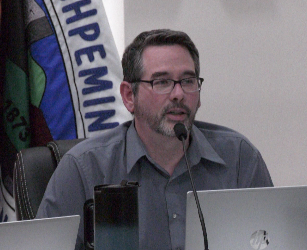
LANSING, Mich. (WZMQ) – Nearly four years after losing his son, a Marquette father says his fight to hold social media companies accountable is far from over.
John DeMay has spent the years since his son Jordan’s death speaking to families, schools, and lawmakers about the dangers children face online.
Now he’s closely watching a major lawsuit unfolding in California that could change how social media companies are held responsible for the impact their platforms have on young users.
DeMay says the case could become a turning point.
“This case that’s being heard right now is really the first of its kind,” DeMay said. “It’s going to set the precedent for how the rest of these cases are handled going forward.”
A case that could set national precedent
The lawsuit is part of a large group of cases filed in Los Angeles through what’s known as a Judicial Council Coordination Proceeding, or JCCP, involving social media companies.
According to DeMay, there are roughly 2,000 lawsuits within the coordinated legal action.
“The courts selected 24 bellwether cases,” he explained. “This case with closing arguments today is the first of those. So it’s really the first test case, and it’s going to determine how the rest of these are heard.”
Two companies, Snap Inc. and TikTok, have already reached settlements with the plaintiff in the case.
The remaining defendants include Meta and Google, whose platform, YouTube, is part of the lawsuit.
DeMay says simply getting the case to trial is already a major victory for families.
“Up until now, we’ve never been able to open the courtroom doors in civil litigation against social media companies,” he said. “Section 230 of the Communications Decency Act has always been a hard stop.”
Section 230 has historically protected tech companies from liability for content posted on their platforms.
“Parents like myself would try to sue these companies for negligent product design or malpractice,” DeMay said. “And the courts would say, ‘Sorry, they have blanket immunity.’ The cases were dismissed immediately.”
This time, a judge ruled the lawsuit could move forward because the claims focus on product design rather than user content.
“This isn’t about content,” DeMay said. “This is about product design, just like car seats, just like seat belts. Companies have a duty of care to build products that are safe for the community, especially for kids.”
Internal documents revealed in court
DeMay says weeks of testimony and documents presented in court have already revealed troubling information about how social media platforms operate.
“The win for us is the evidence that was brought forward,” he said. “Internal emails, research documents, and messaging from executives about how addictive these products are.”
He says those records show companies knew their platforms were designed to keep users engaged for long periods of time.
“The addictive nature is very well known,” DeMay said. “They admitted it internally.”
In some communications, he said executives even compared the platforms to drug dealers.
“They’re comparing themselves to drug dealers and pushers because they know the addiction is so strong,” he said.
The goal, according to DeMay, is simple: keep users online longer.
“They’re drawing users in younger and younger and keeping them on the screen longer so they can sell more ads,” he said. “That’s what this is all about. These are ad agencies.”
He says the companies generate the vast majority of their revenue from advertising.
“Ninety-five percent or more of their billions of dollars come from ad revenue,” he said. “They want kids on their platforms as young as possible so they become lifelong users.”
A broader fight beyond sextortion
DeMay first became involved in advocacy after his son Jordan died following an online sextortion scheme on Instagram.
Since then, his work has expanded far beyond that issue. Through his work traveling around the country speaking to students and law enforcement, DeMay says he’s seen how many different dangers children encounter online.
“It’s addiction, it’s fentanyl sales, it’s human trafficking, it’s sextortion,” he said. “And now we’re seeing AI chatbots convincing kids to harm themselves.”
He says many of these crimes share a common link.
“It always boils down to the same thing,” he said. “It’s a tech company, and it’s some type of product design that allows these things to happen.”
Meeting other families impacted
Over the past several years, DeMay says he has met hundreds of parents who say social media harmed their children.
“It’s an unbelievable feeling,” he said. “You meet families from all walks of life.”
Some lost children to drug overdoses linked to online dealers. Others faced exploitation or mental health crises.
“All of our groups intersect in the middle,” he said. “Because we’re all fighting the same cause.”
Despite the grief many families carry, DeMay says they find strength in working together.
“It’s exhausting, but we all come together because we know where the real pinch point is,” he said.
How lawsuits could force change
DeMay believes lawsuits may be the fastest way to force social media companies to change their platforms.
“There are really only two ways to change companies in this country,” he said. “You either sue them, or you pass legislation.”
He says civil litigation could quickly reshape the industry if companies face large payouts.
“If every one of these cases comes in at 50 or 60 million dollars and it happens over and over again, they’re going to change,” he said.
He compared the situation to safety regulations in the auto industry.
“Imagine if a seatbelt in a truck was malfunctioning and killing people every year,” he said. “Would we just keep selling the trucks and ignore it? Of course not.”
Automakers would recall the vehicles and redesign the product, he said.
“So why would we allow tech companies to keep operating if their product design is harming kids?”
Waiting for the verdict
Closing arguments in the California trial are expected to wrap up soon, with a jury verdict possible in the coming days.
DeMay says he hopes the families involved win the case, but regardless of the outcome, he believes the evidence revealed in court will have a lasting impact.
“I was in the courtroom, and I saw the documents,” he said. “Thousands of pages of them.”
Once those documents become public, he plans to include them in the presentations he gives around the country.
“It’s going to be very easy to show parents exactly what’s happening behind the scenes,” he said.
If the jury rules in favor of the families, DeMay believes the case could draw widespread attention.
“That’s what really needs to happen,” he said. “The media cycle needs to carry this story so parents understand what these companies are doing.”
Even if the case is appealed, something DeMay expects regardless of the verdict, he says the issue is unlikely to fade away.
“This is a landmark case,” he said. “It’s going to run all the way up the food chain.”
Continuing Jordan’s legacy
For DeMay, the fight is deeply personal.
Jordan’s death shook the Marquette community nearly four years ago. Since then, his parents have dedicated themselves to preventing similar tragedies.
Traveling across the country, meeting families, and advocating for change has become a mission.
“It’s about protecting kids,” DeMay said. “We need to do a better job.”