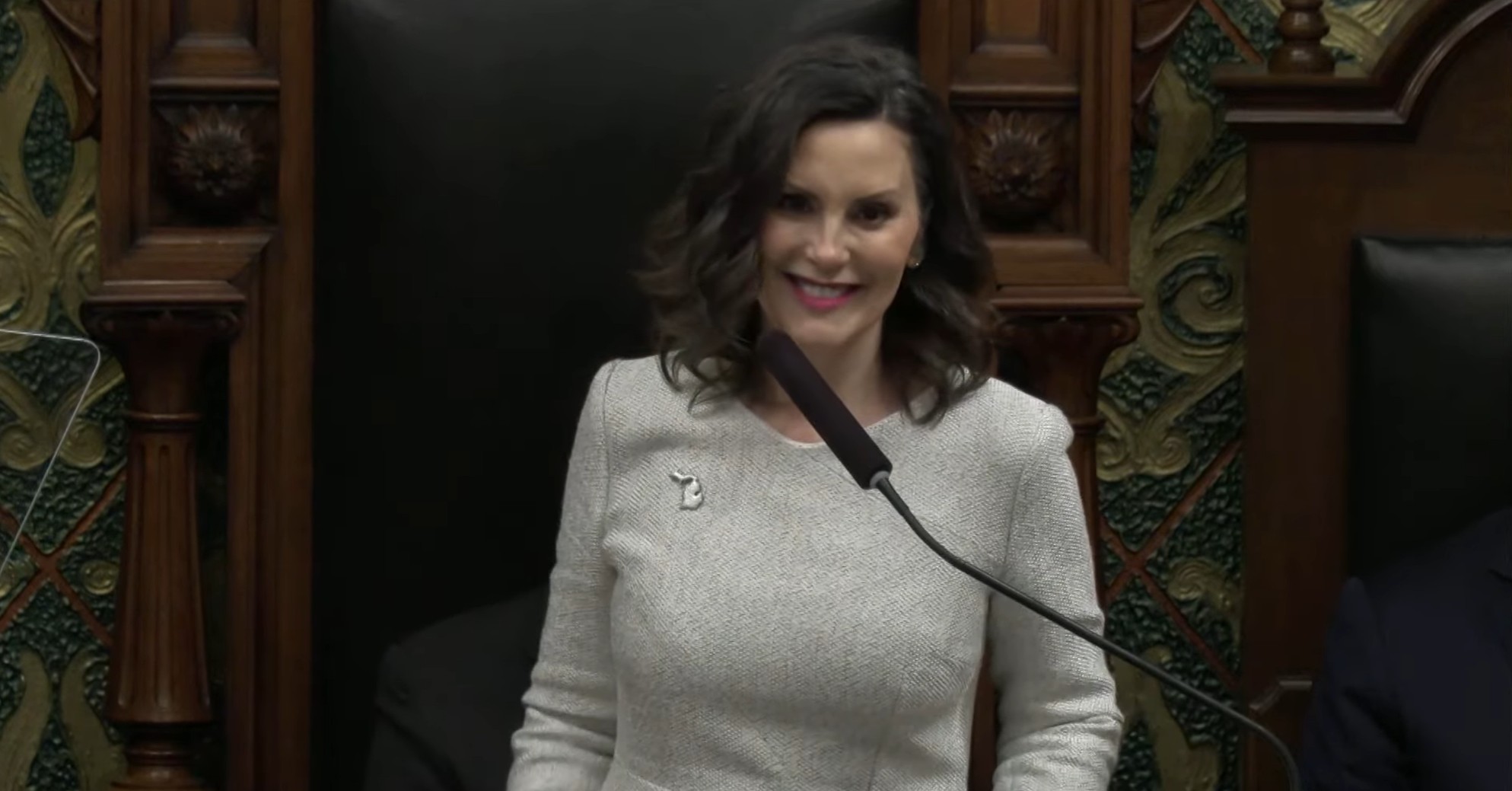
LANSING, Mich. (WZMQ) – In her final State of the State address, Gov. Gretchen Whitmer reflected on seven years in office while unveiling new policy proposals aimed at lowering costs and expanding opportunity in 2026.
Whitmer, delivering her eighth address, called for another balanced, bipartisan budget by June 30 and urged lawmakers to focus on what she described as kitchen-table issues: education, housing, and health care.
Literacy: “Every Child Reads”
The governor made literacy the centerpiece of her final-year agenda, pointing to Michigan’s ranking of 44th in fourth-grade reading and calling it a serious problem.
Whitmer’s executive budget includes what she described as the largest targeted literacy investment in state history under a plan called “Every Child Reads.” The proposal has three components: earlier instruction, statewide adoption of proven teaching methods, and expanded intervention for struggling students.
New proposals include:
- Funding free, full-day pre-K for all children.
- Expanding professional development in evidence-based literacy instruction, including LETRS training.
- Increasing tutoring, small group instruction, and summer learning support.
- Screening all students for dyslexia under recently signed science of reading reforms.
Whitmer also signed legislation earlier this month limiting cellphone use during class, a policy she first proposed in last year’s address.
Housing: Tax Credits and Zoning Reform
Turning to housing, Whitmer said rising construction costs, national shortages, and tariffs on materials have made homeownership increasingly unattainable, especially for younger residents.
While highlighting progress, including surpassing a goal of adding 75,000 homes annually and reaching 86,000 new units, she called for additional action in 2026.
New housing proposals include:
- Creating a state-level affordable housing tax credit to supplement the federal credit and unlock additional funding.
- Streamlining zoning laws and modernizing building codes.
- Reducing minimum lot sizes, setback rules, and parking requirements.
- Making it easier to build multifamily housing and accessory dwelling units.
- Eliminating what she described as “nonsensical construction requirements.”
Whitmer said Michigan is the only state in the region without its own affordable housing tax credit and argued adopting one would help build thousands more units annually.
Health Care: Medical Debt and Medicaid Stability
On health care, Whitmer warned that federal Medicaid and Affordable Care Act changes could increase costs and strain hospitals. She called on Congress to renew ACA subsidies but acknowledged states cannot offset the full impact of federal cuts.
Instead, she outlined several state-level proposals to reduce medical debt and stabilize coverage.
New health care proposals include:
- Capping interest rates on medical debt.
- Preventing medical debt from appearing on credit reports.
- Requiring hospitals to establish financial assistance programs.
- Banning liens or foreclosures on homes due to medical debt.
- Making a significant new investment in Medicaid stabilization in the state budget.
The governor noted Michigan wiped out medical debt for 210,000 residents last year, but said more protections are needed amid economic uncertainty.
Making Free School Meals Permanent
Whitmer also proposed making universal free breakfast and lunch for all 1.4 million public school students permanent, calling it a defining achievement of the current legislative session.
Economic Development and Infrastructure
The governor highlighted broader accomplishments during her tenure, including:
- Repealing the retirement tax and expanding the Working Families Tax Credit.
- Ending state taxes on tips and overtime.
- Passing seven balanced budgets and building a record rainy-day fund.
- Improving the state’s credit rating and planning to pay off $28 billion in debt.
- Fixing 26,500 lane miles of roads and nearly 2,000 bridges under a bipartisan infrastructure deal.
- Replacing 70,000 lead service lines statewide.
Whitmer also touted new manufacturing projects across the state and the upcoming opening of the Gordie Howe International Bridge connecting Michigan and Canada.
Final-Year Focus
With roughly ten months left in office, Whitmer said her mission remains unchanged: “to put you, the people of Michigan, first.”
Throughout 2026, she plans to travel the state on what she called the “G-S-D Tour,” promoting accomplishments and listening to residents.
Whitmer closed by emphasizing bipartisanship and resilience, arguing that despite economic uncertainty and political division, Michigan has repeatedly shown it can “compete and win.”