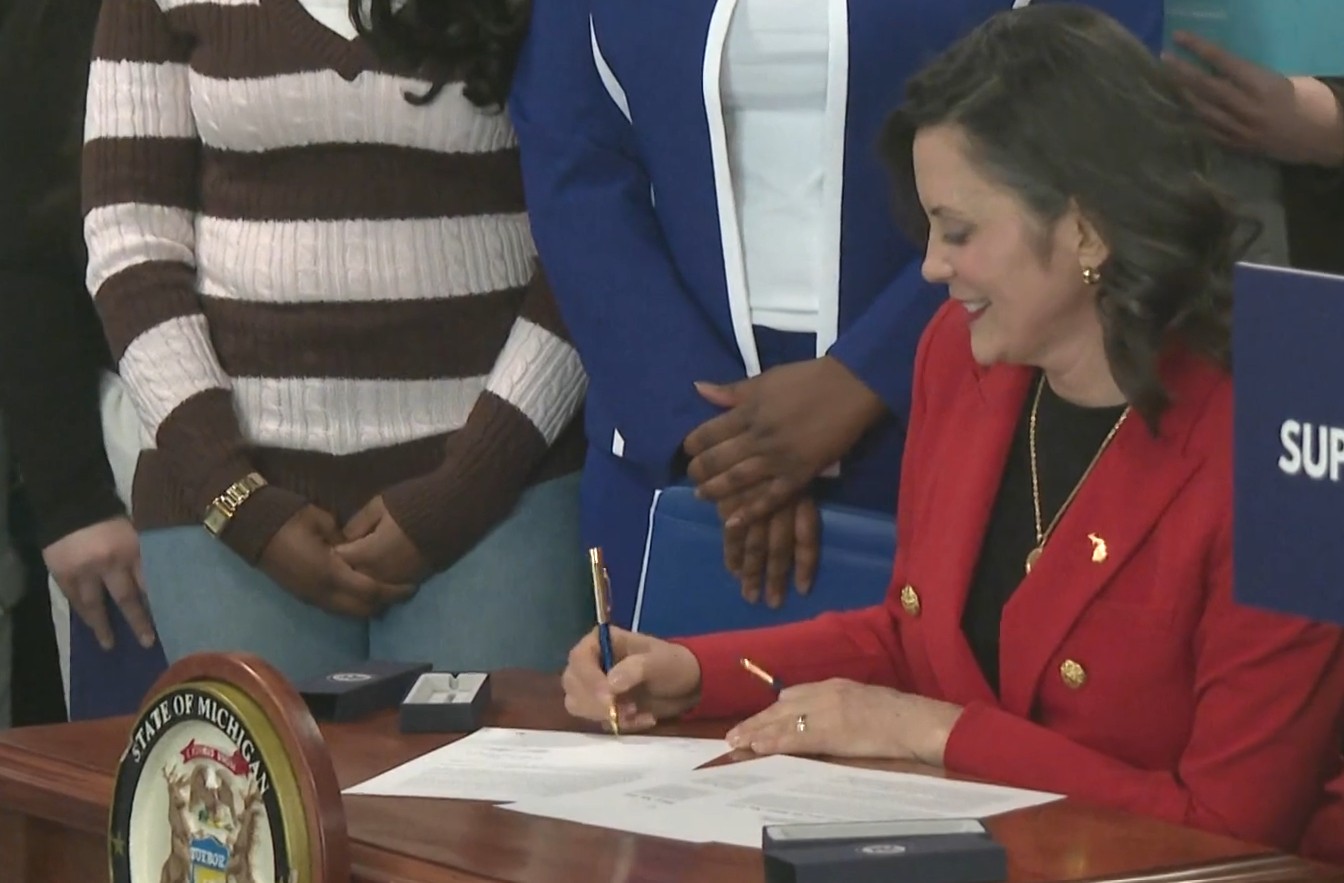
LANSING, Mich. (WZMQ) – Michigan lawmakers are beginning budget negotiations as Gov. Gretchen Whitmer enters the final year of her administration, outlining priorities that mirror key policy goals from her 2025 State of the State address.
Whitmer’s executive budget recommendation emphasizes funding for road infrastructure, expanding access to housing, improving early literacy, and reducing regulatory barriers for businesses. The proposals come as state leaders prepare for another year of bipartisan negotiations in a divided Legislature. All of this sets the stage for her final State of the State Address, where many of these topics are expected to come up.
House Republicans say they support several policy goals outlined by the governor, but are pushing back on potential tax increases or using the state’s Budget Stabilization Fund, commonly known as the rainy day fund.
“We’re not going to raise taxes, we’re not going to raid the rainy day fund, we’re going to cut the waste, fraud, and abuse in government,” said House Speaker Matt Hall, R-Richland Township.
Hall said Republican lawmakers plan to look for cost savings across state government, including eliminating positions he described as unnecessary.
“We have another 3000 plus ghost employees in state government that Anne Bollin and I have identified,” Hall said.
Education remains one area where lawmakers say bipartisan compromise may be possible. Whitmer has consistently prioritized improving third-grade reading outcomes, and Hall indicated House Republicans are open to collaborating on literacy initiatives that include accountability measures.
“I do appreciate what the governor is proposing on literacy,” Hall said. “We can look to what Mississippi did… they made early investments in education… they also put accountability in place.”
The divided Legislature has already passed one shared priority this year. Lawmakers recently approved legislation banning cell phones in K-12 classrooms, a policy Whitmer highlighted in her 2025 State of the State address.
Budget negotiations are expected to continue for several months. Michigan law requires lawmakers to approve a final budget before July 1.
Republican leaders say they want to prioritize spending on core government functions such as roads, education, and public safety, while Democrats are expected to focus on maintaining social services, Medicaid, SNAP, and infrastructure investments.
The outcome of the negotiations could help define Whitmer’s final year in office and shape the state’s fiscal priorities moving forward.