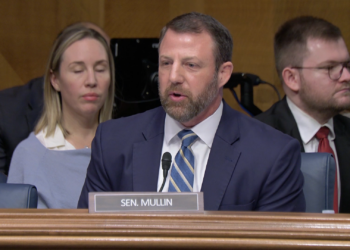
WASHINGTON, D.C. – In a Senate Commerce hearing, Senators looked at the changes to the American media landscape, focusing on a rule on broadcast ownership. The hearing comes at a time where a major broadcast group is looking to solidify a deal that could allow their broadcast company to reach 80 percent of TV households. Broadcasters shared the pros and cons of how changing that FCC rule could impact local journalism.
From social media, to podcasts, to local TV stations, the way we consume information and news has evolved over time. In a Senate hearing, members looked at broadcast ownership in the digital age.
“Today, broadcasters are fighting to stay competitive with media and tech companies with national and global reach,” said Sen. Ted Cruz (R- TX), chairman of the committee. “This raises an important question: are longstanding-broadcast media ownership rules still relevant in the digital age? And if so, to what extent? In recent years, some of these rules have been rolled back or eliminated whether more reform is needed or todays status quo remains sound policy is what we will explore today.”
Senators examined the FCC’s broadcast media ownership rules. Currently, the rule caps the number of broadcast stations an entity can reach nationwide at 39 percent of all US TV households.
But a potential merger of Tegna by Nexstar Media Group, the largest owner of local TV stations in the US with over 200 stations across 116 markets, could surpass that threshold. If finalized, Nexstar could reach 80 percent of all US TV households.
“Nearly half of their audience would have two or more Nexstar stations in a media market and that concerns me,” said Sen. Maria Cantwell (D- WA), ranking member on the committee. “To me, that is not more local voices, that is fewer.”
The National Association of Broadcasters argues the current rules are outdated in today’s digital and advertising marketplace.
“They prevent broadcasters from achieving the scale necessary to compete for audience, programming, advertising revenues and investment capital,” said Curtis LeGeyt, NAB President and CEO. “As a result, your local stations remain hobbled by rules regulated for the analogue era.”
Brian Lilly, one of the founders of Lilly Broadcasting, an independent broadcast company, has concerns about changing the broadcast owner cap rule. “The argument that local broadcasters can’t compete is false,” said Lilly in a statement. “We continue to have record years because we focus on journalism, innovate and take care of our team like family. Make no mistake if the cap is raised it will cost jobs and local journalism will suffer.”
Those against lifting or eliminating the cap said it poses risks to competition, consumers and even democracy.
“We need more independent media,” said Chris Ruddy, CEO of Newsmax. “We need more competition, not less.”
For our viewers, our station is owned by Lilly Broadcasting. Lilly operates stations in New York, Pennsylvania, Michigan, the Caribbean and US territories.