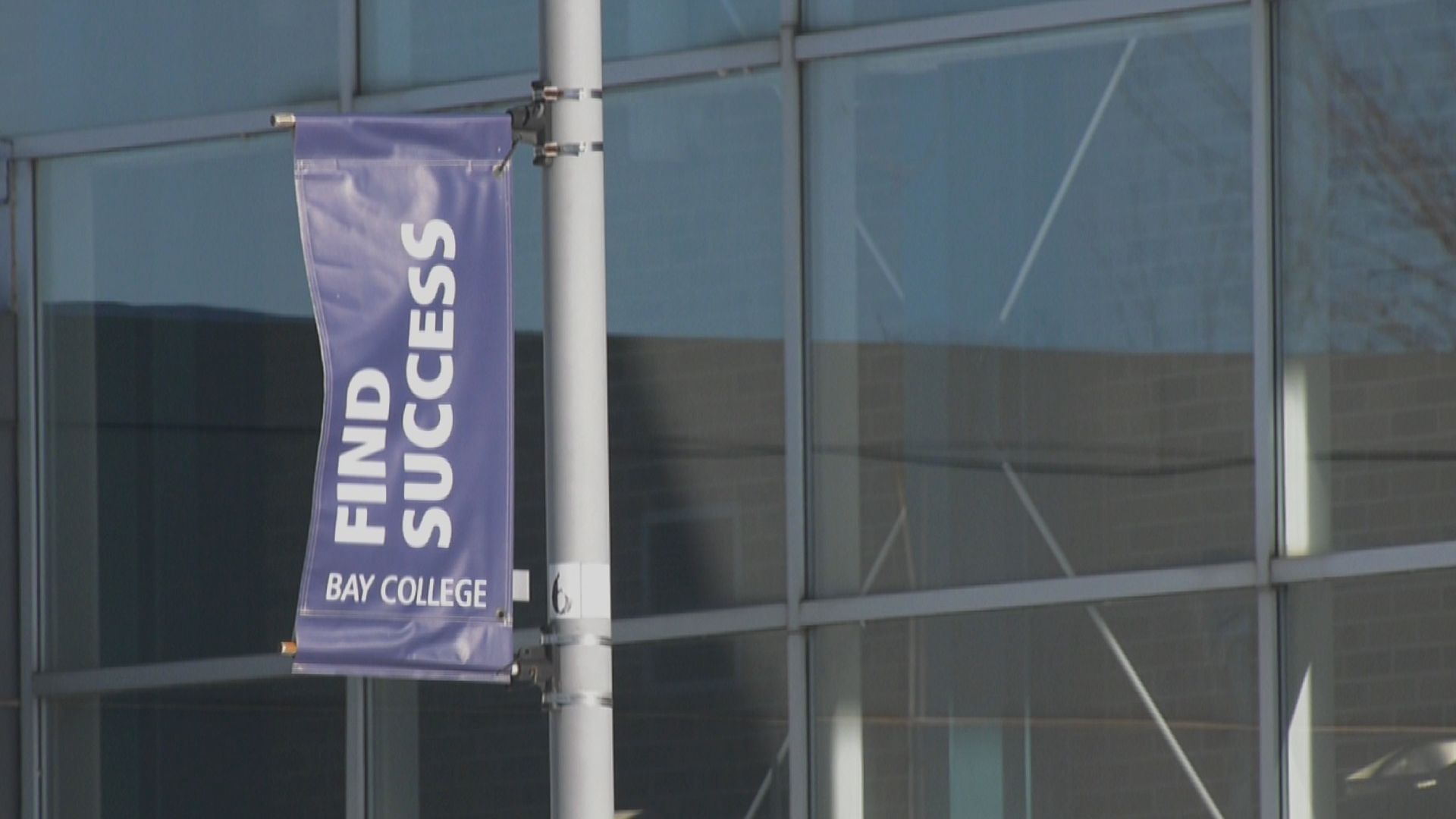
ESCANABA, Mich. (WZMQ) – On Monday, the president of Bay College was featured on a virtual panel discussion regarding student mental health.
The Mental Health Improvement through Community Colleges (MHICC) Initiative aims to improve accessibility to mental health resources for Michigan students.
“We’ve learned that there’s so much amazing work being done on the ground at each campus to support student mental health,” said MHICC Training and Technical Assistance Lead Tim Rhoades, “but a lot of the times, that work can feel like it’s being done siloed and there’s not a lot of communication and collaboration to support each other.”
That’s why MHICC invited representatives from Bay College, Grand Rapids Community College, and other organizations to address the need for mental health investments on Michigan campuses. According to Dr. Sara Abelson, an assistant professor at The Hope Center for Student Basic Needs, that need is greater than some might assume.
“We see that across the state, over half of Michigan community college students are facing clinically significant symptoms of depression, anxiety, non-suicidal self-injury or suicidality,” Abelson said. “We see that 44% of students are reporting that their mental health is interfering with their academics.”
When those issues go untreated, many students experience a dip in their GPA, a lack of motivation, and difficulty with time management. Those students also become more likely to drop out of college.
Bay College President Dr. Nerita Hughes recalled that when she first stepped into her role in 2023, she was tasked with helping to craft a new strategic plan. To support students who may be struggling, she says Bay kept mental health at the forefront of that plan.
“I did listening tours,” said Hughes. “One of the things that rose to the top is their well-being and care. Until you see yourself in the data, you will always be a part of the problem and not the solution.”
Part of Bay’s strategic plan is creating a ‘holistic student experience,’ which ensures they have what they need to find success in every area of life.
“Yes, we want you to confer your degree, but if you are mentally not prepared, physically not prepared, or you’re experiencing food insecurities or any other inability, then what we’re doing is all for naught,” Hughes said. “It’s not going to resolve anything to get them across the finish line if we don’t address what’s preventing them from moving forward.”
In places like the Upper Peninsula, resources are often limited. Hughes says getting faculty and staff on board with mental health initiatives—and also looking out for their well-being—can make all the difference for community college students.
“From a college perspective, we have to reprioritize,” she said. “If our students are not well and our employees are not well, it is that domino effect. What can we provide to make sure that this is really kind of our north star that we’re trying to aim for?”
The goal of the panel was to give Michigan community college leaders and administrators strategies they can use to advocate for mental health investments. To learn more about the Michigan Health Improvement through Community Colleges Initiative, visit mentalhealthcc.org.