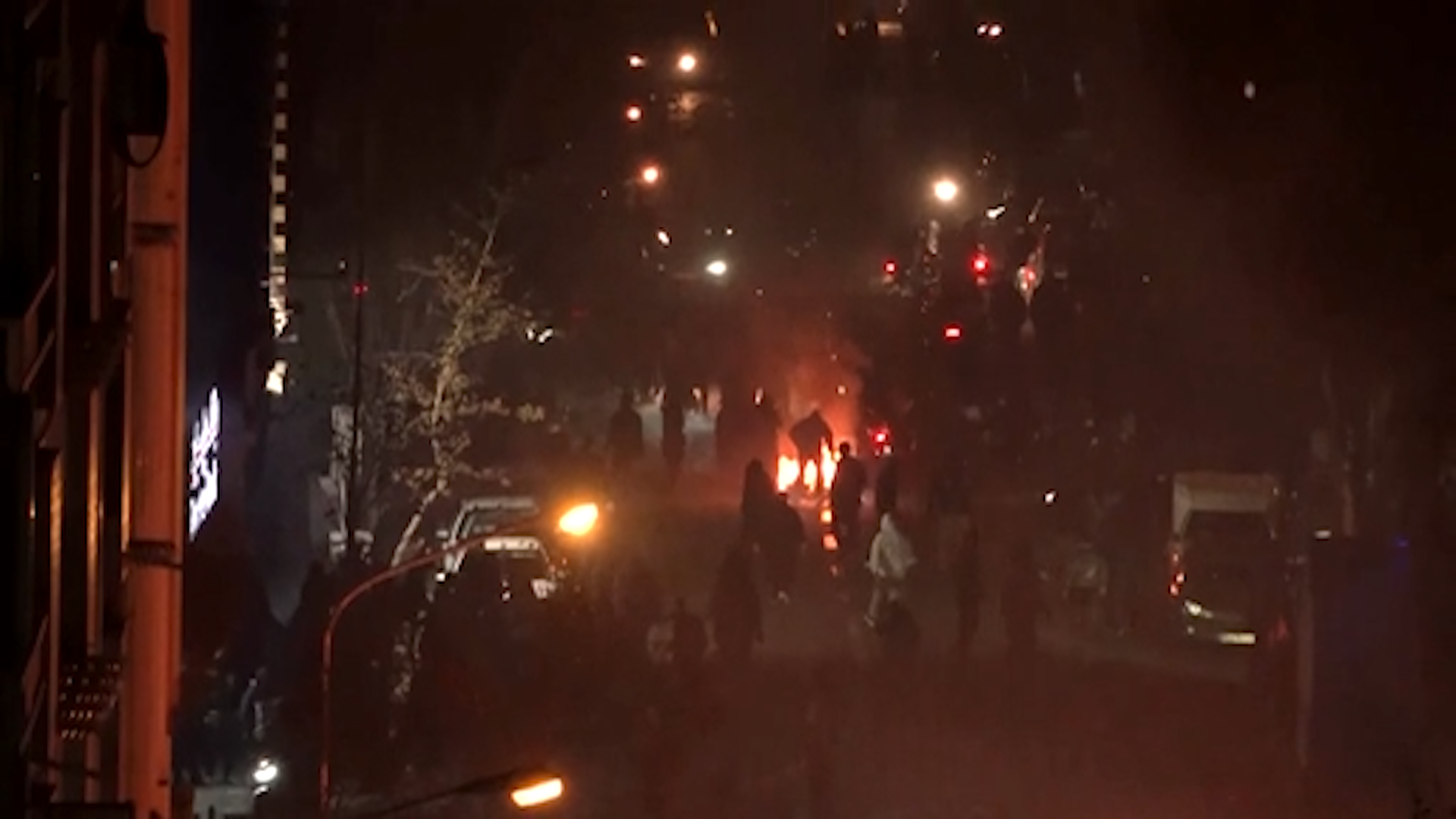
WASHINGTON, D.C. — Members of Congress, advocates and policy experts believe the Iranian regime is at a tipping point amid large-scale protests and unrest among its citizens.
Last week, the regime hit back with force, and now the question is: What will happen next? Arrests, disappearances and executions have devastated the country and Iranian-American citizens in the U.S. Many of the atrocities have been blocked by the regime to prevent the world from seeing.
“What is happening is that the regime, in order to quash the uprising, is trying to minimize communication within the leadership of their protests and also certainly to try to reduce the exposure of its carnage outside of Iran. And that’s why you see the blackout,” said Dr. Majid Sadeghpour, the political director for the Organization of Iranian American Communities (OIAC).
Thousands have been killed this year alone, and as many as 50,000 protestors imprisoned, as resistance to Iran’s Islamic regime reaches new highs.
“The regime in Iran, as you know, is a complete police state, one of the most brutal killers of its own citizens for more than four decades,” said Sadeghpour. “It’s back is against the wall.”
Advocates for regime change say the regime is running out of options, turning to violence and suppression.
“It has no way out and is unfortunately unleashing its terror against the population in a much more formidable manner,” said Sadeghpour.
For Iranian-Americans watching from afar, the pain is personal.
“We’ve met community members who have lost loved ones in this very uprising, have been shot in the head- at least two members that I am aware of,” said Sadeghpour.
Sadeghpour is no stranger to the regime’s violence. His brother was killed in the summer of 1988 by the current regime, along with 30,000 others, the overwhelming majority of whom were members of the People Mojhahedin Organization of Iran (PMOI/MEK).
He says for those still protesting — and those already lost — this fight is about one thing.
“We’re fighting for freedom,” said Sadeghpour. “Choice is at the center of what the people of Iran, our fight, have been fighting for, for decades. It motivates us to continue to keep their voice alive and fight for them as well.”
Now, pressure is mounting on Washington and its allies. Some lawmakers believe the situation is reaching a tipping point.
“This time feels different,” said Sen. Dave McCormick, R-Pa. “There’s this growing level of protest and uprising from young people in particular. And I think it shows the bankruptcy of the Iranian regime. They’re economically bankrupt, they’re morally bankrupt, militarily bankrupt.”
“Our goal as a country is not to run other countries, but it is to promote an environment where people can be self-determining, determine their outcomes. Iran has not been a country like that for an extremely long time,” said Rep. Jack Bergman, R-Mich.
“Iranian people deserve better. The United States stands with the people of Iran,” said State Department Deputy Spokesperson Mignon Houston. “We want to see the voices of the Iranian people being heard. Their human rights respected.”
But Sadeghpour says supporting the resistance in Iran requires bolder action — not with money or weapons — but with recognition and pressure on allies to cut ties with the regime.
“That’s why it’s important for the global community to really mobilize and for the United States to put pressure on our allies to designate Iran’s IRGC as a foreign terrorist organization in Europe and expel diplomats from their capitals,” said Sadeghpour. “Expelling Iranian diplomats from across European capitals can be significant because the money that this regime is making is directly going to the IRGC and enabling the killing of Iranian protesters.”