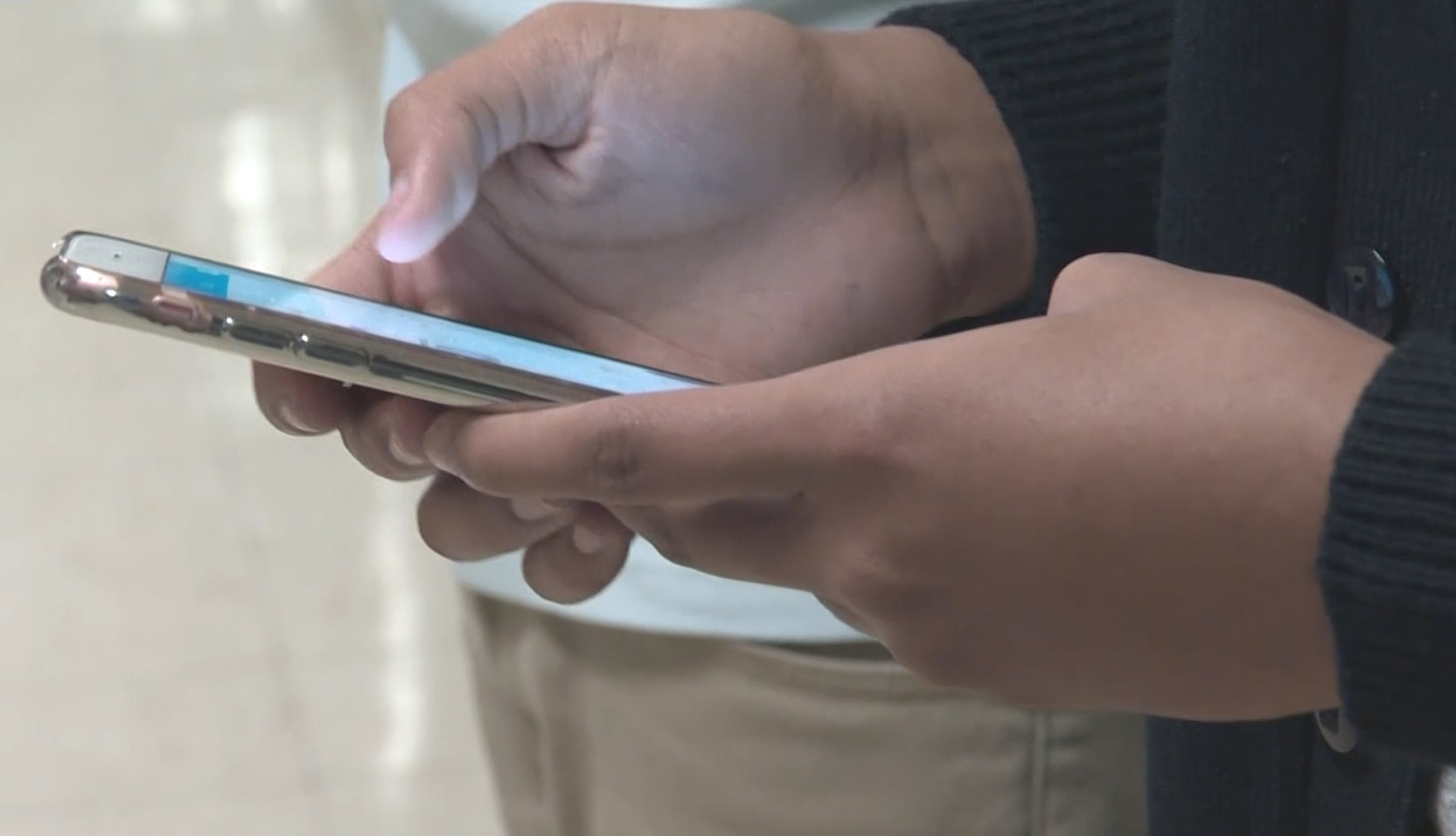
LANSING, Mich. (WZMQ) – The Michigan House has passed House Bill 4141, legislation that would require public school districts and charter schools to implement policies banning wireless communication devices during instructional time.
The bill defines wireless communication devices as smartphones and other electronics capable of accessing the internet, social media, or apps, while explicitly allowing students to carry basic phones used primarily for calling or texting. Private and parochial schools would not be affected.
Republican Rep. Mark Tisdel of Rochester Hills, the bill’s sponsor, said smartphones have become a constant distraction in classrooms and are fundamentally different from basic phones.
“Smartphones, you never put away,” Tisdel said. “And it’s just a completely different distraction than a basic phone.”
Tisdel said allowing basic phones was especially important for students in rural areas who may walk or bike to school without access to bus transportation.
“In many of the rural areas where there isn’t bus service, some kids have an extended walk or bike ride to school,” he said. “And so it was important that there be that kind of contact or availability.”
The bill includes several required exemptions, including for medically necessary devices, district-issued technology, special education programming, and limited instructional use at a teacher’s discretion. Devices used as accommodations under federal disability laws would also be allowed.
Democratic lawmakers said those exemptions were critical to securing bipartisan support.
State Rep. Regina Weiss, a Democrat from Oak Park and a former teacher, said she initially opposed the legislation but ultimately supported the negotiated version.
“All of my concerns and issues that I had with the bill, he was able to incorporate those amendments and changes into the bill,” Weiss said. “And I think we landed in a really good place.”
Supporters also cited concerns about student mental health and cyberbullying, particularly related to social media use during the school day.
“A lot of times kids would get into fights on Snapchat that would turn into actual physical fights during the school day,” Weiss said.
The bill does not include direct penalties for districts that fail to comply, but Tisdel argued that a statewide mandate will make enforcement easier by giving school administrators and teachers clear backing from state law.
The legislation is tied to a Senate bill addressing emergency use of communication devices in schools and cannot take effect unless both measures are enacted. Lawmakers say the goal is to have the package signed into law before the governor’s next State of the State address.