WASHINGTON, D.C. — With just a few weeks until they control both chambers of Congress, Democrats are outlining a long list of priorities and issues to address.
High on that list is artificial intelligence (AI) and the data centers needed to power it.
“I think the data centers were possibly the second most important issue after either the war or the economy,” said Janine Yorio, CEO of Community Digital Technologies.
Yorio believes the midterm results indicate that voters across the country are fed up with data centers.
“Because they realized they do have leverage and they can send a message, and they did it through the election,” Yorio said. “The data center developers have already tried doing things like community benefits. They’ve tried building new schools, they’ve tried paying taxes. It’s a start, but it’s clearly not enough.”
Yorio’s company specializes in improving communications and relations between communities and data center developers.
“I think data centers have become this very visible symbol of the increasing wealth disparity and this feeling of inequity,” said Yorio. “Because it isn’t fair that only the coastal elites benefit and the local people that have to live with it are still unable to afford their groceries.”
Fresh off sweeping midterm victories, Democrats are already taking aim at data centers.
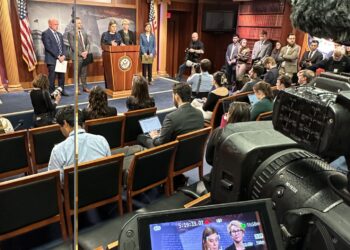
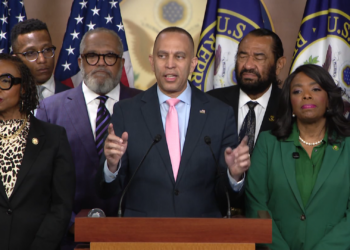
“It is time for Americans from across the political spectrum to stand up and to demand a nationwide moratorium on data centers,” said Rep. Jim McGovern, D-Mass., at a press conference this week on Capitol Hill. “If this AI infrastructure is so great, why are they making shady deals without community input? If it is so profitable, why are they begging for government subsidies? And if it’s so popular, why are the voices of people so loud begging them to stop?”
With looming fears of AI’s capabilities, Democrats are also calling for “common sense guardrails for AI,” said Sen. Kirsten Gillibrand, D-N.Y.
“Democrats and Republicans must come together to build an AI framework that restricts the use of AI in health care denials, shield consumers from AI-driven scams and prevent the deployment of offensive autonomous weapons without human approval,” Gillibrand added.
On Capitol Hill, there is some bipartisan support for tougher federal regulation on the technology.
“To make sure that we put regulations in place that protect every single citizen that we come in touch with and who is part of this incredible nation,” said Rep. Mike Kelly, R-Pa. “You better make sure that what you’re doing is in the best interests of the people that you represent.”
Kelly believes it’s important to move slowly and take time to weigh pros and cons.
“Look at the benefits that could come from all this. On the other sense, look at globally where we are and who we’re in competition with. At some point you look at what’s the most advantageous thing for the greatest nation the world has ever known to remain the greatest nation that the world’s ever known,” Kelly said.
President Trump has expressed support for AI companies to police themselves, rather than imposing tougher government guardrails.
“The United States is also leading the world in superintelligence, SI,” said Trump at the Asia-Pacific Economic Cooperation (APEC) Summit this week. “We’re leading everybody by a lot and we hope to keep it that way and we will keep it that way.”
However, self-regulation for AI companies is largely unpopular on Capitol Hill, which means there could be a bipartisan effort in the new Congress to rein in AI.
“In this new technology, to allow any entity to self-regulate means you introduce the potential for trying to get around the system,” said Rep. Jack Bergman, R-Mich. “So the government has to have a role in the guidelines and the guardrails, and then the oversight.”
AI is here to stay, according to Yorio. Now, it’s a matter of figuring out how the technology — and the infrastructure that powers it — can coexist with communities across the country.
“I believe that Americans generally want to see innovation occur and that does mean figuring out how to make peace with AI growth,” said Yorio. “The genie is out of the bottle. Where it gets built is a function of whether we can make deals that people feel good about.”
To find out if you live near an existing or proposed data center and whether you may be eligible for economic benefits, visit Community Digital Technologies.