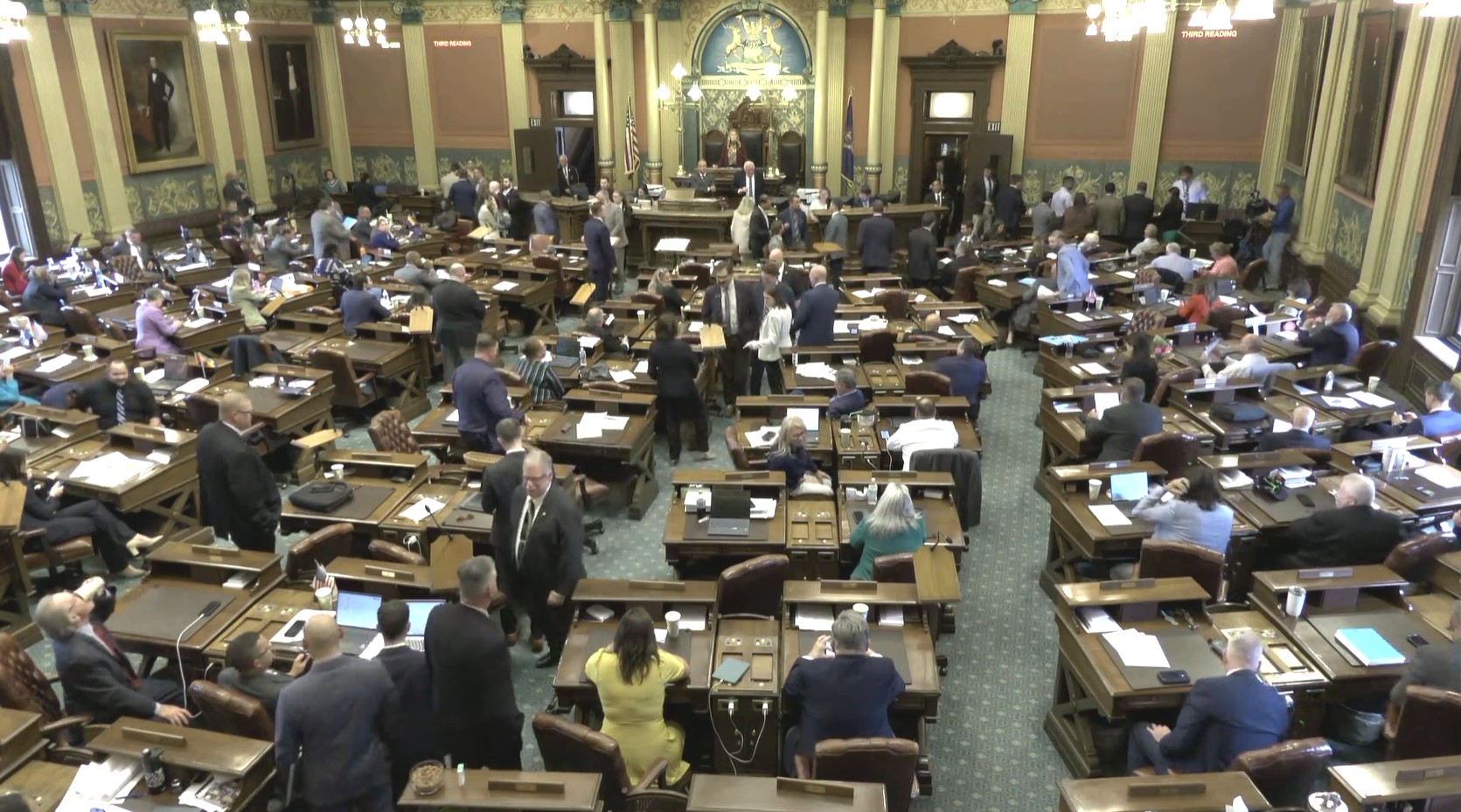
LANSING, Mich. (WZMQ) – Michigan House Republicans are advancing a tax strategy that pairs broad relief for residents with new taxes on select services more commonly used by higher-income individuals, an approach that in structure mirrors ideas long promoted by progressive Democrats.
House Speaker Matt Hall said the proposal centers on eliminating or reducing major household costs, including property taxes and utility bills, while offsetting lost revenue through targeted taxes on what he describes as “luxury services.”
“We’re going to hopefully eliminate the state property tax,” Hall said. “People are going to save a lot of money.”
Hall estimates the plan could save the average taxpayer roughly $900 per year, along with at least $250 in annual utility cost reductions by requiring rate rollbacks.
To make up the difference, Republicans are considering taxes on services such as lobbying, private aviation, telemarketing, and limousine use.
“We call it a luxury tax. We’re going to tax the lobbyists, and we’re going to tax the robocalls and the telemarketers and the private jets and the limousines. I’m looking forward to getting the final list in place.” Hall said. “We don’t want to tax essential goods and services. We’re not going to tax health care services. I think if we could deliver Huge tax relief, we’re talking about more than $900, and we’re talking about at least $250 on your utility bill. And in order to offset the loss for schools and local governments, if we can tax some of the luxury services, I think that’s a good thing.”
That framework, reducing taxes for the broader population while increasing costs on narrower, wealthier segments, closely resembles policies championed by progressive figures like Bernie Sanders and Zohran Mamdani, who have advocated for shifting more of the tax burden onto high earners and luxury consumption.
In New York, similar ideas have been implemented through higher marginal income taxes on top earners and targeted levies on high-value transactions. Those policies have helped generate revenue for major public investments, including transit infrastructure and housing programs, while also contributing to more stable funding streams for city services. At the same time, critics have raised concerns about long-term economic competitiveness and taxpayer migration, debates that continue as those policies evolve.
Michigan Republicans have frequently criticized those types of progressive tax structures, often framing them as economically risky or overly aggressive. Yet their current proposal reflects a comparable underlying concept, using targeted taxation at the top to create space for broader tax relief.
There are notable differences in execution. Hall emphasized that essential goods and services would remain untaxed, distinguishing the plan from broader-based proposals.
Instead, the House approach leans more heavily on consumption-based taxes tied to specific services, rather than income-based increases.
The proposal is also emerging as part of ongoing budget negotiations between the House, Senate, and Gov. Gretchen Whitmer ahead of the July 1 deadline. Hall said tax policy will be central to reaching a final agreement.
“I fully expect property tax reform to be part of a budget deal,” he said.
Hall also framed the broader budget strategy as one that avoids cuts and new broad taxes by reducing inefficiencies in state spending.
“All we have to do is budget the amount of money they’re actually spending, and we can cut $2 billion from the budget without impacting anything,” Hall said. “That’s how we can make big investments in local governments, in education. We can make big investments in literacy. We can make big investments in our public safety and in roads.”
As negotiations continue, the overlap between the Republican proposal and long-standing progressive tax concepts highlights a notable convergence. Both approaches rely on the same core fiscal premise that targeted taxation on higher-end economic activity can fund relief or investment elsewhere, even as political leaders continue to characterize those ideas in sharply different ways.