WASHINGTON, D.C. — High-stakes diplomacy collapsed over the weekend after nearly 24 hours of negotiations between the United States and Iran.
The stalemate could soon hit oil and gas prices, with tensions rising yet again at a critical global oil chokepoint.
After more than 20 hours of negotiations between the U.S. and Iran in Pakistan on Saturday, the United States and Iran left the table without a deal, marking a significant diplomatic breakdown.
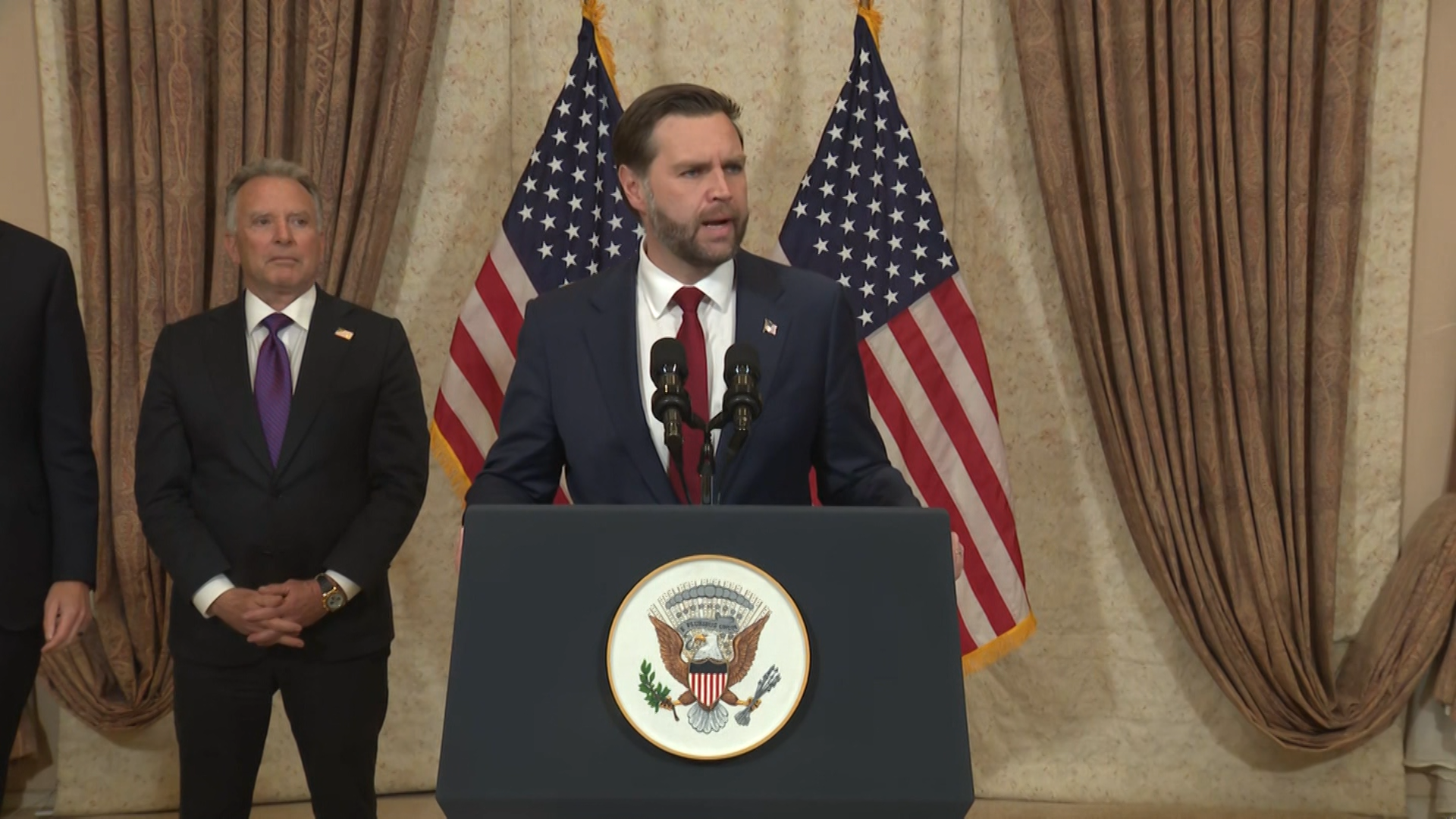
“We have been at it now for 21 hours. We’ve had a number of substantive discussions with the Iranians, that’s the good news,” Vice President JD Vance said Saturday. “The bad news is that we have not reached an agreement, and I think that’s bad news for Iran much more than it’s bad news for the United States of America.”
Iran’s nuclear program has emerged as one of the top sticking points that neither party was able to agree on.
“We just could not get to a situation where the Iranians were willing to accept our terms,” the vice president said.
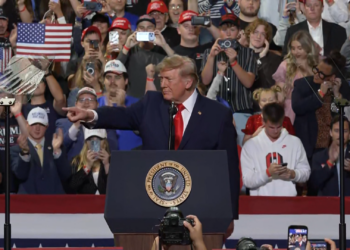
Now, the focus is shifting from diplomacy to deterrence. President Donald Trump said a blockade of the Strait of Hormuz by U.S. naval forces went into effect at 10 a.m. Monday. Trump said he’s instructed the Navy “to seek and interdict every vessel in international waters that has paid a toll to Iran” in a post on Truth Social on Sunday. He added: “No one who pays an illegal toll will have safe passage on the high seas.”
On Monday, Trump again took to Truth Social to warn that any Iranian Navy assets, specifically “fast attack ships,” will be “immediately eliminated” if they approach the blockade.
“Warning: If any of these ships come anywhere close to our blockade, they will be immediately eliminated, using the same system of kill that we use against the drug dealers on boats at sea,” Trump wrote.
“They’re really blackmailing the world. We’re not going to let that happen,” Trump told reporters Monday afternoon.
Iran warned it would retaliate if the United States carried out the blockade of its ports. Delegations are expected to regroup in Pakistan, but with the current ceasefire set to expire within days, time is running short.
Meanwhile, Brent Crude oil, the global benchmark, spiked above $100 per barrel on Monday before dropping to $98 in the afternoon, highlighting just how sensitive not only global energy, but also supply chains and consumer prices, are to ongoing instability in the region.
“It’s a double whammy, or you could say a perfect storm. You’ve got prices going up, the supply is going down, and that causes a lot of disruption all the way around,” said Jeff Golfman, Founder and President of Send123.
Golfman said unlike other supply chain disruptions, like natural disasters and global pandemics, this one is particularly impactful because it’s all about oil.
“Oil is in so many of the products that we buy to run our businesses, to run our homes, to run our lives,” Golfman said. “If you have a blockage or a restriction of supply, it’s simple economics. Prices go up, availability goes down.”
Golfman’s company, Send123, is an AI procurement platform that helps companies manage their supply chains to make better business decisions and mitigate tariff impacts. The platform, he said, helps businesses navigate sourcing through uncertain times.
“I think in businesses and in your house, you start looking at alternate solutions. You start looking for alternate suppliers. I personally think that the biggest lesson we took out of the pandemic is that single sourcing is a problem because if that single source gets disrupted for any reason, prices go up and availability goes down,” Golfman said.
“I think what we can take away from this is how do we individually, and as businesses, diversify our supply chains,” he said. “That’s how we start mitigating these kinds of issues so the impacts, as they come about, are not as large.”
The average price of gas, according to AAA in most states, is holding right around the national average of $4.12 for now. The average in Ohio and Michigan is lower, sitting at $3.85 and $3.96 per gallon, respectively. The average price is higher in Pennsylvania, which sits at $4.15 a gallon as of Monday.
Lawmakers are also returning to Washington this week, and Democrats are planning to vote on another War Powers resolution. Some conservative hard-liners have expressed opposition to a prolonged war with Iran. If additional Republicans join the Democratic effort, it could limit the president’s use of military force against Iran without approval from Congress.