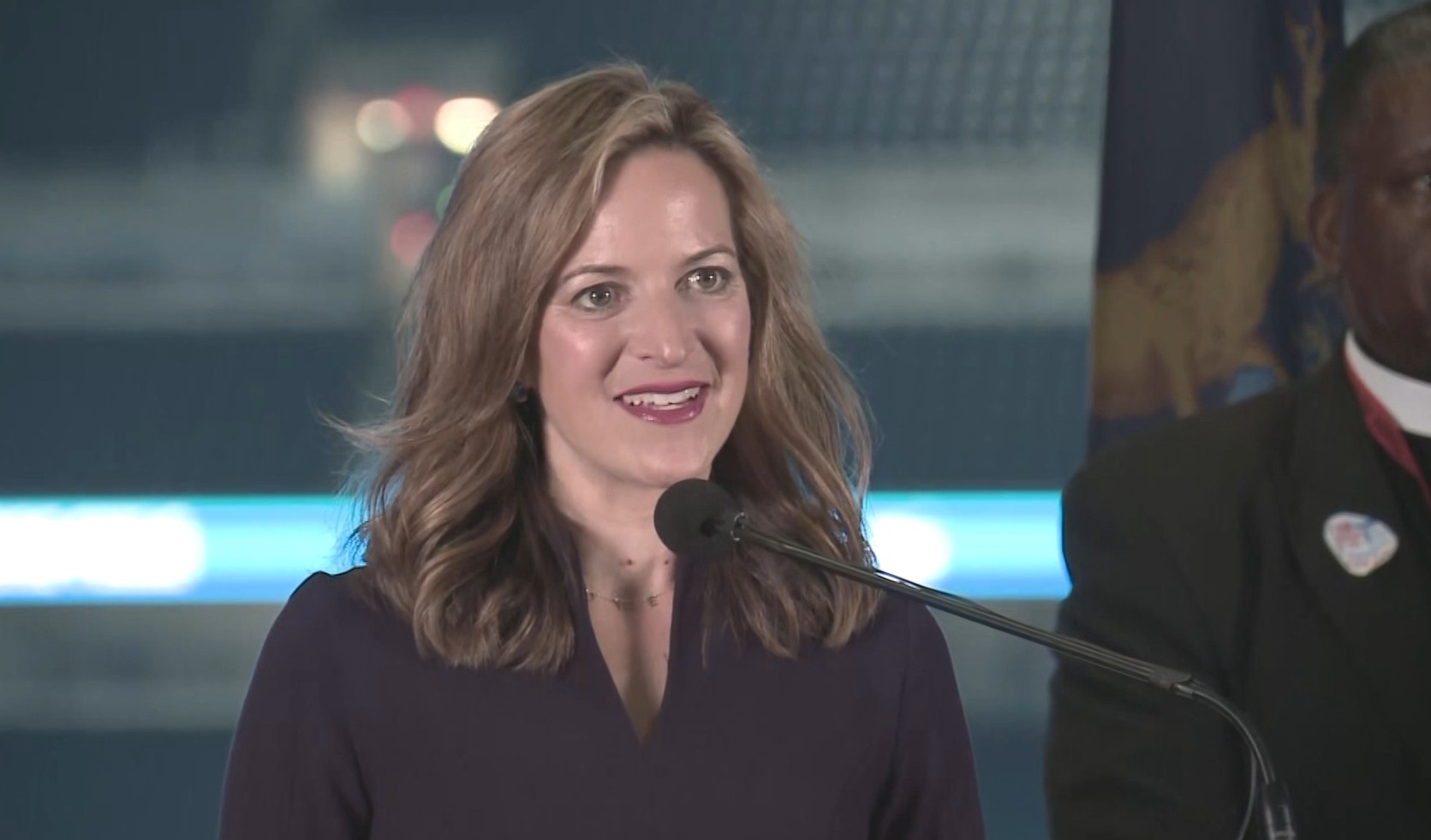
LANSING, Mich. (WZMQ) – As the race for governor intensifies ahead of the August primary, Democratic candidate and current Secretary of State Jocelyn Benson is centering her campaign on healthcare reform.
In an interview with WZMQ, Benson said Michigan’s healthcare system is “broken” and argued that structural changes within the Michigan Department of Health and Human Services (MDHHS) are necessary to improve affordability and access.
“By cutting those costs and streamlining how things are working, modernizing services, you’re actually creating a more lean and streamlined agency,” Benson said. “And then you can deliver those cost savings into programs that expand healthcare affordability and accessibility for residents.”
Benson’s proposal calls for identifying and eliminating administrative waste within MDHHS, then redirecting those savings toward expanding care and consumer protections. She said reforms would make the department more user-friendly and better equipped to advocate for patients when insurers deny doctor-recommended treatments.
Her plan would also require hospitals to provide upfront cost estimates for patients and would reform the state’s complaint system for residents challenging insurance denials.
“I’ve seen firsthand in places like the Upper Peninsula, quality care is too expensive,” Benson said. “And a shortage of medical professionals means bills are getting more and more expensive, while outcomes are stagnant or difficult to achieve at all.”
To address gaps in access, Benson is proposing an expansion of the mobile Secretary of State model to create mobile health clinics that bring preventive services directly to rural and underserved communities.
“My healthcare agenda actually invests in making sure we are bringing care directly to communities,” she said.
Workforce shortages are another central focus. Benson said she would expand scholarships, loan forgiveness programs, and other incentives to recruit and retain doctors, nurses, and other medical professionals in rural healthcare deserts.
“Expanding learning programs, scholarships, loan forgiveness, incentives, housing support, other things that can bring nurses and physicians to all rural areas of our state,” Benson said, “and ensure that healthcare is there when you need it, and that it’s also affordable.”
Benson is also proposing the creation of an independent Prescription Drug Affordability Board with the authority to review manufacturing practices, approve price increases, and hold pharmaceutical companies accountable for excessive pricing.
She said the board would help combat price gouging that keeps medications out of reach for many residents.
The plan further addresses the Black maternal health crisis by investing in culturally inclusive care, expanding Medicaid-covered doula and midwife services, requiring bias training for maternal healthcare providers, and increasing access to prenatal and postpartum care.
She said the goal is to ensure every mother in Michigan has the support she needs, regardless of race or income.
Benson is also backing a $5,000 caregiver tax credit, she said the credit would ease the financial strain on families caring for aging relatives as Michigan’s population grows older. The goal of the credit is to help ensure that longtime residents can remain supported by family members and that families have the financial resources to provide that care.
Benson is one of two Democrats seeking the party’s nomination for governor. One independent and seven Republican candidates are also running. Michigan’s primary election is scheduled for Aug. 3, with the general election set for Nov. 4.