WASHINGTON, D.C. — Tensions are rising yet again between the United States and Iran, with new threats and military escalation, all while high-stakes talks between the two countries occur in Geneva.
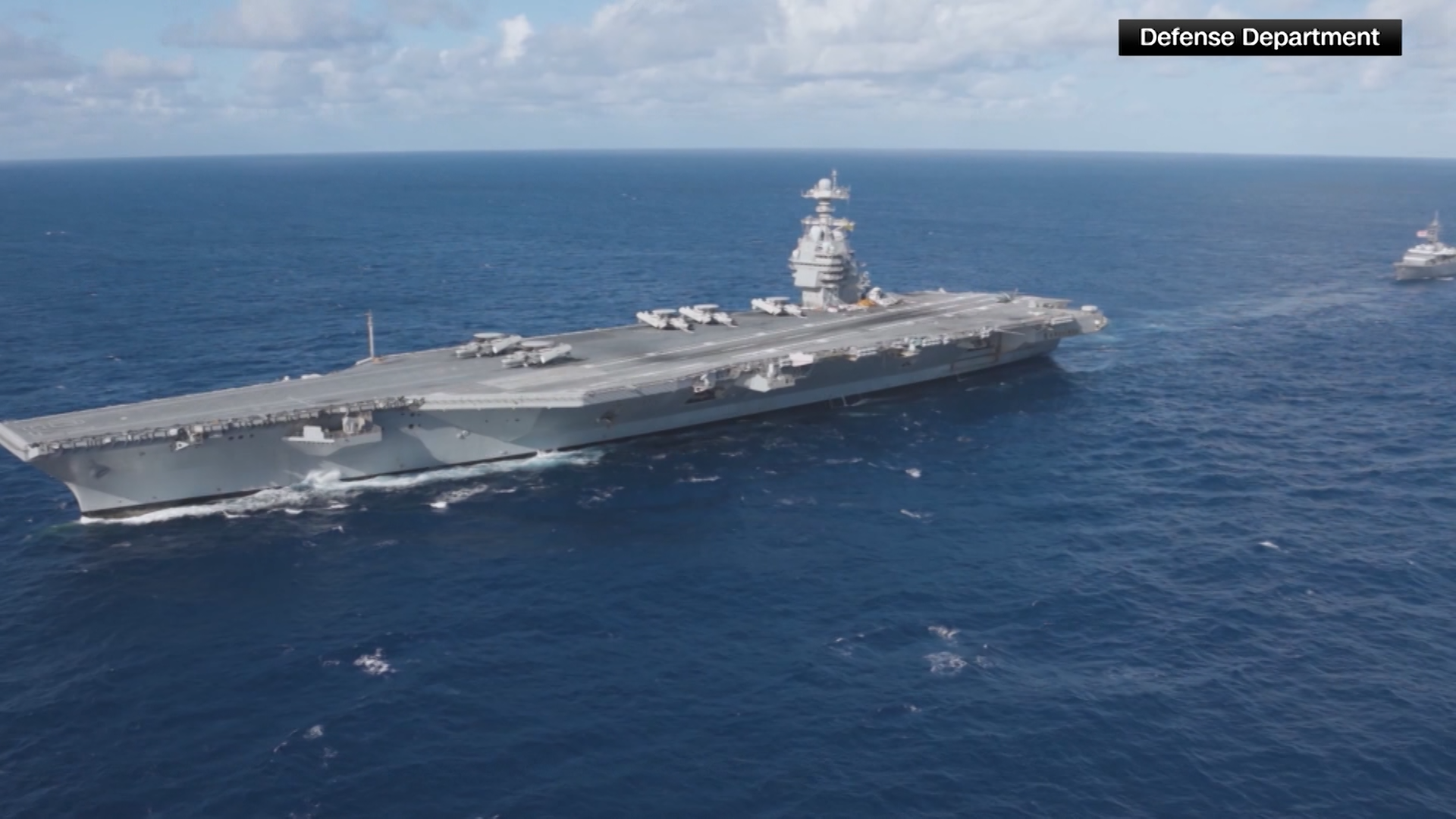
U.S. officials say the Pentagon is mobilizing a second aircraft carrier group to the region. The USS Gerald R. Ford, one of America’s most advanced warships, had been positioned in the Caribbean, but is now reportedly being sent to the Middle East as indirect talks and negotiations over Iran’s nuclear program continue.
“We’re dealing with people who make political geopolitical decisions on the basis of pure theology. And it’s a complicated thing. I mean, no one’s ever been able to do a successful deal with Iran, but we’re going to try,” said Secretary of State Marco Rubio during a recent visit in Slovakia.
The Trump administration wants a deal with Iran, one that includes the dismantling of Iran’s nuclear program.
“We could have had a deal instead of sending the B-2’s in to knock out their nuclear potential. We had to send the B-2’s. I hope they’re going to be more reasonable,” said President Donald Trump, who warned Iran of “steep consequences” if a deal is not reached.
“I don’t think they want the consequences of not making a deal. They want to make a deal,” Trump said.
This week, Iran’s supreme leader fired back, saying the U.S. cannot bring down Iran’s government, and warned that Iran has the power to destroy American ships if attacked — that’s according to Iranian media. The supreme leader also said a complete dismantling of Iran’s nuclear energy is off the table.
Senior officials in Iran’s Islamic Revolutionary Guard Corps reportedly declared they are prepared to close the Strait of Hormuz if ordered, which could severely disrupt the global oil supply chain. Roughly 20% of global oil flows through the vital waterway.
Iran says it won’t negotiate under threats and insists it’s ready to respond if Washington strikes. But here in the U.S., Iranian American advocates are reiterating that the best way toward stability in the region is by supporting the resistance from within Iran.
“We would like a U.S. policy that actually embraces the Iranian people and the resistance’s fight to overthrow this regime,” said Dr. Majid Sadeghpour, political director at the Organization of Iranian-American Communities.
On Tuesday, negotiators in Geneva said they’ve agreed on a potential framework, however, sharp divisions remain.