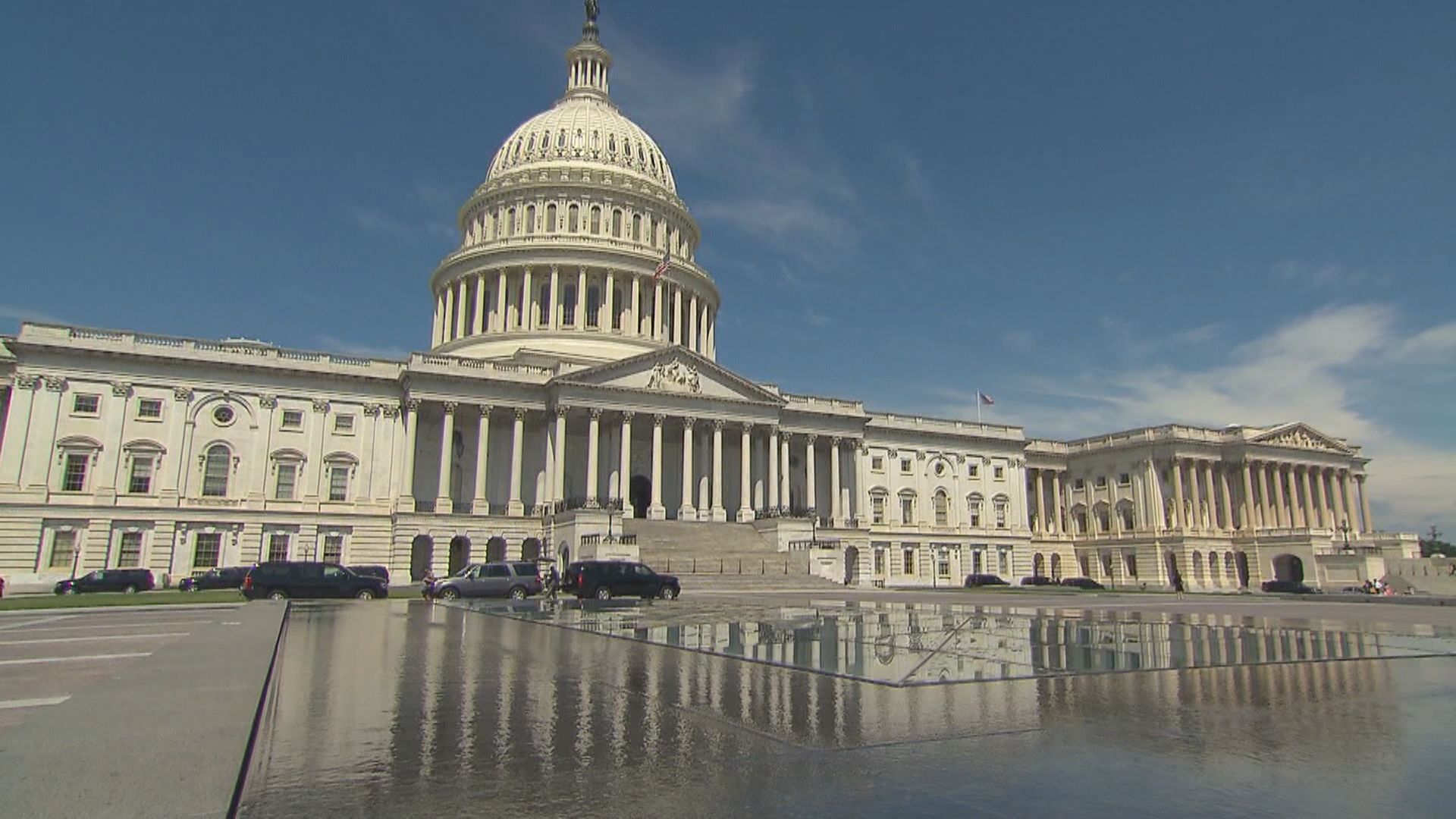
WASHINGTON, D.C. (WZMQ 19 News) — A bipartisan push to ban stock trading by members of Congress is gaining momentum — but not without resistance. Supporters say it’s about restoring public trust. Critics warn it goes too far.
Introduced in September, the bipartisan Restore Trust in Congress Act goes well beyond current federal law and would ban members of Congress, their spouses and dependents from owning, buying or selling individual stocks and securities.
In 2012, the passage of the STOCK Act barred members of Congress from using insider information to buy and sell stocks. However, recent data indicates that one in three members of Congress traded stocks or other financial assets from 2019 to 2021, and more than 3,700 of those trades posed potential conflicts of interest with their legislative responsibilities.
“Currently the STOCK Act mainly requires reporting,” said Donald K. Sherman, executive director of Citizens for Responsibility and Ethics in Washington (CREW). “Federal law bans insider trading, and what we have seen time and time again is that members, regardless of party, have either filed their disclosures late or failed to disclose assets at all.”
The Restore Trust in Congress Act goes further than current law — forcing lawmakers to divest within 180 days. Under the proposal, fines would equal 10% of the asset’s value, plus any profits, and would be publicly disclosed.
“The fines in the STOCK Act, which start at $200, just haven’t worked,” Sherman said. “The public shouldn’t have to ask or wonder whether their members are making decisions based on their personal financial entanglements or their view of the public interest.”
Nearly 100 House members from both parties now support the bill — and a discharge petition could force a vote. However, some members do not agree with that method.
“Well, I’m not a big fan of discharge petitions,” said Rep. Jack Bergman, R-Mich. “I’m going to see how it’s worded. Sometimes discharge petitions, they’re used as a messaging tool. I want to see meat on the bone. I’d rather do a law and say, ‘Hey, we’re going to bring this to the floor. We’re going to debate it and make a decision.’”
That being said, Congressman Jack Bergman is strongly in favor of prohibiting stock trading for members of Congress: “I believe that a member of Congress should not be able to trade stocks,” he told WZMQ 19 News.
Others say the risk of even accidental conflicts is reason enough to act.
“The problem is you get access to information all the time. Even if you’re not trying to somehow have an advantage, you’re putting yourself in a position where you might inadvertently have some advantage,” said Sen. Dave McCormick, R-Pa. “I’m generally in favor of banning stock trading, particularly individual stocks. If something came from the House that made sense to me along those lines, I’d be willing to support. In fact, I’d be very enthusiastic to support it.”
McCormick said the trust gap is the real problem.
“The most important thing is that people lose trust,” McCormick said.
Michigan’s two Democratic senators have also advocated for similar limitations on stock trading.
In July, the Senate Homeland Security and Governmental Affairs Committee passed the Halting Ownership and Non-Ethical Stock Transactions (HONEST) Act. Senator Gary Peters, D-Mich., serves as the committee’s Ranking Member and played a key role in the legislation.
“Americans deserve to have complete confidence that federal elected officials are working in their constituents’ best interests—not their own financial interests,” said Peters. “By passing this legislation out of committee with bipartisan support, we are one step closer to getting this bill passed into law and finally barring bad actors from taking advantage of their positions for their own financial gain.”
Senator Elissa Slotkin, D-Mich., has also pushed for bans on stock and crypto trading for elected officials.
“The American people think that all of us- Democrats and Republicans- are using our positions and our access to enrich ourselves,” said Sen. Slotkin during a Congressional hearing on the topic in July. “It’s happening on both sides of the aisle, people don’t believe that we are here for the right reasons. We have a problem.”
But opponents warn the bill could discourage people from public service.
“Are you supposed to take a vow of poverty?” said Rep. Mike Kelly, R-Pa. “I think it really reaches far beyond what it needs to be. That goes way outside the norm of what our duties are when we come here.”
Kelly argued Congress already has oversight mechanisms in place.
“We already have an ethics committee that looks at everything you do every single day,” Kelly said. “I don’t want to see us get to the point where we decide who can invest in what and how much they can invest.”
“Whatever effort it is that my colleagues have, that’s fine if that’s what they think. That’s fine. I’m not part of that,” Kelly added.
Sherman said Congress has a unique role compared to the other branches of government. If a conflict of interest arises in the executive or judicial branches, a judge or executive employee can recuse themselves. That is not exactly the case for members of Congress.
“Members can’t recuse because it would deny their constituents representation that they voted for,” Sherman said.
With bipartisan support — and bipartisan resistance — the Restore Trust in Congress Act, and other similar measures, could soon prompt a showdown in the House and Senate when lawmakers return in the new year.