
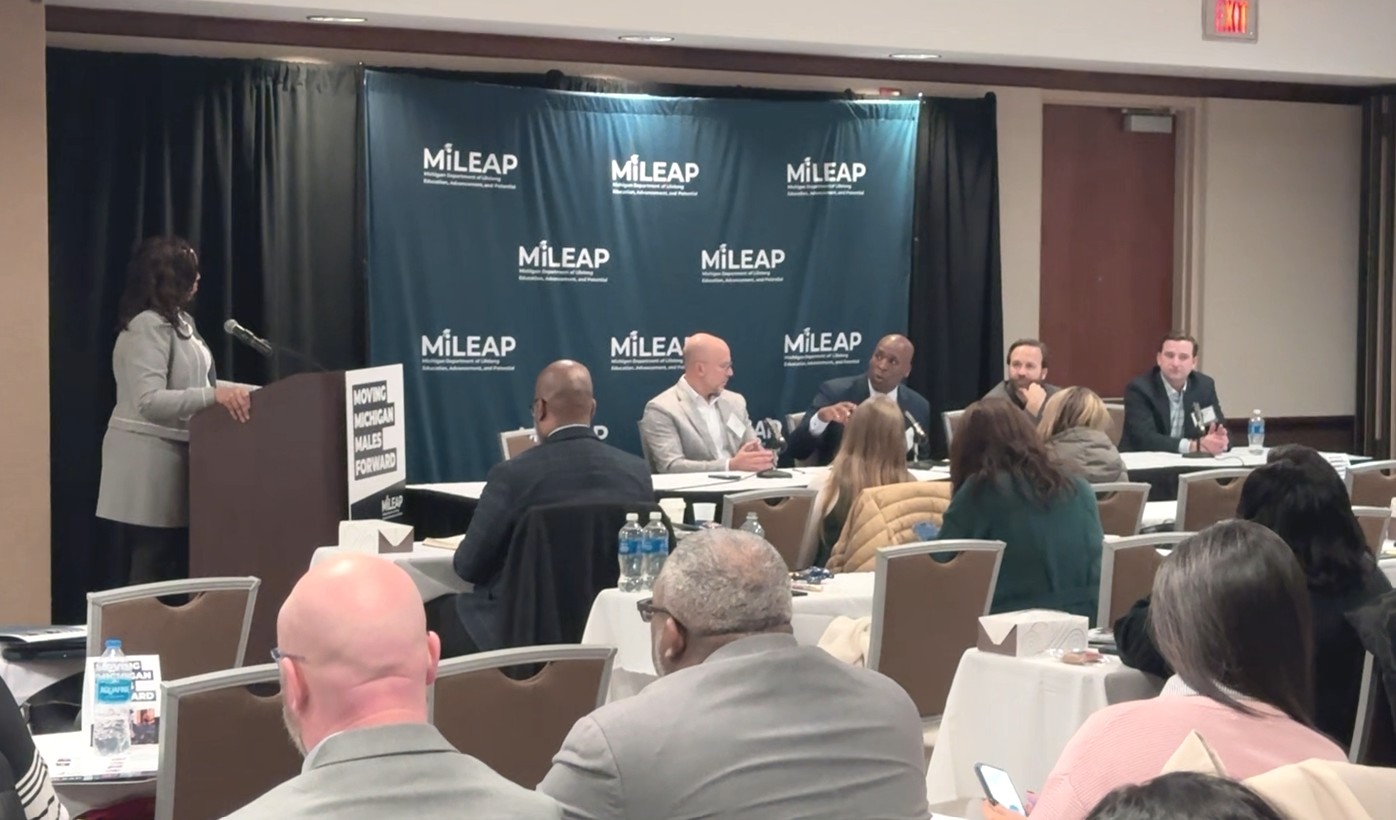
LANSING, Mich. (WZMQ) – State leaders are sounding the alarm over what they describe as a growing crisis for young men in Michigan, one marked by lower college enrollment, lagging participation in job training, and barriers that make it harder to enter high-wage careers.
The Michigan Department of Lifelong Education, Advancement, and Potential (MiLEAP) hosted its first Moving Michigan Males Forward panel this week, bringing together educators, state officials, business leaders, and workforce experts to focus on reversing those trends. The effort follows an executive directive from Governor Gretchen Whitmer instructing state agencies to expand outreach and improve access to tuition-free training and education pathways for men.
MiLEAP leaders said the goal is not only to discuss solutions, but to spark statewide action. “Governor Whitmer’s directive makes clear that Michigan’s long-term success depends on our ability to fully engage men in education and career opportunities,” MiLEAP Director Beverly Walker-Griffea said. She added that convening leaders from across sectors offers a “real opportunity to listen, learn, and lift up strategies that ensure every Michigan man has the support he needs to thrive.”
Throughout the day, participants examined new research and strategies to keep young men engaged in education, from dual enrollment and apprenticeships to community college options and entrepreneurship. Keynote speaker Richard V. Reeves, president of the American Institute for Boys and Men, underscored the urgency, saying, “Engaging more boys and young men in high-quality education is now one of our most pressing policy challenges.”
State officials say improving access alone isn’t enough. Programs like Michigan Reconnect and the Michigan Achievement Scholarship are already lowering the cost of college and skills training, yet men remain underrepresented. In Reconnect, women currently enroll at twice the rate of men, mirroring a national shift in higher education demographics.
Leaders also highlighted the role of employers and emerging industries in rebuilding opportunity. Panelists discussed connecting young men with jobs in technology, advanced manufacturing, and mobility, along with strengthening partnerships between businesses, schools, and community colleges.
Workforce leaders warned that the stakes extend far beyond individual outcomes. Michigan TalentFirst President Kevin Stotts said employers are already struggling to find talent as fewer young men pursue training after high school. “We cannot afford to overlook this talent,” he said. “Supporting more men in accessing these opportunities is essential, not just for their future, but for the strength and competitiveness of our entire state.”
MiLEAP officials say the department will continue hosting events, listening sessions, and focus groups into 2026 to better understand the needs of young men and the barriers they face.
More information about statewide education and workforce initiatives can be found at Michigan.gov/MiLEAP.