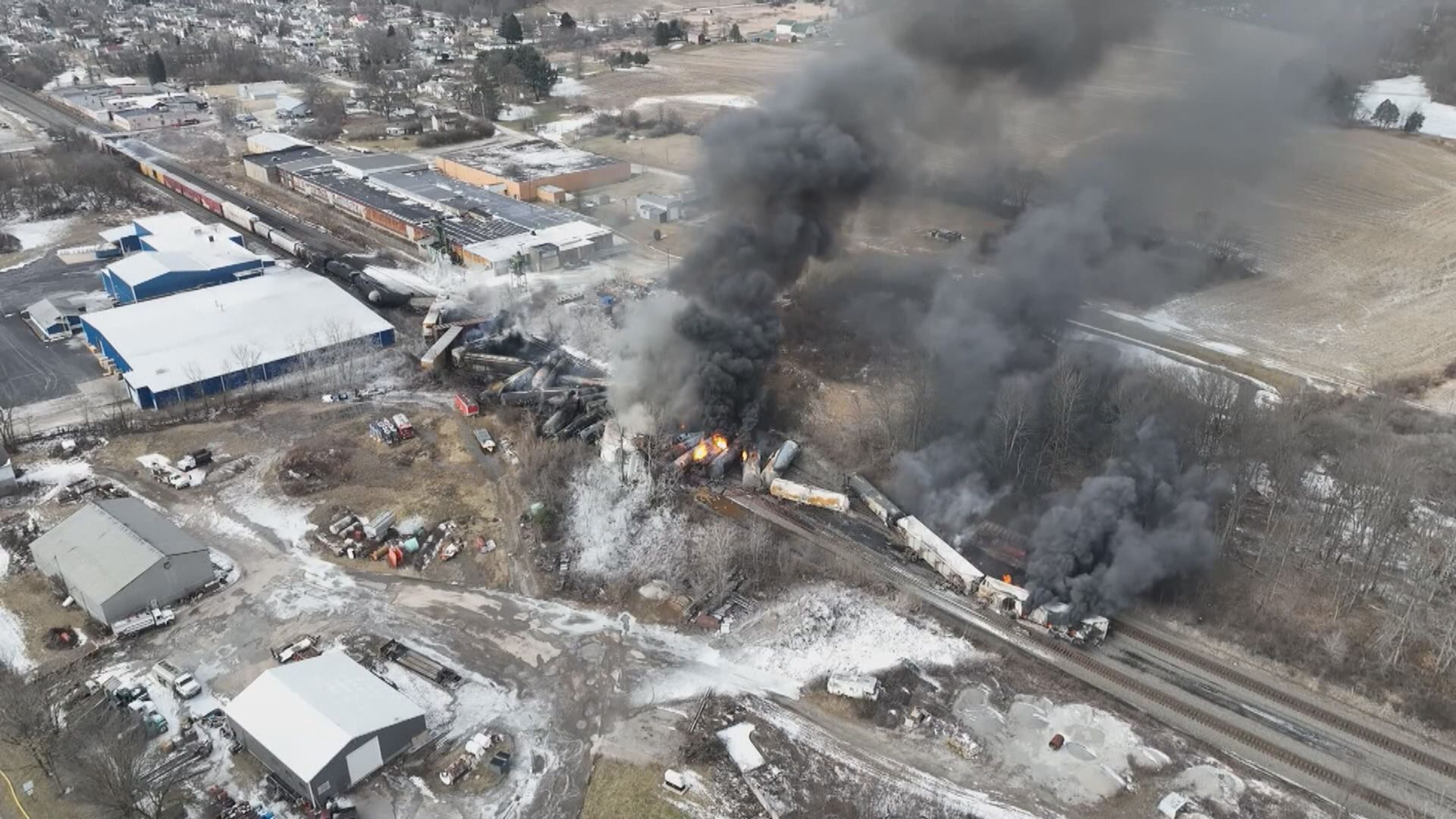
WASHINGTON, D.C. – It’s been three years since the Norfolk Southern train carrying hazardous materials derailed along the Pennsylvania and Ohio border. The National Transportation Safety Board said a failed wheel bearing caused the train to derail, which released hazardous material into the surrounding communities.
“Seeing the derailment, seeing the toxic fireball that was a rushed decision that we’ve seen forced that vent and burn that toxic fireball into the sky,” recalled Rep. Chris Deluzio (D- PA). “To see first responders from Ohio and Pennsylvania rush in and to see our constituents deal with years on very serious and legitimate concerns around their health and safety.”
Three years later, Congressional members, experts and local officials are still advocating for additional guardrails to prevent another East Palestine from happening. For the past three years, they’ve been pushing to pass the Railway Safety Act.
“It requires reliable, real-time hazmat information,” said Edward Kelly, General President of the International Association of Fire Fighters. “Firefighters arriving know the dangers on scene rather than discovering through long term exposure.”
Rep. Deluzio said it’s a straightforward piece of legislation. “Reduce the risk of wheel bearing failures that led to the derailment in East Palestine, increase fines of the railroads that that now face a slap on the risk,” said Rep. Deluzio. “Stronger requirement for transporting hazardous materials like vinyl chloride like what we saw in the derailment in East Palestine and putting two workers on every train. Minimum staffing on every train.”
Industry experts and members are urging leadership to move forward with this legislation.
“This is something that can and needs to be addressed,” said Greg Regan, Transportation Trades Department with the AFL-CIO. “I do not want to be back here next year or at the five-year anniversary or the ten-year anniversary or heaven forbid there’s another tragedy that shocks another community.”
The National Institute of Health opened the East Palestine Research Program office to assess and address the long-term health outcomes stemming from the derailment in the community. It’s a five year, ten-million-dollar research initiative funded by the NIH.