WASHINGTON, D.C. (Guam News Now) — Students could soon see more milk options in the cafeteria.
Congress sent legislation to President Trump’s desk that would allow the reintroduction of whole and reduced-fat milk options in schools.
On Monday, the House passed the Whole Milk for Healthy Kids Act, introduced in the Senate by Sen. Roger Marshall, R-Kan.
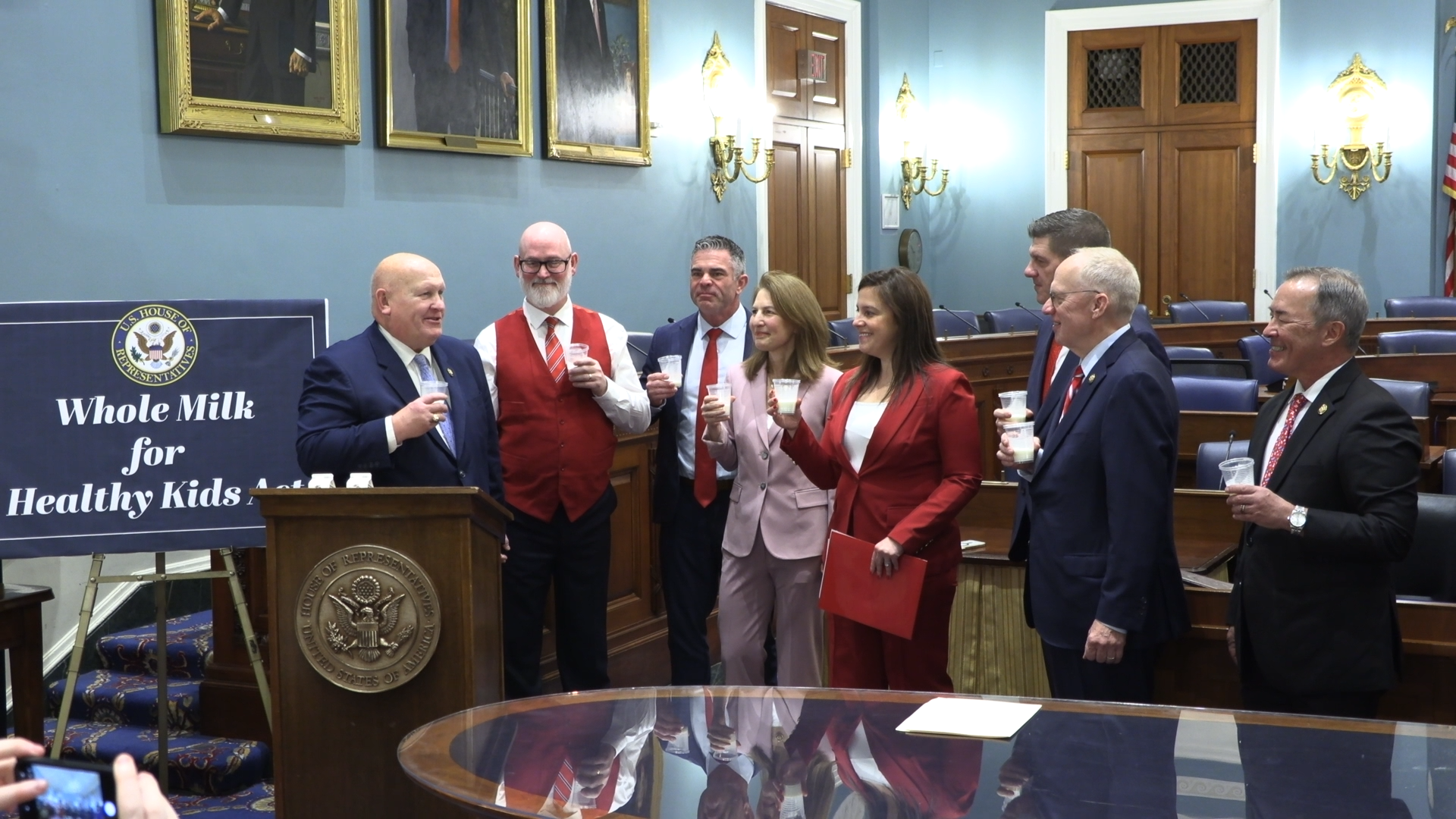
Rep. Glenn Thompson, R-Pa., has introduced the bill for over a decade. Despite passing the House in previous sessions, it never made it out of the halls of Congress- until this week, “In a very, very strong bipartisan way,” Thompson said.
Delegate Jim Moylan, R-Guam, cosponsored the legislation. He said having healthy, nutrient-rich milk options will benefit schools and families and Guam.
“And for communities like Guam where food costs are higher, supply chains are longer and the options are more limited, school meal programs play a vital role in supporting families,” Moylan said.
If signed by the president, it would restore whole and reduced-fat flavored and unflavored milk options to school cafeterias. For over a decade, school milk options have been limited to nonfat and 1%.
“It means our kids are going to get more calcium, more vitamin D, they’ll have better bone health and they’ll have a lower risk of diabetes and cardiovascular disease,” said Rep. Josh Riley, D-N.Y. “And that’s the science, plain and simple. And it’s about time that our federal law is caught up to it.”
Democrats and Republicans are in agreement: Whole milk provides much more than a nutritional boost for kids.
Thompson said over the years, the total economic impact of the U.S. dairy industry has fallen, now just under $800 billion annually.
“The passage of this act yesterday, I am confident we’re going to see the dairy industry now go back up over $1 trillion,” said Thompson. “That is a win for our kids nutritionally, a win for dairy farms to provide some resilience and to that industry.”
The bill also has the support of several plant-based food groups, who say it gives schools participating in the National School Lunch Program more flexibility to serve plant-based milks, they say, are nutritionally equivalent to dairy milk.
“The legislation also allows parents and legal guardians, in addition to licensed physicians, to provide a written statement to guarantee that their students receive a non-dairy substitute for cow’s milk at school,” The Plant Based Foods Association (PBFA) and the Plant Based Foods Institute (PBFI) said in a recent joint press release.